Want to learn how to automate a roofing business? Running a roofing company becomes more complex as you grow. More leads, crews, and projects create new opportunities, but they also create more chances for communication gaps and missed follow-ups. That is why contractors are learning how to automate roofing business operations.
The goal is not replacing people. It is building systems that help your team respond faster, stay organized, and create a better homeowner experience.
In this guide, we will break down the automation steps that help roofing companies manage leads, sales, production, and customer communication more efficiently.
Start With the Processes You Already Have
Keep in mind that while AI can automate some tasks, human judgment still matters in many complex tasks. But it does help roofers automate mundane tasks and make teams more efficient.
Before you automate anything, you need to understand how your business currently operates. This is where many contractors make mistakes. They buy software first and try to force their existing workflow into a system that was never designed around their process.
Automation does not fix a broken process. It scales whatever process already exists. If your sales team does not consistently follow up with homeowners, automated reminders will simply remind them about a messy process. If your production team does not have clear handoffs between departments, automation will not magically create accountability.
The first step is documenting your current workflow. Map out every stage of your customer journey:
- How does a new lead enter your business?
- Who contacts the homeowner first?
- How are inspections scheduled?
- How are estimates delivered?
- What happens after a contract is signed?
- How does production communicate updates?
- How do you collect reviews and referrals?
Once you understand those steps, you can identify where automation creates the most value. For most roofing companies, those opportunities often appear in communication, follow-up, scheduling, and internal organization.
Automate Lead Response Before Anything Else
The first few minutes after a homeowner contacts your company can determine whether you win the job. Homeowners often contact multiple roofing companies after a storm or when they notice a problem. The contractor who responds quickly and communicates clearly has an advantage before the inspection even happens.
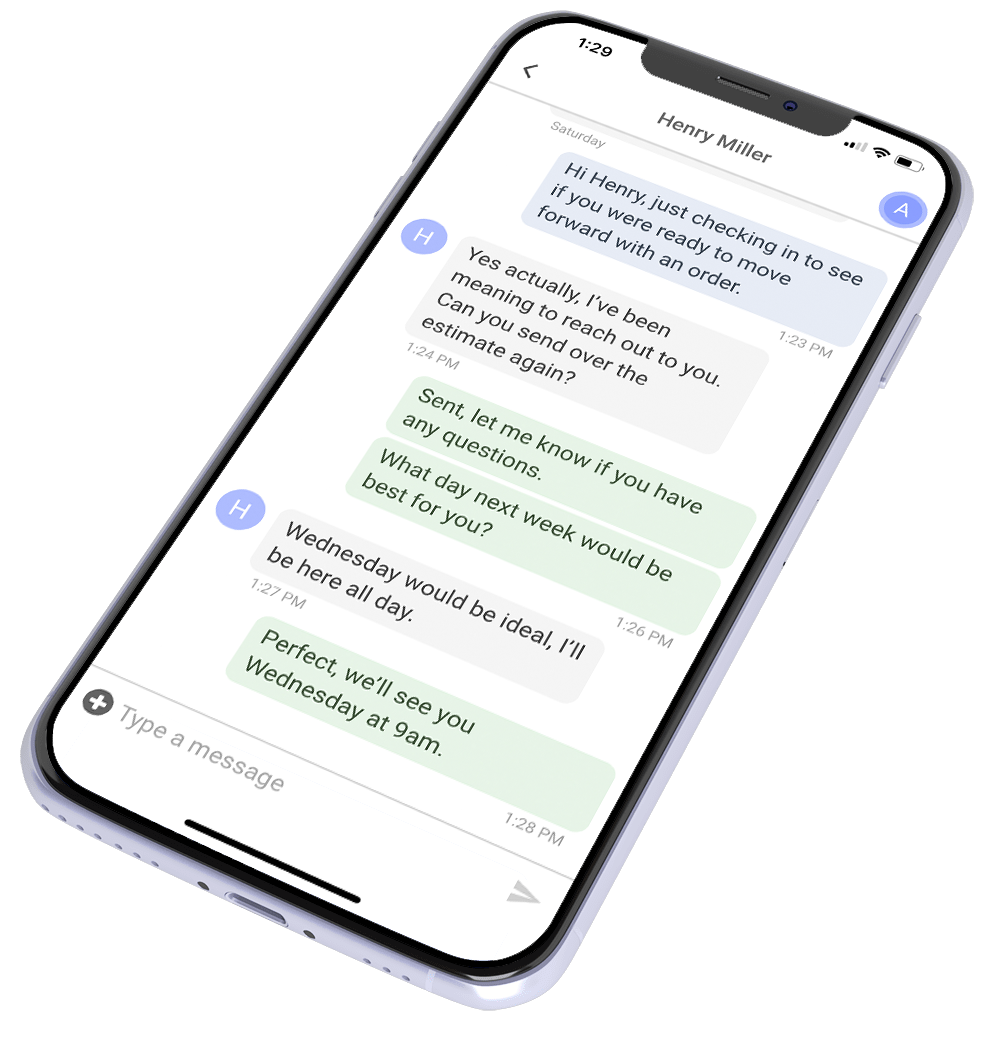
That does not mean you need a salesperson sitting by the phone 24/7. It means your system needs to make sure every opportunity receives a response. A roofing automation system can help by:
- Sending immediate confirmation messages after a lead submits information
- Creating follow-up tasks for sales representatives
- Assigning leads to the right team member
- Tracking communication history
- Alerting managers when opportunities are not moving
The important part is that automation supports the relationship. It does not replace it. A homeowner does not want to feel like they are being pushed through a machine. They want to know that a real person understands their situation and can help them make the right decision.
This is where ProLine’s communication-first residential CRM approach matters. Keep in mind that communication is not just an administrative task. It is the foundation of trust. Better communication creates stronger relationships. Stronger relationships help contractors sell more jobs.
ProLine Workflows Overview | Office Hours #93
Create Automated Workflows After the Estimate
Many roofing companies focus heavily on generating leads but lose momentum after the estimate is delivered. This is where automation can have a major impact.
A homeowner may need several days or weeks to decide on a roof replacement. During that time, they may have questions, compare contractors, or simply forget about the conversation. A consistent follow-up system keeps your company visible without forcing your sales team to manually remember every interaction.
After an estimate is sent, your workflow might include:
- Immediate Estimate Confirmation
The homeowner receives confirmation that their estimate was delivered. This gives them confidence that the process is moving and creates an opportunity to explain the next steps.
- Follow-Up Reminders
Your sales team receives reminders to check in based on the homeowner’s timeline. A homeowner who says they need to talk with their spouse may need a different follow-up approach than someone who is waiting on insurance approval.
- Communication Tracking
Every conversation should be visible. If a salesperson leaves the company or a homeowner calls the office with a question, your team should not have to search through text messages or personal notes to understand what happened.
A CRM creates one source of truth for every homeowner interaction.
Automate the Handoff From Sales to Production
The signed contract is not the end of the sales process. It is the beginning of the production experience. This transition is where many roofing companies create unnecessary confusion.
The salesperson closes the job. Then production needs the homeowner information. The office needs scheduling details. The crew needs project requirements. The homeowner wants to know what happens next. Without a clear system, every handoff becomes an opportunity for mistakes.
Automation can create a smoother transition by triggering the next steps automatically. After a signed estimate, your system can:
- Create the production project
- Notify the operations team
- Send homeowner confirmation messages
- Create material ordering tasks
- Schedule internal deadlines
- Assign responsibilities to team members
The homeowner should not have to wonder what happens after signing. Clear communication increases perceived value because it shows professionalism and organization. Remember, homeowners cannot always judge the technical quality of your roofing work before the project is complete. They judge the experience they receive throughout the process.
Automate Material and Production Coordination
Once a job enters production, organization becomes even more important. Roofing projects involve multiple moving parts:
- Material ordering
- Delivery scheduling
- Crew coordination
- Permit requirements
- Weather delays
- Homeowner updates
A missed detail can create delays that frustrate both your team and the homeowner. Automation helps by creating triggers tied to project milestones. For example:
- When a job is approved, create material ordering tasks.
- When materials are delivered, notify the production team.
- Before installation, send homeowner preparation instructions.
- After completion, trigger final communication and review requests.
The goal is not to automate every decision. Experienced roofing professionals should still control important choices. The goal is to make sure routine actions happen consistently.
Use Reporting to Find Bottlenecks
Automation without visibility is incomplete. You need to know whether your systems are actually improving performance. Strong roofing companies measure what happens throughout the entire customer journey:
- Lead response times
- Inspection conversion rates
- Estimate follow-up activity
- Sales pipeline movement
- Production timelines
- Customer satisfaction
Without reporting, problems often remain hidden. For example, if sales have slowed, the problem may not be your closing ability. Maybe leads are not being contacted quickly enough. Maybe estimates are not receiving proper follow-up. Maybe homeowners are unclear about the next step.
Reporting helps you find the actual problem. ProLine’s reporting software gives roofing companies visibility into their sales pipeline, team activity, and job progress. Instead of managing based on assumptions, owners can make decisions using real information.
That visibility helps contractors improve operations while keeping communication at the center.
Automate Customer Communication Without Losing the Human Touch
One of the biggest concerns contractors have about automation is that it will make their business feel less personal. That concern is valid. Poor automation feels robotic. Good automation feels organized. The difference is whether the system supports meaningful conversations or replaces them. Good uses of automated communication include:
- Appointment confirmations
- Project updates
- Reminder messages
- Review requests
- Follow-up notifications
These messages keep homeowners informed and reduce unnecessary phone calls. However, major conversations should still involve your team. A homeowner dealing with storm damage or deciding whether to invest thousands of dollars into a new roof deserves expertise and empathy. Automation should create more opportunities for those conversations, not remove them.
The Scaling Blueprint: Build Systems Around Every Trigger
AI is already changing how some jobs get done, but replacing employees is not automatically the best way to capture its value. U.S. labor data cited by Futurism shows employment declined in some occupations the Bureau of Labor Statistics had previously identified as exposed to AI, including a 4.8% drop among sales representatives from May 2024 to May 2025. However, that data does not prove AI caused those job losses.
Research also shows that AI can make employees more productive when it works alongside them. In an NBER study of 5,179 customer support agents, workers using an AI assistant increased productivity by 14% on average.
Gartner found a similar pattern at the company level. In a survey of 350 executives at large global companies already piloting or deploying autonomous technologies, about 80% reported workforce reductions. However, those reductions were not associated with higher returns from the technology. Gartner concluded that organizations seeing stronger results were investing in the skills, roles, and systems that help people use and manage AI.
Therefore, you should enable your staff to accomplish more with less burnout by automating your roofing business, and the easiest way to think about roofing automation is through triggers. Every important event in your business should create the next action.
- A new lead comes in → contact process begins.
- Inspection completed → estimate workflow begins.
- Estimate approved → production workflow begins.
- Materials delivered → installation preparation begins.
- Project completed → review and referral process begins.
This is how you create a scalable roofing operation. Instead of depending on memory, individual habits, or scattered communication, your business runs on systems. That does not make your company less personal. It makes your customer experience more consistent.
Build a Roofing Business That Runs Better With ProLine
Learning how to automate roofing business operations is not about adding more technology for the sake of it. The purpose of automation is simple: help your team communicate better, protect opportunities, and spend more time doing the work that creates value. Roofing will always be a relationship business.
Homeowners want to work with contractors they trust. They want clear answers, reliable updates, and confidence that they made the right choice. The contractors who win in the future will not be the ones who remove people from the process. They will be the ones that use technology to help their people communicate better.
FAQs
How can roofing companies automate their business?
Roofing companies can automate their business by creating systems for lead response, follow-up, scheduling, customer communication, production updates, and reporting. The goal is to reduce repetitive administrative work while helping teams provide a more consistent homeowner experience.
What roofing tasks should be automated first?
Most contractors should start with front-office tasks like lead follow-up, appointment scheduling, estimate reminders, and customer communication. These areas usually have the biggest impact because missed follow-ups can directly result in lost revenue.
Can automation replace roofing salespeople?
No. Automation can support sales teams by organizing information, creating reminders, and improving communication consistency, but homeowners still need human expertise when making a major roofing decision. Trust and education remain critical parts of the sales process.
What is the biggest mistake roofing companies make with automation?
The biggest mistake is automating before creating clear processes. Technology cannot fix inconsistent workflows. Contractors should first define how leads, sales, production, and communication should move through the business, then use automation to support those systems.