Most roofing companies start automating because they want to save time. The goal is usually simple: respond faster, organize leads, reduce administrative work, and help the team handle more jobs. But poorly designed automation can create the opposite result by making homeowners feel ignored, disconnected, or like they are just another number in a system.
That matters because roofing is a trust-based business. A homeowner may only replace their roof once or twice in their lifetime, and the experience they have with your company determines whether they recommend you to friends, family, and neighbors. Good roofing business automation should strengthen communication, not replace it.
The companies that use automation well are not trying to remove relationships from the process. They are building systems that help their teams create more of them.
Why Automation Mistakes Hurt Roofing Referrals More Than You Think
Referrals are one of the most valuable growth channels for roofing companies because they come with built-in trust. When a homeowner recommends you to a neighbor, the new customer is not starting from zero. Someone they already trust has helped reduce the uncertainty around hiring a contractor.
That is important because roofing has a unique sales challenge. You are asking a homeowner to spend thousands of dollars on a project they may know very little about, with a company they may have never worked with before. The homeowner is evaluating more than your price. They are paying attention to:
- How quickly you respond
- Whether you answer their questions clearly
- Whether you show up when promised
- Whether your team keeps them updated
- Whether the entire process feels organized
Automation affects all of these touchpoints. A well-designed system can make your company appear more professional and reliable. A poorly designed system can make homeowners feel like they are talking to a machine instead of a trusted local contractor. The difference comes down to how you use automation.
The Automation Mistake That’s Killing Your Close Rate
Mistake #1: Automating Communication Before Understanding the Customer Journey
One of the most common automation mistakes is adding tools before understanding where communication problems actually happen. A contractor may install software that sends automated texts, emails, or reminders, but nobody has mapped out what homeowners actually need at each stage of the process.
The result is generic communication. A homeowner receives a message, but it does not answer their question or help them understand what happens next. For example, a homeowner who just approved a roof replacement needs different information than someone who requested an inspection but has not scheduled an appointment.
These are completely different moments in the customer journey. Good automation starts with understanding the questions homeowners ask throughout the process:
- What happens after I schedule an inspection?
- When will someone come to my house?
- How long will the project take?
- What materials are you recommending?
- When will I receive updates?
- Who should I contact if I have questions?
The best automation supports these conversations. ProLine’s communication-first CRM philosophy is built around this idea. Communication creates relationships, and relationships create revenue. Automation should make those relationships easier to manage, not make homeowners feel like they are interacting with a disconnected system.
Mistake #2: Using a Generic Business Number Instead of a Local Line
A major automation mistake happens when companies hide their communication behind unfamiliar numbers.
Many consumers screen calls from unknown numbers. If your automated system reaches out from a generic number, the homeowner may ignore it completely or assume it is another marketing message.
This is especially damaging for referral-based businesses.
Imagine a homeowner’s neighbor recommends your company. The homeowner fills out a form, expecting someone local to reach out. Instead, they receive a call from an unfamiliar number with no clear connection to your company. That first interaction creates friction.
For roofing companies, the goal is not simply contacting the homeowner. The goal is building confidence. Using a consistent local business number can make your outreach easier to recognize. When communication comes from a recognizable company number, homeowners are more likely to answer and continue the conversation.
The automation is still happening behind the scenes. The difference is that the homeowner experience feels personal. The technology disappears, and the relationship remains.
Mistake #3: Automating Follow-Up Without Tracking Context
Follow-up is where many roofing companies lose opportunities. A homeowner may request an estimate, ask a question, or mention they need to discuss the project with their spouse. Then the conversation goes quiet. Without a system, the next step depends on someone’s memory. That is risky.
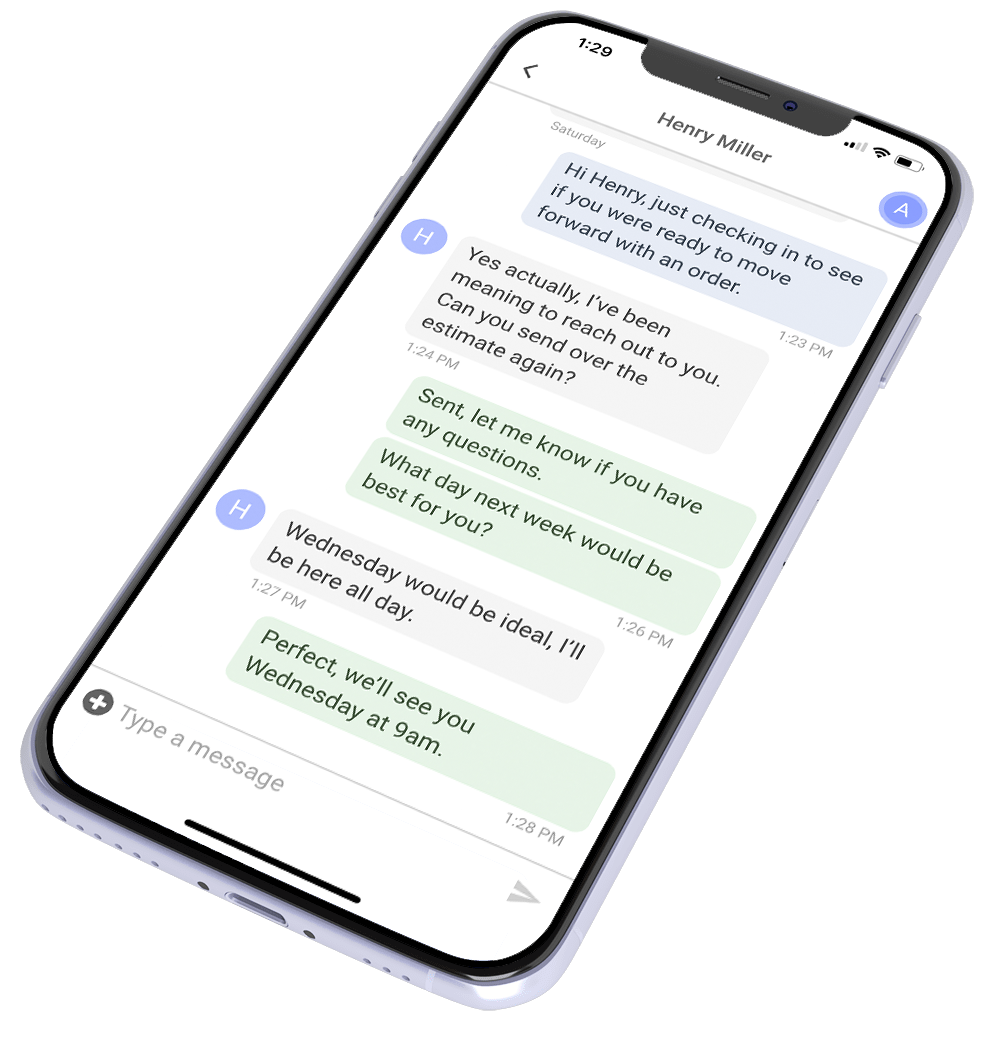
Salespeople get busy. Storm volume increases. Production issues appear. Leads that seemed important on Monday can disappear by Friday. Automation helps solve this problem, but only when it includes context. A follow-up message that says: “Just checking in about your roofing project.” is much weaker than:
“Hi Sarah, we spoke last week about the leak near your garage. I wanted to see if you had any questions about the repair options we discussed.” The second message shows the homeowner that your company remembers the conversation.
That matters because people want to feel understood. A CRM gives your team the information needed to create better follow-up. Instead of sending messages without context, your team can see previous conversations, project details, and next actions.
ProLine helps roofing companies keep communication history organized so opportunities do not disappear inside text threads or personal phones.
Mistake #4: Treating Automation as a Replacement for Human Interaction
The biggest misconception about automation is that more automation is always better. It is not. Some parts of roofing can be automated effectively:
- Appointment reminders
- Internal notifications
- Lead organization
- Follow-up scheduling
- Customer updates
But some parts of roofing require human judgment. A homeowner dealing with storm damage does not just need information. They need reassurance. They need someone who can explain what happened, what options they have, and what they should expect next.
That conversation creates perceived value. The homeowner is not paying thousands of dollars because your company uses advanced software. They are paying because they trust your recommendation. Technology should support that trust. It should help your team respond faster, stay organized, and deliver a better experience. It should not create distance between your company and the homeowner.
Mistake #5: Failing to Train Your Team on New Systems
A roofing automation platform is only useful if your team actually uses it. Many companies invest in software but never build the habits required to make it successful. Salespeople continue tracking information in personal notes. Office managers keep separate spreadsheets. Important conversations stay inside individual phones.
Now the company has more technology, but less visibility. Automation requires process alignment. Your team needs to understand:
- When information should be entered
- Who owns each follow-up step
- How customer communication should be handled
- How managers review pipeline activity
Without these standards, automation becomes another place where information gets lost. This is why reporting matters. A good reporting system shows whether your processes are working. You can see where leads are moving, where opportunities are slowing down, and where your team needs support.
ProLine’s reporting software helps contractors understand what is happening across their sales pipeline instead of managing based on assumptions.
Mistake #6: Optimizing for Speed Instead of Customer Experience
Faster communication is valuable, but speed alone does not create trust. A roofing company can respond to a lead within seconds and still lose the job if the homeowner feels pressured or confused. The goal is not simply being faster. The goal is being more helpful.
For example, an automated response that says: “We received your request. Someone will contact you soon.” is better than silence, but it does not create much confidence. A stronger message explains what happens next: “We received your request. A roofing specialist from our team will review your information and contact you shortly to schedule an inspection. If you have questions before then, we are happy to help.”
Small differences change how homeowners perceive your company. Communication is one of the biggest ways contractors increase perceived value. When homeowners feel informed and supported, they are more comfortable moving forward and more likely to recommend you afterward.
Mistake #7: Forgetting That Referrals Are Built After the Sale
Many roofing companies think referrals happen only after the project is complete. The reality is that homeowners decide whether they would recommend you throughout the entire experience.
- Did your team communicate during delays?
- Did you explain unexpected changes?
- Did you keep the homeowner updated during production?
- Did you make the process easier?
These moments determine whether the homeowner tells their neighbor, “You should call this company,” or warns them to avoid the headache. Automation can help protect this experience. Project updates, reminders, customer check-ins, and post-job follow-ups create consistency. They help ensure every homeowner receives the same level of communication, regardless of how busy your team becomes.
Build Automation That Helps You Earn More Referrals
The best roofing automation systems are not designed around replacing people. They are designed around helping people do their best work.
Your sales team should spend less time chasing information and more time having valuable conversations. Your office team should spend less time searching for updates and more time helping customers. Your homeowners should feel like they are working with a professional company that keeps its promises. That is what good automation creates.
- It creates consistency.
- It creates visibility.
- It creates better communication.
ProLine helps roofing contractors build these systems with a communication-first CRM designed to help teams sell more jobs and make it home for dinner. When your communication improves, your customer experience improves. And when your customer experience improves, referrals follow.
FAQs
How can roofing automation improve referrals?
Roofing automation can improve referral flow by creating a more consistent homeowner experience. Automated reminders, updates, and follow-ups help ensure customers feel informed and supported throughout the project, which can increase the likelihood they recommend your company.
What is the biggest mistake roofing companies make with automation?
The biggest mistake is automating communication without understanding the customer journey first. Sending generic messages without context can make homeowners feel disconnected instead of supported.
Should roofing companies automate all customer communication?
No. Roofing companies should automate repetitive communication tasks while keeping important conversations human. Homeowners still need experienced professionals who can answer questions and provide guidance.
Why do local phone numbers matter in roofing automation?
Local phone numbers help create trust because homeowners are more likely to recognize and answer calls from a familiar area. Using a recognizable company line can improve response rates compared to unknown numbers.