Walking into a neighborhood where several roofing companies have already knocked on doors requires a smarter approach… as well as the right door-to-door sales tips. Homeowners have likely heard similar pitches, scheduled inspections, or already spoken with other contractors. The opportunity is still there, but winning requires more than a good script.
The best roofing sales reps understand the neighborhood, identify real opportunities, and start conversations that feel helpful instead of disruptive. In roofing, trust drives the sale. These 15 door-to-door sales tips will help you recognize better prospects, improve your approach, and compete effectively in crowded markets.

1. Study the Neighborhood Before You Knock
The biggest mistake many door-to-door reps make is treating every house the same. A high-performing rep does not walk into a neighborhood randomly. They spend time understanding what happened there first. Before knocking, look for:
- Recent storms in the area
- Homes with similar construction dates
- Visible roof damage patterns
- Neighboring houses with recent replacements
- Signs that insurance claims may be common
This preparation changes the conversation. Instead of saying, “I’m here because we’re offering free inspections,” you can explain why you are in that specific area. Homeowners respond better when there is a reason behind the visit.
2. Learn How to Read Exterior Damage Indicators
Roof damage is not always obvious from the street, but experienced reps know what clues to watch for. Some common exterior indicators include:
- Missing or lifted shingles
- Dark spots or inconsistent roof coloring
- Damaged gutters
- Exposed roof edges
- Loose flashing
- Damaged siding or window screens after storms
You are not trying to diagnose the entire roof from the driveway. The goal is to identify whether the property deserves a closer look. The strongest reps understand that their first job is not selling. It is finding homeowners who may actually need help.
3. Pay Attention to Roof Age
Roof age is one of the simplest qualification factors. A homeowner with a two-year-old roof is probably not your best opportunity. A homeowner with a 15-year-old roof in a storm-prone market is a different conversation. When you approach a home, consider:
- When the home was built
- Whether nearby homes have been replaced recently
- Whether the neighborhood experienced previous storms
- Whether the roof appears weathered
This helps you spend your time where the opportunity is strongest so you can dominate the world of D2D roofing sales.
4. Look for Storm Damage Patterns, Not Just Individual Homes
Storm damage rarely affects only one property. If one home has visible damage, nearby homes may have similar issues. This is why successful roofing companies often target entire neighborhoods after significant weather events. The opportunity comes from understanding the pattern.
However, avoid assuming every homeowner has damage. The goal is to inspect and educate, not create unnecessary urgency.
A communication-first approach builds more trust because homeowners can tell when a salesperson is genuinely trying to help versus simply trying to close a deal.
5. Use Neighboring Projects as Context
One of the strongest door-to-door openings is a legitimate nearby project. If your company is replacing a roof down the street, that creates natural credibility. Instead of saying: “We’re roofing contractors looking for business.”
You can say: “We’re working with a homeowner nearby and noticed several roofs in this area showing similar storm-related wear. We’re checking a few properties while we’re here.”
The difference is context. The homeowner understands why you are there.
6. Don’t Lead With the Sales Pitch
Experienced homeowners have heard dozens of pitches. If your first objective is to sell, homeowners often become defensive immediately. Your first objective should be earning a conversation. Ask questions. Examples:
- “Have you had anyone inspect your roof after the last storm?”
- “Do you know how old your roof is?”
- “Have you noticed any leaks or missing shingles recently?”
Questions create dialogue. A conversation gives you information. A pitch only gives the homeowner a reason to say no.

7. Create a Clear Inspection Process
Homeowners are more comfortable when they understand what happens next. Many roofing sales conversations fail because the rep creates interest but does not explain the process. A clear process might look like:
- Inspect the roof
- Document findings
- Explain what you found
- Discuss repair or replacement options
- Create a plan based on the homeowner’s goals
This reduces uncertainty. Remember, homeowners are not just buying roofing materials. They are buying confidence that they chose the right contractor.
8. Educate Instead of Creating Pressure
The roofing industry has a trust problem because some homeowners have experienced contractors who disappear after the sale. The best reps separate themselves by teaching. Explain:
- What damage looks like
- Why certain repairs matter
- How insurance claims generally work
- What homeowners should consider before choosing a contractor
Education increases perceived value. When homeowners understand the process, they are more likely to view your company as a trusted advisor instead of another salesperson at the door.
9. Track Every Conversation
High-competition neighborhoods create another challenge: follow-up. A homeowner who is not ready today may become your customer three weeks later. The problem is that many reps lose these opportunities because conversations live in:
- Phone notes
- Text messages
- Spreadsheets
- Memory
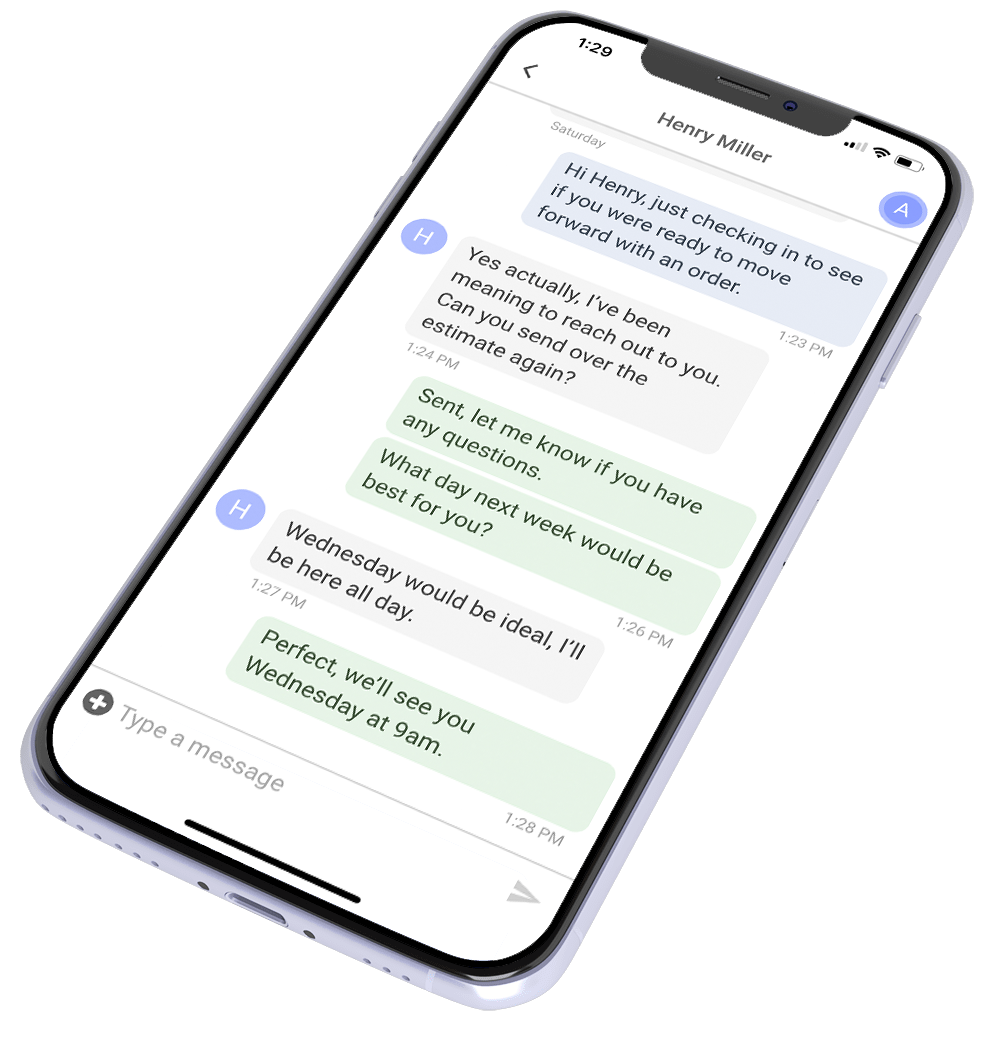
That system breaks quickly. A roofing CRM helps teams track every interaction, schedule follow-ups, and keep opportunities moving. ProLine’s communication-first CRM keeps homeowner conversations connected to each project so sales reps know exactly what happened and what needs to happen next.
The goal is simple: fewer missed opportunities and more closed jobs.
10. Follow Up Faster Than Competitors
Speed matters. A homeowner who speaks with multiple contractors will remember the company that communicates best. Fast follow-up can include:
- Sending inspection details quickly
- Answering questions after the visit
- Providing updates without being asked
- Confirming appointments
Communication is one of the few advantages every contractor can control. You cannot control whether another company has a bigger budget or more trucks. You can control how quickly and professionally you respond. Also, you should rely on old-school methods like email marketing to stay in touch with high-competition clients.
11. Build a Route Strategy
Random door knocking wastes time. Strong reps organize their territory. A better approach is:
- Prioritize streets with stronger opportunities
- Group nearby appointments together
- Revisit neighborhoods after major weather events
- Track which areas produce results
Over time, your team learns which neighborhoods convert best. A CRM with reporting tools helps managers understand which sources and territories actually produce revenue instead of relying on assumptions.
12. Pay Attention to Homeowner Signals
Not every conversation has the same potential. Learn to recognize buying signals:
- Asking about cost
- Asking about timing
- Asking about insurance
- Asking about materials
- Asking about your company history
These questions show interest. At the same time, hesitation does not always mean rejection. Sometimes homeowners simply need more information.
Good reps know when to move forward and when to continue nurturing the relationship.

13. Stand Out With Professionalism
In crowded neighborhoods, professionalism becomes a competitive advantage. Small details matter:
- Showing up on time
- Wearing proper identification
- Being respectful of the property
- Explaining the process clearly
- Following through on promises
Homeowners often compare contractors based on trust signals. The salesperson who communicates professionally creates a stronger perceived value before the project even begins.
14. Build a Follow-Up System, Not a Follow-Up Habit
Many reps say they follow up. The question is whether they follow up consistently. A real system defines:
- When the first follow-up happens
- How many attempts are made
- What communication channels are used
- Who owns the next step
Without a system, follow-up depends on memory and motivation. That is why sales organizations need tools that make communication repeatable.
ProLine helps roofing companies create structured sales processes that keep leads organized and help teams sell more jobs.
15. Measure What Actually Produces Results
The best sales teams improve because they track performance. Look at:
- Doors knocked
- Conversations started
- Inspections scheduled
- Estimates delivered
- Jobs closed
- Revenue generated
Activity matters, but outcomes matter more. A rep who knocks 100 doors with poor targeting may perform worse than someone who knocks 40 doors in the right neighborhood with the right approach. Data helps you understand what is working. Now, you’re ready to start a really profitable roofing business in your city.
Bag High-Value Clients with ProLine’s CRM
Winning high-competition neighborhoods is not about having the most aggressive pitch. It is about being the contractor who understands the homeowner better.
The best door-to-door roofing sales reps know how to identify real opportunities, explain problems clearly, and build trust through communication. They do not treat every door as a quick transaction. They understand that roofing is a relationship business. Every interaction either increases or decreases perceived value.
When your team has the right process and tools, those conversations become easier to manage. ProLine helps roofing companies build that process with a communication-first CRM designed to help contractors sell more jobs and make it home for dinner.
Door-to-Door Sales Tips FAQs
How do you get better at door-to-door roofing sales?
Getting better requires improving three areas: identifying qualified opportunities, communicating clearly, and following up consistently. The best reps focus less on aggressive selling and more on building homeowner trust.
What should roofing sales reps look for before knocking on a door?
Reps should look for signs like roof age, storm damage indicators, nearby roof replacements, and neighborhood-wide weather impact. These signals help prioritize homes where an inspection may provide real value.
How many doors should a roofing salesperson knock per day?
The right number depends on the market and sales process. However, successful reps focus on quality conversations and inspections scheduled, not just the number of doors reached.
Why do roofing sales reps struggle with follow-up?
Many reps lose opportunities because they do not have a structured system for tracking conversations and next steps. Without visibility, leads can easily disappear after the first interaction.