Choosing the best CRM for roofing contractors is not the same as choosing one for a typical office-based business. Roofing is a high-ticket, relationship-driven business where salespeople spend time in the field, homeowners expect fast communication, and every missed follow-up can cost thousands in lost revenue.
A system that only tracks project stages may give you a clean-looking dashboard without actually helping your team sell more jobs. The best CRM for roofing contractors should connect communication, sales activity, follow-up, and project visibility in one workflow. This guide breaks down the features that matter most and explains how to evaluate CRM systems before committing your team to one.
If you’re a residential roofer, this blog is a must-read for you!
Why Roofing Companies Need a Different Kind of CRM

As roofing contractors bet on tech growth in 2026, you might start looking into new kinds of CRM software solutions for your roofing business’s growth. A roofing company can have dozens or hundreds of active opportunities at different stages. One homeowner may be waiting for an inspection, another may be reviewing an estimate, another may have signed a contract, and another may have stopped responding after a proposal.
That makes roofing fundamentally different from a business where customers return every month. A homeowner may spend $15,000 or more on a roof and then not need another one for 15 or 20 years. Your company cannot rely on repeat purchases to make up for poor sales processes. Every opportunity matters.
The CRM therefore has to do more than tell you where a project is. It needs to help your team manage the relationship that gets the homeowner from initial contact to signed contract and, ideally, to a customer who recommends you to the next homeowner. That starts with communication. Choose a CRM that fits how your roofing company actually sells and operates.
Communication Is the Core of the Roofing Sales Process
Homeowners usually cannot evaluate the technical quality of a roof before hiring the contractor. They are relying on other signals to determine whether your company is trustworthy. How quickly did you respond? Did you answer their questions? Did you explain the inspection clearly? Did you follow up when you said you would? Did you keep them informed when something changed?
These interactions create perceived value. A contractor who communicates well can make a homeowner feel that their project is being handled professionally before a single shingle is installed. That trust can make a meaningful difference when the homeowner is comparing several contractors, especially when one company is offering a lower price. This is why ProLine takes a communication-first approach to CRM. The logic is straightforward:
Communication → Relationship → Revenue
Static Project Tracking vs. Communication-First CRM
One of the easiest ways to evaluate a CRM is to ask what happens when a homeowner moves through your pipeline. A traditional project tracker might show columns such as “New Lead,” “Inspection,” “Estimate,” “Sold,” and “Production.” That provides useful visibility, but it does not necessarily tell your sales team what happened between those stages.
A communication-focused CRM goes deeper. It should help your team see the conversations, follow-ups, tasks, appointments, and homeowner responses that caused the opportunity to move from one stage to another. The difference matters. A project tracker tells you where the job is. A communication-first CRM helps you understand what needs to happen next.
The Roofing CRM Evaluation Matrix
The Roofing CRM Question Nobody Is Actually Asking
1. Lead and Pipeline Management
The CRM should give your team a clear view of every opportunity and where it stands. At minimum, you should be able to distinguish between new leads, contacted homeowners, scheduled inspections, completed inspections, open estimates, sold jobs, and lost opportunities. Your sales managers should also be able to identify deals that have stalled.
Pipeline visibility becomes especially important as your company grows. An owner cannot personally remember the status of every opportunity, so the CRM has to provide that visibility for them.
2. Communication Tracking
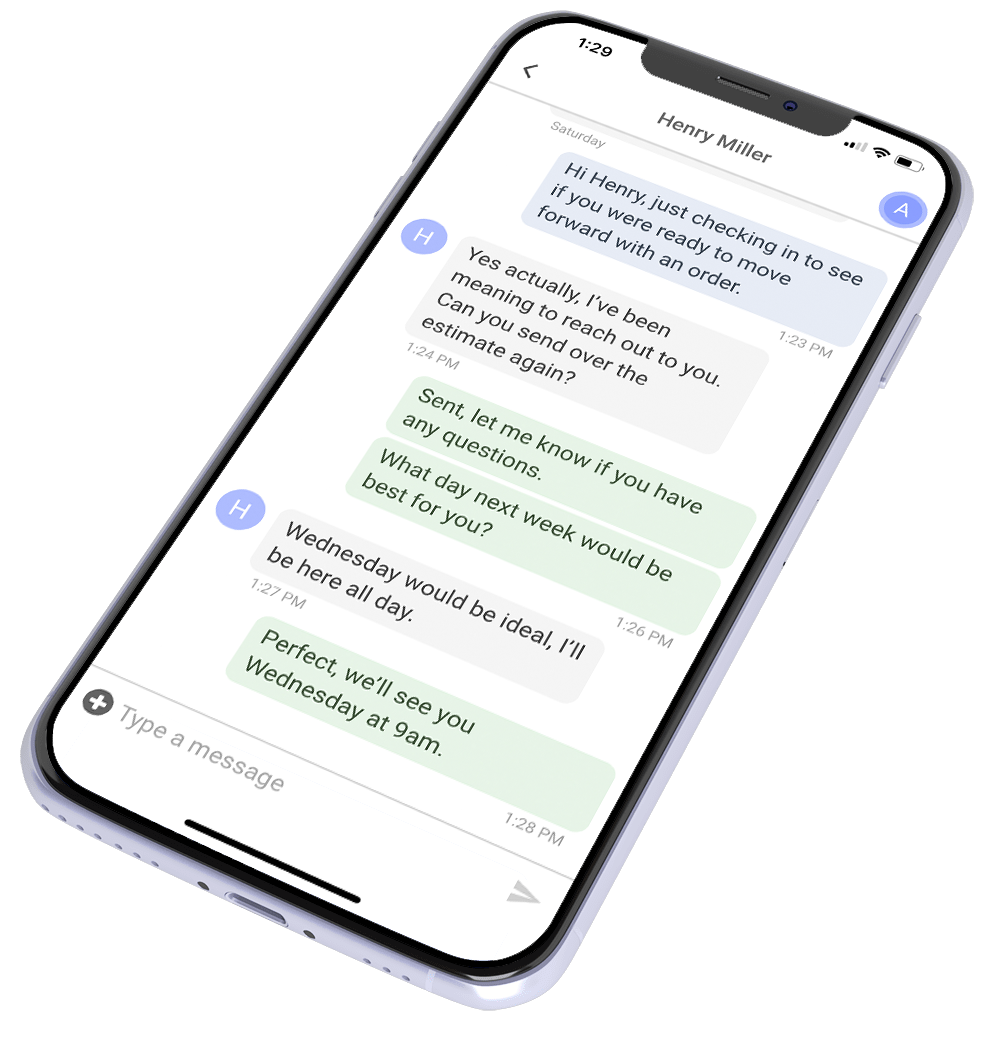
This is a major difference between roofing CRMs. Your system should keep relevant homeowner communications connected to the opportunity. That can include calls, texts, emails, notes, appointment activity, and follow-up history.
A salesperson should be able to open a homeowner’s record and understand the conversation without searching through their personal phone or inbox. That reduces confusion and prevents homeowners from having to repeat information they have already provided.
3. Automated Follow-Up
Roofing leads often require multiple touches before they become customers. Homeowners may need time to compare estimates, speak with their spouse, work through insurance, or arrange financing.
A CRM should help salespeople stay consistent without forcing them to remember every follow-up manually. Automation can create reminders and trigger appropriate communications while allowing salespeople to step in personally when the conversation requires judgment.
4. Mobile Functionality
Roofing salespeople spend much of their time away from a desk. They may be inspecting properties, knocking on doors, meeting homeowners, or driving between appointments. A CRM that works well only on a desktop creates friction.
Salespeople should be able to access customer information, update opportunities, communicate with homeowners, and complete important tasks from the field. If using the CRM is harder than using a notebook or phone, adoption will suffer.
5. Estimate and Proposal Visibility
The CRM should make it easy to understand which homeowners have received estimates and what happened afterward. This is particularly important because an estimate is not the same thing as a closed job. If a proposal has been sitting untouched for two weeks, someone should know about it.
The system should make open estimates visible and help salespeople take the next action before the opportunity goes cold.
6. Reporting and Management Visibility
A CRM should give owners more than a list of projects. You should be able to understand how many leads are being generated, how quickly they are contacted, how many become inspections, how many inspections become estimates, and how many estimates become contracts. These numbers can reveal where your sales process is working and where it is breaking down.
If lead volume is high but inspections are low, you may have a response problem. If estimates are high but contracts are low, you may have an issue with pricing, presentation, perceived value, or follow-up. Good reporting helps you find the bottleneck instead of guessing.
7. Production Handoff
The sales process does not end when the homeowner signs. Once a job is sold, information has to move into production. If sales information is incomplete or scattered across different systems, the homeowner may have to repeat themselves or deal with unnecessary confusion.
A strong CRM should make the transition from sales to production clear. The production team should understand what was sold, what the homeowner expects, and what communication has already taken place. That creates a smoother customer experience and reduces internal mistakes.
Why Communication Should Be Weighted More Heavily
Not every CRM feature deserves equal importance. A beautiful dashboard is useful. Reporting is useful. Project tracking is useful. But if your team still misses calls, forgets follow-ups, and loses homeowner conversations, the dashboard is not solving a major sales problem. Communication is the foundation because it influences both the relationship and the sale.
Consider a homeowner comparing two roofing companies. Company A sends an estimate and goes silent. Company B sends the estimate, explains the scope, answers questions quickly, follows up when promised, and keeps the homeowner informed. Even if Company A offers a lower price, Company B may create greater perceived value because the homeowner feels more confident about the process.
That is the commercial value of communication.
The CRM Should Help Reps Sell, Not Just Report
Another important question is whether the CRM is designed primarily for management or for the people actually using it. If salespeople view the CRM as a system that managers use to monitor them, adoption will feel difficult. The platform should make the rep’s job easier.
That means showing the next action, keeping homeowner information accessible, reducing duplicate data entry, and making communication easier. A strong CRM becomes part of the salesperson’s daily workflow rather than another administrative obligation.
What to Look for in CRM Automation
Automation can save your team significant time, but not all automation is equally valuable. Good automation handles repetitive work without removing the human element from important conversations. For example, the CRM might remind a salesperson to follow up after an estimate or automatically send a confirmation when an inspection is scheduled.
Poor automation sends generic messages regardless of what the homeowner actually said. The goal should be fewer repetitive tasks and better communication, not simply more automated messages.

What’s The Next Step? Choose ProLine
The best CRM for roofing contractors is not necessarily the platform with the longest feature list. It is the system that helps your team manage the relationships behind every opportunity. Static project tracking can tell you where a job sits, but roofing companies need more than status updates. They need communication history, follow-up discipline, pipeline visibility, field access, reporting, and a clear connection between sales and production.
That is why communication should sit at the center of your CRM decision. When contractors communicate faster, educate homeowners better, and follow up consistently, they create more perceived value. More perceived value can lead to more closed jobs, stronger margins, and a reputation that makes the next homeowner easier to win. So, get ProLine to make sure you have the right CRM at your disposal to get things started…
FAQs
What is the best CRM for roofing contractors?
The best CRM should combine pipeline management, homeowner communication, follow-up, reporting, and field accessibility. For roofing companies, communication should be a core part of the platform rather than a separate function.
Why does a roofing company need a CRM?
A CRM helps roofing companies organize leads, track sales opportunities, manage follow-up, and keep homeowner communication connected. It prevents valuable opportunities from being forgotten as the sales pipeline grows.
What should a roofing CRM track?
At minimum, track leads, inspections, estimates, contracts, follow-ups, homeowner communication, and production handoffs. Managers should also be able to see conversion rates and stalled opportunities.
Should roofing salespeople use the CRM in the field?
Yes. Roofing salespeople spend significant time outside the office, so mobile access is important for updating opportunities, accessing homeowner information, and communicating promptly.
Is communication more important than project tracking?
Both matter, but communication should be central because it directly affects the homeowner relationship. A CRM that tracks project status without helping your team communicate effectively can leave a major part of the sales process unmanaged.