Jon Starry built Steadfast Roofing from $3M to $17.3M in the Tampa Bay area. Rather than depending on storm-chasing, Steadfast has focused on residential retail roofing, repeatable sales systems, communication, and local reputation.
Go behind the scenes of a $20M roofing business. Here’s how a large retail roofing operation structures its people, systems, and processes.
WATCH: How Steadfast Roofing Grew from $3M to $17.3M Without Chasing Storm Damage
Systems Before Scale
Hiring people into a broken process rarely fixes the underlying problem.
A new rep who joins a chaotic pipeline inherits the chaos. A production manager without clear SOPs spends their time inventing processes instead of managing them. Headcount grows, but the owner can remain the answer to every question.
Jon took a different approach. He built sales and communication workflows before volume forced the issue and added production capacity before the team was overwhelmed.
The principle is simple: build repeatable systems before growth makes them urgent. That gives new people something structured to step into instead of asking them to invent the structure themselves.
The Sales Operation: What It Actually Looks Like
A Sales Deck Built Around Trust
Steadfast’s sales presentation focuses on reducing the trust gap between the homeowner and a contractor they may have met only hours earlier. Instead of leading with material specifications or company milestones, the presentation helps the rep explain the company, the process, the scope, and what the homeowner should expect next.
At scale, that structure matters because every rep starts from the same framework. The company depends less on individual presentation style and gains a more repeatable sales process across the team.

GBP Cluster Strategy for Local Dominance
Steadfast has focused heavily on building local visibility in the Tampa Bay communities where its team works. That includes strengthening its presence in local search, reviews, neighborhood referrals, and branded visibility.
The goal is simple: when a homeowner sees a Steadfast truck or meets a rep, the company name should already feel familiar from search results, reviews, or neighbors.
Compensation Structure That Aligns Incentives
Compensation shapes incentives. As the sales team grows, commission structure affects which jobs reps prioritize, how margin is protected, and how disputes over job ownership or profitability get handled.
What works for a three-person sales team can become difficult to administer with twelve reps, multiple handoffs, and higher job volume. The goal is a compensation model that stays understandable, rewards the behavior the company wants, and does not require constant owner intervention.
The Operating Model: What Runs the Machine
Communication-First CRM as the Central Nervous System
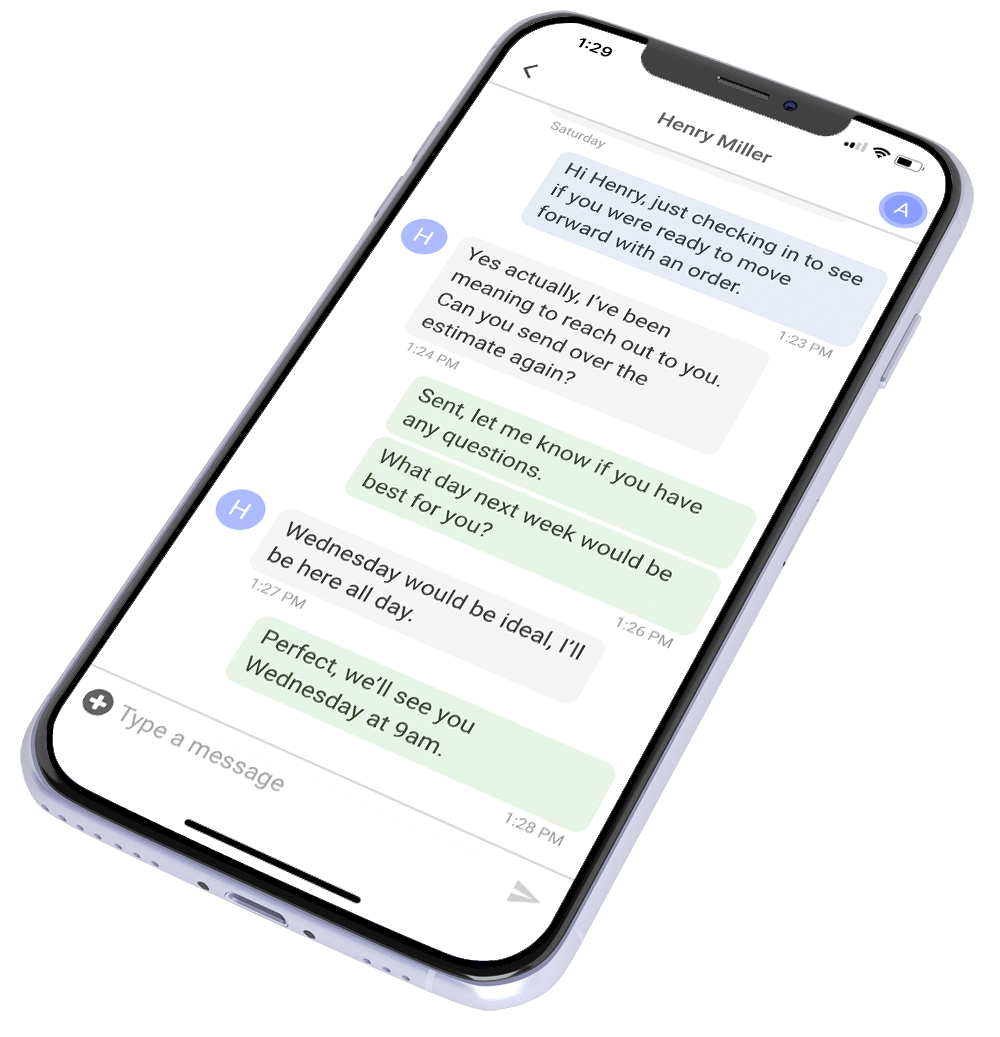
Steadfast runs ProLine to keep homeowner communication, sales activity, and follow-up connected in one system. Calls, texts, and emails can stay attached to the project record, while automations handle routine follow-up that would otherwise depend on a rep remembering what comes next.
As the company grows, that continuity matters. A rep may leave. A project may get reassigned. A homeowner may call months later. The history needs to remain with the business so the next person can understand what has already happened without rebuilding the relationship from scratch.
The same principle applies to the pipeline: clear ownership and defined next actions become more important as volume grows.
Production Staffed Early
Adding production capacity before the team is overwhelmed can feel premature, but waiting until sold work consistently exceeds operational capacity creates its own problems.
Hiring before the breaking point gives the company more room to train deliberately, maintain scheduling discipline, and avoid asking the sales team to promise dates production cannot support.
The goal is not excess headcount. It is enough capacity that growth does not immediately turn into longer install timelines, rushed hiring, and inconsistent homeowner communication.
Office Roles Defined and Documented
Scheduling, permits, customer service, invoicing. Each has a defined owner or the owner absorbs them all by default. How to run the office of a roofing company covers the role definitions and SOPs that make an office function without constant owner involvement.
An owner still answering scheduling calls at $15M isn’t running a $15M business. They’re running a $15M job.

The Growth Engine: Retail Without Storm Dependence
Steadfast’s model does not depend on a major weather event creating a sudden surge of demand. Instead, the company builds demand through local marketing, sales execution, reviews, referrals, and neighborhood reputation.
That creates a different operating challenge from storm-driven growth. The company has to generate demand consistently rather than waiting for an event to create it, which puts more weight on marketing, follow-up, sales process, and reputation.
Reviews and referrals play a major role in that model. The more homeowners see Steadfast trucks, completed roofs, local reviews, and recommendations from neighbors, the less unfamiliar the company feels when the next sales conversation begins.
Common Breakdowns Before $20M
The path from $5M to $20M has predictable breaking points. Most contractors hit all of them. The ones who scale through them built systems that removed the dependency before the breaking point arrived.
Growth exposes weaknesses that a smaller team can often work around manually. The exact breaking point differs by company, but several problems show up repeatedly:
- The owner becomes the bottleneck. Approvals, escalations, scheduling conflicts, and exceptions all route through one person, slowing the company as volume increases.
- Communication fragments. Customer history gets scattered across personal phones, inboxes, and side notes, making handoffs harder when responsibilities change.
- Compensation gets harder to administer. A structure that worked with a few reps may create ambiguity around job ownership, margin, or payouts as the sales team expands.
- Production capacity falls behind sales. Sold work increases faster than crews, scheduling, or project management capacity, stretching install timelines and putting pressure on the customer experience.
- Reporting becomes insufficient. Revenue may be growing while leadership still struggles to see which reps, markets, lead sources, or processes are driving the result.
These are structural problems. More effort inside the same process rarely fixes them for long. The fix is structural, not motivational. Pushing harder inside the same broken structure produces the same results faster.
Frequently Asked Questions
What functions usually need clearer ownership as a roofing company scales?
Sales, production, office administration, customer communication, scheduling, and financial responsibilities all need clear ownership as volume grows. The exact org chart varies by company, but the owner should become less involved in routine coordination as managers, documented processes, and reporting take over more of the day-to-day operation.
How did Steadfast Roofing grow without chasing storm damage?
Through retail marketing, a trust-focused sales presentation, strategic GBP placement across residential clusters, and an automated review and referral system that generated consistent word-of-mouth demand. The growth was systems-driven rather than event-driven, which is slower to build but far more predictable once it’s running.
What is the most important system to build before scaling?
Communication. Every other system, sales, production, office, depends on information moving reliably between people. A CRM that centralizes homeowner communication, tracks every interaction, and automates follow-up is the infrastructure everything else runs on. When communication is fragmented across tools and personal devices, every other system you build on top of it is unstable.
How do you stop being the bottleneck in your own roofing company?
Define every role with specific responsibilities and clear boundaries so decisions have a natural owner that isn’t you. Move homeowner communication into a centralized platform so it stops routing through your personal phone. Build automated follow-up sequences so the sales process doesn’t depend on anyone’s memory. Then measure outcomes by role and let the data surface who needs coaching instead of supervising every individual directly.
What commission structure works at scale?
There is no single commission model that fits every roofing company. The important thing is that the calculation remains clear as job volume, handoffs, and cost complexity increase. Gross-revenue commissions are simpler to administer, while profit-based structures can align compensation more directly with margin but require cleaner job-cost data.
The Business Behind the Revenue Number
Growing from a small roofing company into a larger operation usually requires more than adding reps and crews. Roles become more specialized, communication requires more structure, and the owner has to give up decisions that once ran through them personally.
Steadfast’s story is one example of what that transition can look like: build repeatable sales and communication systems, create clear ownership across the operation, and add capacity before growth turns every weakness into an emergency.
ProLine is a communication-first CRM built to help roofing teams keep customer communication, follow-up, sales activity, and reporting connected as the organization grows.