These days, running a roofing business without a roofing CRM feels nearly impossible. Sure, there are exceptions. Some folks make it work with Google Sheets or even manila folders. They’ve got their own systems and they’re crushing it. But most people agree. A roofing CRM makes life way easier.
So what is a roofing CRM? What does it do, exactly? Do you need one? Do you need more than one? Believe it or not, our CEO AJ has met roofers who juggle multiple CRMs at once.
This article will break it all down. We’ll explain what a roofing CRM is. We’ll compare it to other types of roofing software. You’ll see what they all have in common and what makes them different. Most importantly, we’ll walk through what your CRM actually needs to do to be worth the money.
We’ll also look at how a CRM works inside your roofing business. It’s not just for you as the owner. Your sales team sees it one way. Your manager sees it another. Everyone touches it, so it has to make sense for all of them.
By the time you finish reading, you’ll know what a roofing CRM is, what it does, and how it should work. You’ll also know what to watch out for. You’ll be ready to choose the right one, use it the right way, and get the most out of it.

What Is a Roofing CRM?
Let’s start with the basics. CRM stands for “Customer Relationship Management.” Most of the time, this means software that helps you keep track of your customers. That might sound simple, and it is. But it’s also powerful. Anything that helps you stay on top of who your customers are and what they need counts. Even if you’re using sticky notes, index cards, Google Sheets, or just your memory, you’re already using something like a CRM.
At ProLine, we say this a lot: you already have a CRM, even if it’s not a good one. Maybe it’s not even software. Maybe it’s a whiteboard or a phone notepad. Maybe you’re using tools that weren’t built for this job, but you’re forcing them to do it. That’s normal. But it raises the question. What makes something a roofing CRM?
A roofing CRM is a customer relationship manager built for roofers. That means it includes features that match the way roofers actually work. Most roofing CRMs have a job board, kind of like a Kanban board, where you move jobs through different stages. These stages follow the roofing sales process: new lead, inspection, quote, production, and so on.
It goes beyond that, too. For example, ProLine includes quoting tools built right into the CRM. It also connects with software roofers already use, like EagleView, GAF QuickMeasure, Roof Quote PRO, and others. Even services like SendJim or Dope360 can tie in. These are tools many roofers rely on, and the right CRM can bring them together in one place.
Now, here’s where things get a little mixed up. Some people think a CRM should do everything. They want a CRM that’s great at production, project management, or estimating. And sure, it’s helpful if your CRM includes those features. It’s helpful if it can manage billing, order materials, and organize trades. But here’s the truth: those things can become distractions.
Remember, CRM stands for “Customer Relationship Management.” Not “Project Management” or “Estimating” or “Material Ordering.” Those tools matter. They can be helpful. But they’re not the core job of a CRM. The real power of a CRM comes from a small group of tools that focus on one thing: building and managing relationships with your customers.
The Two Most Important Parts of Your CRM
Most roofing CRMs give you a board view. This is where you can drag and drop jobs as they move forward. New leads go in one column, inspections in the next, quotes after that, and so on. It’s kind of like a to-do list, but smarter. You can see the whole business at a glance.
Then you’ve got your project view. This is where you open a job and see everything tied to it. You’ll find the customer’s name, phone number, and email. You’ll see notes, files, and photos. Some CRMs even give you a customer portal, so they can check updates on their own.
But here’s what matters most: the board view and the communication tools. Those two pieces, together, are where the real money gets made. They’re the engine behind better follow-up, faster quoting, and stronger customer relationships. When they work well, everything else gets easier.
At ProLine, we’ve seen this again and again. Our happiest users don’t just love the bells and whistles. They’re glad we have those, sure. But what they rave about most is how easy it is to stay in touch, close more jobs, and give a better customer experience.
They’re not chasing every new feature. They’re using the CRM to do what it was built to do. Build strong, lasting customer relationships that lead to more money in the bank.
Here are the kinds of things a good roofing CRM should handle for you:
Customer communication
It should make it easy to call, text, or email your customers. Everything should happen in one place, so you’re not jumping between apps.
Automated sales nurture
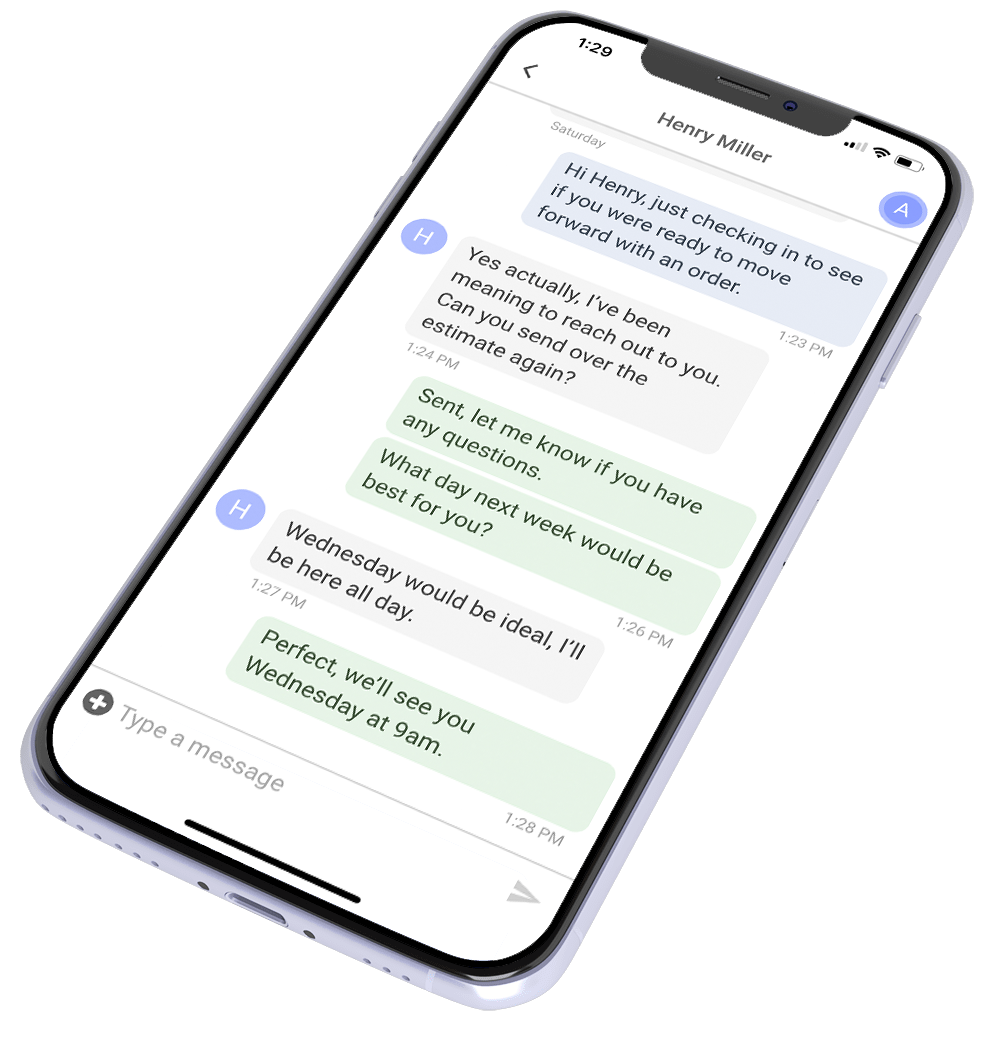
When a new lead comes in, the CRM should send messages that help move them along. It should teach them what to expect and get them ready to book.
Automated appointment reminders
Once someone books a time, the CRM should remind them. That way, they don’t forget and you don’t waste time.
Creating quotes
You should be able to build and send quotes without leaving the CRM. Some even let you send quotes from your truck before you drive away.
Automated follow-up
If someone gets a quote but doesn’t reply, the CRM should follow up for you. No more missed chances or forgotten leads.
Automated production reminders
Your CRM should let customers know what’s happening. They should get updates when the crew’s coming or when the job is done.
Referral requests
When you finish a job, the CRM should ask the customer if they know anyone else who needs a roof. This helps bring in more business.
Automated review requests
The CRM should send a message asking for a Google review. Good reviews build trust and help you win more jobs.
How a Roofing CRM Fits Into Your Business
Now let’s talk about how a roofing CRM works with your business. Every roofing company has its own way of doing things. And it’s not just about size. A $1 million company and a $10 million company can work the same way. At the same time, two $10 million companies might work totally different.
That’s why your CRM shouldn’t force your business to fit into its system. It should fit into yours. That might mean it takes a little longer to set up. You might need to adjust a few things or plan out how your team uses it. But once it’s set up, it should work with your flow, not against it.
The first thing to get right is your lead flow. You need a smooth way to get new leads from your lead sources into the CRM. If you’re typing in names by hand, that’s a nightmare. Instead, you want integrations. This might mean using Zapier or connecting directly with apps like Calendly, ProLine’s booking forms, or Facebook Ads.
Once the lead is in, the CRM should go to work. It should send the first message to the homeowner. It should know if an appointment gets booked and move that job to the right stage. You shouldn’t have to do that part by hand. Same goes for quotes. The CRM should use your price list, measurements, and margin settings to build a quote that’s accurate and ready to send.
This kind of CRM becomes more than a fancy spreadsheet. It becomes the engine that pushes your jobs forward. It doesn’t just hold information. It moves your process forward, step by step.
You’re looking for a CRM that makes giving homeowners a world-class customer experience either easy or automatic.
However you define that world-class experience, your CRM should help you deliver it. It should take the hard parts off your plate. Wowing your customers shouldn’t feel like pulling teeth. If your CRM’s doing its job, it should make your business shine without extra effort.
Who Uses a Roofing CRM?
Now let’s look at who actually uses a CRM every day in a roofing business. Different people use it in different ways. But in most companies, it breaks into two main groups: admins and sales reps. These are the people who touch the CRM most often. And how they use it and set it up makes a big difference.
For smaller roofing companies, the admin is often the owner. Maybe they’ve got a business partner helping, but usually it’s the person running the business who also sets up the CRM. They decide how the process should work. They make sure the CRM fits the flow of their jobs. It’s a one-time setup, but it’s a big deal.
Take something simple, like setting up automatic text messages. That might take an hour one afternoon. But once it’s done, it could save you an hour a day or close three more jobs a month. Either way, that’s a massive return. A little time now turns into a lot of time and money later.
Still, we see two big mistakes over and over. First, some owners only look at price. They see a CRM as just another bill. But that’s the wrong way to think about it. You’re not buying a box to check. You’re investing in a tool that can grow your business, build your brand, and help you sell more jobs.
You should choose your CRM based on return, not just cost.
The second mistake is expecting someone else to set everything up for you. And look, we get it. You’re busy. You’ve got jobs to run, crews to manage, and fires to put out. Spending two hours “working on the business” feels impossible. But sometimes, working on the business is what makes everything else easier.
If you hand off setup to someone else entirely, you’ll always rely on them. You won’t understand how things work. You won’t know how to fix issues or improve the system. Even worse, your CRM won’t match how you do things. You’ll end up changing your business to fit the tool instead of the other way around.
Someone on your team needs to take ownership of the CRM and set it up to match your process.
That might be you. Or it might be someone you trust. Either way, it has to be someone who knows how your business works and can make sure the CRM matches that. Otherwise, you’ll never get the full value from it.
Sales Reps Use It, Too
The other group that uses your roofing CRM every day is your sales team. These are the people building and managing customer relationships on the front lines. They’re the ones knocking doors, booking inspections, sending quotes, and closing deals. So the CRM has to work for them, not just for you.
But here’s the tricky part. Getting sales reps to actually use a CRM can be really hard. You might know this already if you’ve used one before. Or maybe you’re a business owner who’s tried to roll one out. Either way, adoption is a struggle. People avoid it, ignore it, or flat-out refuse to use it.
There’s a stat floating around out there that 75% of CRM rollouts fail. That’s across all industries, not just roofing. And a big reason for that is simple: people at the top don’t make it a priority, or the team just won’t use the tool. No matter how powerful a CRM is, it’s worthless if nobody touches it.
A CRM your sales reps won’t use is a CRM that won’t make you money.
So when you’re looking at CRMs or booking demos, this should be a key question: will my sales team actually use this? Is it simple? Is it helpful? Will it make their day smoother or more annoying? Because if it makes their life harder, they’ll find ways to work around it. If it helps them close more deals, they’ll use it every time.
You don’t need a CRM that just checks boxes. You need one that your reps will live in. That’s how you make it pay off.
Other People Who Might Use Your Roofing CRM
Besides admins and sales reps, there are a few other people who might need access to your roofing CRM. In some companies, you’ve got office managers who keep everything moving behind the scenes. They help answer phones, update records, and keep the team organized. They need to be able to hop in and find information fast.
Some companies also have inside sales teams. These are folks who answer calls, follow up with leads, and help book appointments. They may not be out in the field, but they rely on the CRM just as much to track leads and keep the pipeline full.
You might even want your subcontractors to have limited access. If they need to see schedules or material orders, your CRM should let them. ProLine makes this easy by letting you add limited users for free. That way, subs can see just what they need, like working material orders or certain job details, without touching the rest of the system.
Still, even with all these extra users, the core roles stay the same. It’s mostly about your admins and your sales reps. They’re the ones who use the CRM most. So when you’re picking or setting one up, focus on making sure it works for them first. If they’re taken care of, everyone else will fall into place.
Conclusion
So what’s the big picture here?
First off, CRM stands for “Customer Relationship Management.” If your CRM isn’t making life easier for your customers, then it’s not doing its job. You should be able to look at the system and say, “Yeah, this helps us give homeowners a better experience.” If not, something’s broken.
Second, your CRM should fit your process, not the other way around. If it forces you to work in a way that feels off or confusing, you won’t get far. The best CRMs are flexible. They bend to your business, not the other way around.
Third, and this one’s big: giving homeowners a great experience should feel easy or automatic. That’s the goal. The right CRM helps you wow your customers without making you jump through hoops.
Fourth, the admin side matters. Someone needs to step up and take ownership of setup. Whether that’s you or someone on your team, they need to put in the work to get it running right. And when you’re shopping for a CRM, don’t just look at the price. Look at the return. A good CRM should pay for itself.
Last but not least, your sales team has to use it. If they don’t, the whole thing falls apart. Pick a CRM they’ll actually want to live in, something that helps them close more jobs without slowing them down.
See how ProLine helps roofers close more deals with less effort. Book your free demo
Want a Quick Look First? Check out our short overview video to see how the CRM works.
Still Exploring Your Options? We reviewed the top platforms to help you decide.
Read: 8 Best Roofing CRMs for Residential Roofers