Most roofing companies are struggling because they are adding tools faster than they are evaluating whether those tools actually improve how the business runs; That problem becomes even more serious when you bring AI into a roof franchise CRM environment. Suddenly, every platform claims to “automate follow-ups,” “predict revenue,” or “optimize operations,” but very few actually integrate into the day-to-day reality of roofing work.
The real question is not whether you should use AI tools. The real question is how you audit them before they quietly introduce more complexity than value into your system.
Why AI Tools Fail Inside Roofing Franchise Systems
AI tools usually fail in roofing not because the technology is weak, but because the operational environment is unforgiving. Roofing is not a passive business. Jobs move quickly, communication is fragmented, and delays have real financial consequences.
Most AI tools are built for clean data environments. Roofing CRMs are not clean environments. They are messy, time-sensitive, and heavily dependent on human coordination between sales, production, and insurance workflows. That mismatch creates a gap where tools look impressive in demos but underperform in real-world usage.
According to McKinsey research, nearly 70 percent of digital transformation initiatives fail to achieve their intended value due to poor integration with workflows and low adoption rates across teams. In roofing terms, that means even “smart” tools fail if they don’t fit into how your team actually runs jobs every day.
What “Auditing” Actually Means in a Roofing CRM Context
Auditing AI tools is not about checking feature lists. It is about stress-testing whether the tool improves operational flow inside your roof franchise CRM or simply adds another layer of software on top of existing problems.
A proper audit answers one question: does this tool reduce friction, or does it introduce more steps into the workflow? If a tool requires extra clicks, additional training, or separate logins that disrupt your job process, it is already creating hidden operational costs. AI should simplify decision-making, not shift it into another system that’s managed manually.
Step 1: Test Whether It Actually Fits Into Your Workflow
The first and most important step in auditing AI tools is to test integration at the workflow level, not the feature level.
This means asking practical questions such as whether the tool connects directly to your CRM data, whether it updates job status automatically or requires manual syncing, and whether your team can use it without changing how they already manage jobs.
If your roofing team has to “adapt to the AI tool” instead of the tool adapting to your system, that is a red flag. A roof franchise CRM should remain the operational backbone. AI tools should plug into it, not replace core workflows or fragment them.
Step 2: Evaluate Whether It Improves Revenue Clarity
One of the most overlooked aspects of AI tools is whether they improve financial visibility.
In roofing operations, especially franchise models, revenue clarity is everything. You need to know what is closed, what is pending, what is in supplement, and what is actually collectible. AI tools should enhance this clarity, not obscure it with abstract predictions or dashboards that don’t align with real job stages.
A useful benchmark is simple. If the tool cannot clearly answer how it affects revenue per job, it is not ready for operational use.

Step 3: Check How It Handles Communication Flow
Roofing is a communication-heavy business. Every job involves multiple stakeholders, including homeowners, crews, insurance adjusters, and internal teams.
If an AI tool does not align with the communication flow inside your CRM, it creates fragmentation.
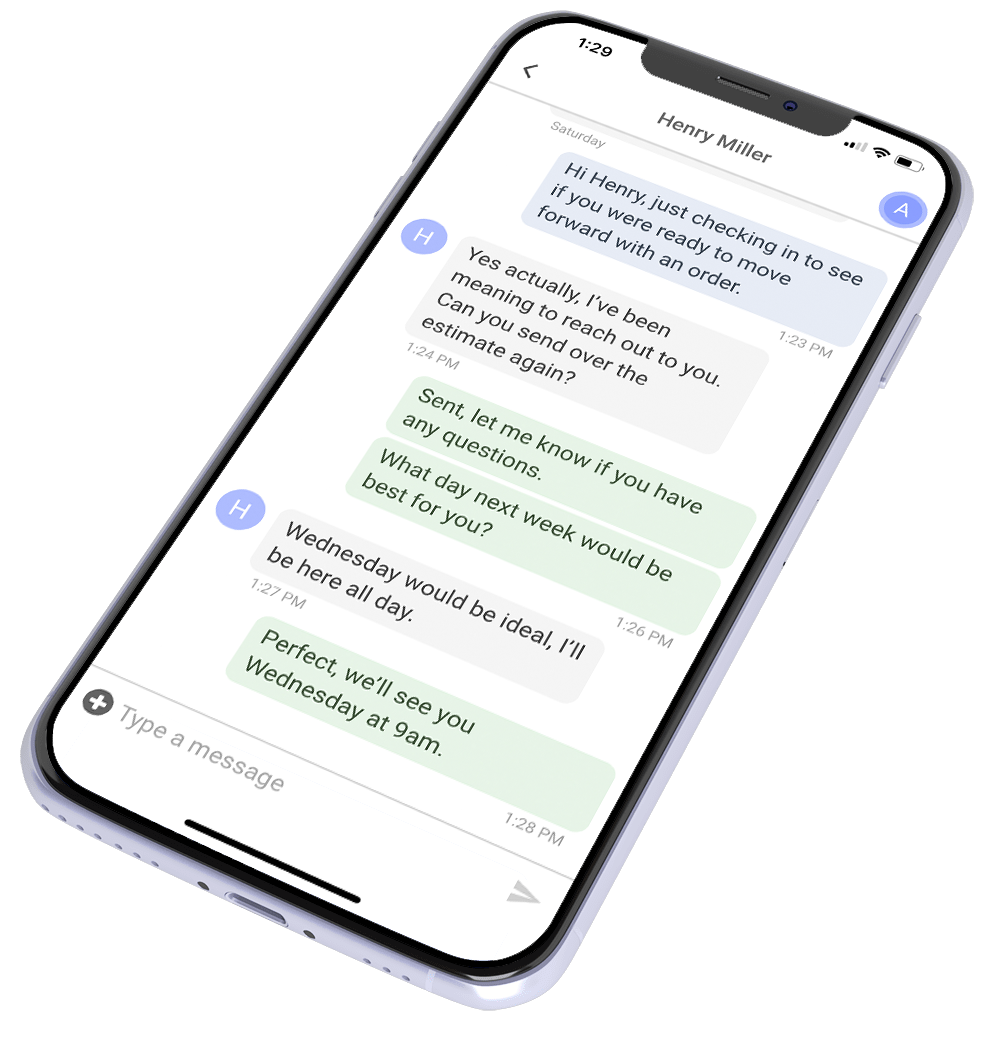
The best systems reinforce communication inside one structured environment rather than splitting it across tools, emails, and external apps. This is where communication-first systems like ProLine become important, because they centralize job communication instead of scattering it across multiple disconnected platforms.
AI tools that sit outside this communication layer often create more confusion than clarity.
Step 4: Audit Data Quality Requirements
AI tools are only as good as the data they receive. In roofing, data quality is often inconsistent because information comes from field teams, adjuster documents, and manual inputs. Before adopting any AI feature, you need to understand what data it requires and whether your current CRM can reliably supply it.
If the tool depends on perfect or highly structured data that your field operations do not consistently produce, the AI output will be unreliable. This is especially important in roofing franchise systems where multiple teams contribute to the same dataset. Inconsistent data input leads directly to inconsistent AI output.
Step 5: Measure Whether It Reduces Decision Time
One of the clearest indicators of a valuable AI tool is whether it reduces decision-making time. In roofing operations, delays in decisions often lead to delays in scheduling, delayed materials, and slower cash flow cycles.
A useful AI tool should help you answer questions faster, such as which jobs are at risk of delay, which supplements are stuck in review, and which crews are underutilized. If the tool requires interpretation rather than delivering clear direction, it is not reducing cognitive load. It is increasing it.
Step 6: Evaluate Team Adoption Reality
Even the best AI tool fails if your team does not use it consistently. Adoption is not about training sessions or documentation. It is about whether the tool naturally fits into daily workflows without forcing behavioral change.
If your production manager has to leave the CRM, open another platform, and manually interpret AI insights, adoption will drop quickly.
In roofing franchise environments, consistency matters more than sophistication. A simple system that is used 100 percent of the time will outperform a complex AI tool used only occasionally.
Common Mistakes When Auditing AI Tools
These roofing mistakes can cost you $100,000:
- Focusing on features instead of outcomes: Many contractors evaluate AI tools based on what they can do in isolation rather than what they improve in the actual workflow. Features do not matter if they do not change outcomes.
- Ignoring CRM dependency: If an AI tool does not integrate directly into your roof franchise CRM, it introduces fragmentation. That fragmentation usually leads to duplicated work and inconsistent data.
- Overestimating automation: AI does not eliminate the need for structure. If your underlying workflow is broken, AI will simply accelerate bad processes.
- Underestimating change management: Even small tools can disrupt team behavior if they require new habits. In roofing operations, small disruptions compound quickly across multiple jobs.

What a Proper AI Tool Looks Like in Roofing
A properly integrated AI tool in a roofing franchise environment does not sit outside your system. It operates inside it. It should:
- Enhance job visibility without manual input
- Support supplement tracking without separate workflows
- Improve communication clarity inside the CRM
- Reduce time spent searching for information
- Support decision-making without replacing human judgment
Why Your CRM Still Matters More Than AI
AI tools often get positioned as replacements for systems, but in roofing operations, your CRM remains the foundation. Without a structured CRM, AI has no reliable source of truth. Without job-level organization, AI cannot interpret context correctly. Without communication tracking, AI insights become disconnected from reality.
That is why roof franchise CRM systems remain the operational center of gravity, while AI should function as a layer on top… not a replacement underneath.
Audit Your AI Tools to Find the Best Option
Auditing AI tools is not about evaluating technology hype. It is about protecting operational clarity inside your roof franchise CRM. In roofing, every tool you add either strengthens your system or fragments it further. AI is no exception.
If it does not integrate into your workflow, improve revenue visibility, and reduce decision time, it will eventually become noise instead of leverage. The contractors who scale successfully are not the ones who adopt the most tools. They are the ones who adopt only the tools that improve execution inside a structured system.
If you want to bring AI into your operations without losing control of your workflow, ProLine gives you a communication-first CRM that keeps jobs, teams, and data aligned so every tool you add strengthens your system instead of breaking it apart.
FAQs
What does it mean to audit AI tools for a roofing CRM?
It means evaluating whether an AI tool improves workflow efficiency, integrates with your CRM, and enhances revenue visibility rather than adding complexity or fragmentation.
Why do AI tools fail in roofing franchise systems?
They often fail because they are not built for fragmented, real-time job environments and do not integrate properly into roofing workflows or CRM systems.
Should AI tools replace a roofing CRM?
No. AI tools should support a CRM, not replace it. The CRM remains the source of truth for job tracking, communication, and revenue management.
What is the biggest risk of adding AI tools too quickly?
The biggest risk is workflow fragmentation, where teams use multiple disconnected systems that reduce visibility and create inconsistent data.
How do I know if an AI tool is actually useful for roofing?
A useful AI tool reduces decision time, integrates directly into your CRM, improves revenue clarity, and fits naturally into your existing workflow without forcing behavior change.