A roofing business coach can help an owner sharpen pricing, hiring, sales strategy, accountability, and the way they think about the business.
But strategy still needs an operating system underneath it.
A coaching program can help a contractor decide what needs to change. The software running the business determines how consistently the team can execute those decisions when lead volume grows, reps get busy, and the owner is no longer personally managing every handoff.
That’s where software belongs in the coaching conversation: not as a replacement for strategy, but as the infrastructure that helps the strategy survive growth.
You can have the right mindset, the right sales strategy, and the right hiring plan. And still hit a ceiling because the tool managing your leads, quotes, follow-up, and communication was designed for a business half your current size.
What a Roofing Business Coach Teaches You vs. What Software Has to Execute
Coaching and software solve different problems.
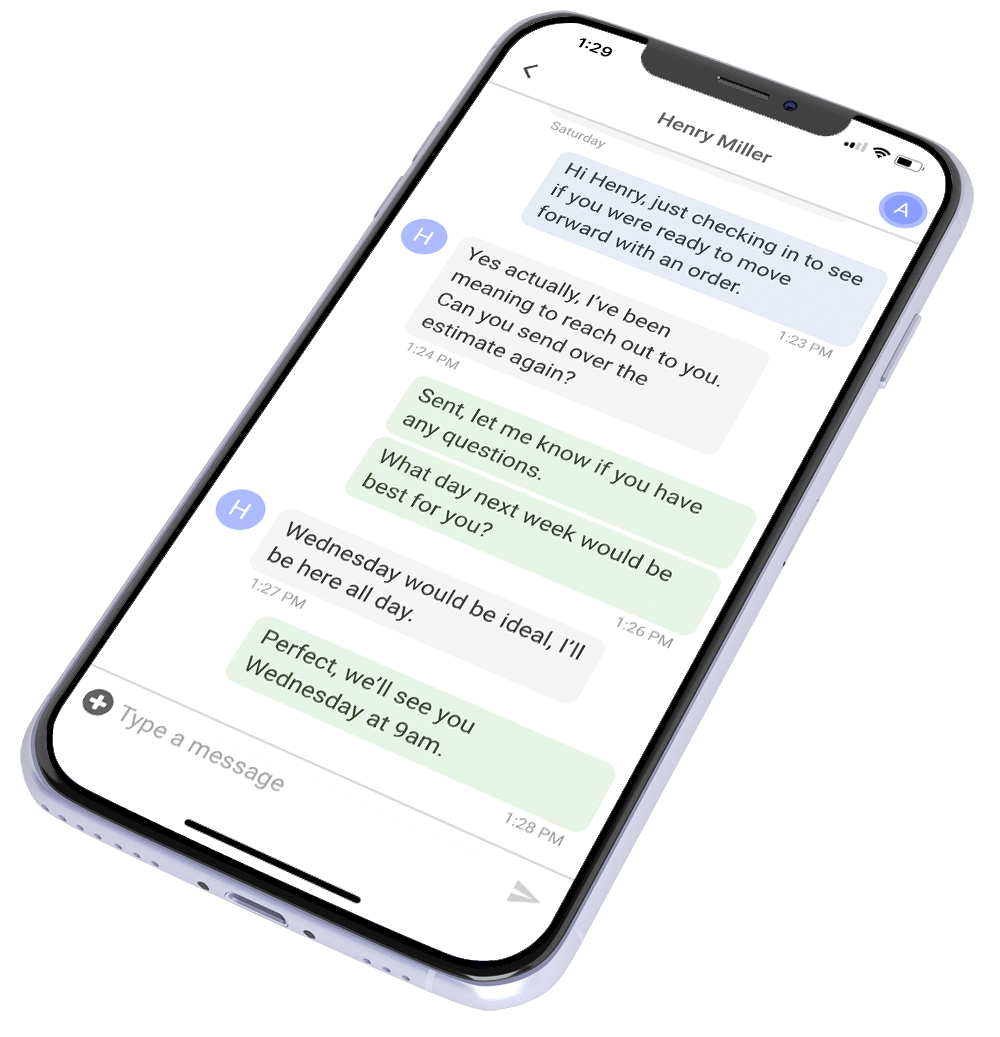
A coach may help a contractor decide that every new lead should receive a fast response. Software can make that standard easier to execute consistently when the rep is on a roof, the office is busy, or the lead comes in after hours.
A coach may help an owner rethink pricing. Quoting software can give the sales team a faster, more professional way to present the scope and explain the value behind the number.
A coach may decide that close rate needs to be tracked by rep. Reporting software can make that information easier to see without rebuilding the analysis manually every week.
The strategy tells the business what should happen. The operating system determines how easy it is for the team to make it happen consistently.
Good strategy fighting against a sloppy workflow creates unnecessary friction.
The 4 Software Gaps Most Coaching Programs Miss
1. Follow-Up That Doesn’t Depend on a Human Remembering
Coaches regularly emphasize consistent follow-up for a reason: many roofing opportunities do not close during the first conversation or immediately after the proposal.
The system question is how that follow-up actually happens.
Instead of relying only on a rep to remember every open opportunity, a CRM can automate routine touchpoints after a quote is sent. That might include a next-day check-in, another message several days later, and continued outreach based on the company’s sales process.
When the cadence is built into the workflow, follow-up becomes more consistent even when the team is busy. The rep still handles the actual sales conversation; the system helps make sure the next touchpoint does not disappear.
2. Lead Response That Doesn’t Have an After-Hours Problem
New leads do not always arrive when someone is sitting at a desk ready to respond. Calls, forms, and messages can come in while reps are on appointments, the office is busy, or the business is closed for the day.
Coaching can establish the standard: respond quickly and make the next step clear. The software question is how the business maintains that standard when a human is not immediately available.
One option is automation or an AI agent. ProLine’s AI Agents can answer inbound calls, contact new leads, qualify prospects based on configured criteria, and schedule inspections without requiring an employee to handle every interaction manually.
The point is that response coverage should be designed into the operation instead of disappearing whenever the office is unavailable.
3. Reporting That Shows the Truth, Not Just Revenue
Revenue going up can mean the business is growing. It can also mean the company is doing more work while margins stay flat or overhead grows.
That is why coaching decisions need measurable operating data behind them.
How is win rate changing by rep? Which lead sources produce revenue? Which projects generate healthy margins after costs? Is production keeping pace with sales?
Those questions can be answered manually, but reporting built into the CRM reduces the work required to assemble the picture. ProLine, for example, reports on sales performance, lead sources, project revenue and margin, production, activity, and cash flow.
4. Communication History That Survives Team Changes
Growth creates more handoffs. Reps change roles, employees leave, projects get reassigned, and customers call back months after the original conversation.
When customer communication lives mainly on personal phones or individual inboxes, those transitions become harder because the rest of the team may not have the full history.
A communication-first CRM keeps calls, texts, emails, and activity connected to the customer or project record. If ownership changes, the next person can review what has already happened before continuing the conversation.
That reduces the amount of customer context that depends on one employee remaining available forever.
What Coaching Gets Right That Software Can’t Replace
Coaching can help an owner challenge assumptions, set priorities, make difficult decisions, and build accountability around the numbers that matter.
Dave Sullivan, who says he has worked with hundreds of contractors, makes a version of this point in his own coaching: there is no universal roadmap because owners are building toward different goals.
WATCH: Roofing Business Growth Is Now On Easy Mode | Dave Sullivan
Software cannot decide what kind of business an owner wants to build. It cannot choose the right price, decide when to hire, or create accountability by itself.
What it can do is make the chosen process easier to execute and measure once those decisions have been made.
How to Know If Your Current Software Can Actually Support the Growth You’re Planning
Most roofing businesses discover their software ceiling when they’re already past it. Volume increases, cracks show, and the owner is back to doing everything manually at higher revenue than before.
The questions worth answering before that happens:
- What happens when a lead arrives after hours? Is there an acknowledgement, automated response, answering process, or clear next step?
- Can a rep build and send a proposal from the field? If not, understand how much manual work and delay the current process adds.
- What happens to customer history when a rep leaves or a project gets reassigned? Can the next person see the prior calls, texts, emails, and activity?
- Can leadership see sales performance, lead-source results, and project margins without rebuilding the numbers manually?
- What becomes harder as volume increases? Identify the steps that already depend on workarounds, duplicate entry, personal devices, or one employee remembering what happens next.
Those answers reveal where the software is supporting the operating model and where the team is compensating for it manually.
The framework for choosing roofing software that actually scales with the business covers each of these decision points in detail.

Why ProLine Belongs in the Coaching Conversation
ProLine is a communication-first CRM built specifically for roofing contractors at growth stage. Automated follow-up sequences. AI agents for after-hours leads. Mobile quoting that produces a signed proposal before leaving the driveway. Reporting that surfaces close rate and pipeline health without manual work.
For coaches who work with roofing contractors at scale, ProLine’s coaching partner program is specifically designed to let coaches deploy and manage ProLine across their client base, giving every client a system that actually supports what the coaching program is teaching.
And for contractors working with a roofing business coach right now, the most useful question to ask is whether the software running the business can execute the strategy the coaching program is building. How to grow a roofing business systematically covers the operational side of that growth in detail.
Frequently Asked Questions
What does a roofing business coach actually do?
A roofing business coach can help an owner improve strategy, accountability, pricing, hiring, sales process, financial discipline, and business structure. The exact focus varies by coach and program. Software plays a different role by supporting the workflows used to execute and measure those decisions.
Can software replace a roofing business coach?
No. Software and coaching solve different problems. A coach can help leadership decide what to change and build accountability around those decisions. Software can help the team execute repeatable workflows, centralize information, automate routine steps, and measure results. One does not automatically replace the other.
What software gaps often become more visible as a roofing company grows?
Fragmented customer communication, inconsistent follow-up, manual reporting, duplicate data entry, and gaps in lead response can all become harder to manage as volume increases. Which one matters most depends on the company’s existing process and where opportunities are being lost.
How do I know if my roofing software is limiting my growth?
Warning signs include employees relying on personal texts or spreadsheets to fill gaps in the CRM, slow lead response when the office is unavailable, customer history becoming difficult to recover during handoffs, and reports requiring extensive manual work. None automatically means the platform must be replaced, but each is worth investigating.
Is ProLine used by roofing business coaches?
Yes. ProLine has a coaching partner program specifically designed for consultants and coaches who work with roofing contractors. It lets coaches deploy and manage ProLine across their client base, standardize the sales and communication workflows the coaching program recommends, and monitor performance across multiple clients from a single view.
The Growth Strategy and the System Have to Match
A roofing business coach can help an owner decide what the business should do differently. Software helps turn those decisions into repeatable workflows the team can actually follow.
The better those two layers fit together, the less manual effort it takes to maintain the process as the business grows.
ProLine is built to support roofing sales and communication workflows with centralized customer communication, automated follow-up, mobile quoting, AI-assisted lead response, and reporting.
The strategy still belongs to the business. The software’s job is to make execution easier.