Did you think choosing the best roof measuring tools would be child’s play? A roof measurement might look like a small step in the estimating process, but it quietly shapes everything that follows. If the numbers are clean, the job flows smoothly.
- Materials arrive on time.
- Crews work efficiently.
- Estimates match reality.
- Homeowners feel confident signing the contract.
When the numbers are wrong, the entire project feels it. Material orders run short. Extra bundles appear on the invoice. Labor hours stretch longer than expected. Supplements pile up. And suddenly, a job that looked profitable on paper becomes a frustrating lesson.
That is why roof measurement technology has evolved so quickly over the past decade. We can see that contractors today commonly rely on three approaches when preparing estimates:
- Handheld measurements taken directly on the roof
- Satellite imagery reports generated remotely
- Drone-based aerial inspections
Each approach solves a different problem. Each carries tradeoffs in speed, safety, & precision. Understanding how they compare helps you choose the right tool for each job while protecting both your crews and your margins. Automation in roofing can help you cut costs and become more efficient at your work. This blog will explain whether drones/satellites are better for your crew.
Handheld Roof Measurements: The Traditional Approach
For decades, handheld measurement was the standard method for sizing a roof. You climb the ladder, step onto the shingles, and measure ridges, valleys, and edges manually. Many contractors use tape measures, measuring wheels, or laser tools to capture dimensions and calculate squares. This method offers one major advantage: you see the roof directly.
While measuring, you can also inspect important details like flashing, ventilation, decking condition, and signs of water intrusion. These observations often help you explain problems to homeowners in simple terms. Being physically present helps you identify structural complexity that may affect labor time or material requirements. However, handheld measurement comes with limitations that become obvious as your company grows. Such as these limitations:
- First, it requires time. Driving to the property, setting up ladders, measuring slopes, and documenting notes can easily consume an hour or more per inspection.
- Second, it introduces safety risks.
Roofing consistently ranks among the most hazardous construction occupations. The Occupational Safety and Health Administration reports that falls remain one of the leading causes of fatalities in the construction industry. Even experienced contractors encounter slippery shingles, steep pitches, or fragile decking. So, manual measurements are risky.
Finally, handheld measurement limits how many estimates you can complete each day. Travel time alone reduces efficiency when you are quoting jobs across a large service area. Thus, for detailed inspections alone, handheld measurements remain valuable even in 2026.
Satellite Roof Measurements: Fast and Convenient
Satellite-based measurement tools changed the estimating process by allowing contractors to size a roof without visiting the property. These systems analyze high-resolution aerial imagery and convert it into roof diagrams, dimensions, and estimated material quantities.
Services such as EagleView, Hover, GAF QuickMeasure, and RoofScope are widely used in the roofing industry because they allow contractors to generate reports quickly while responding to homeowner inquiries. They eliminate the need to climb ladders and risk falling.
Satellite measurements are especially great for early-stage estimates when you need to provide a proposal quickly. Instead of scheduling a site visit, you can review a digital roof diagram and prepare a quote within minutes. This approach works particularly well for:
- Preliminary estimates
- Storm restoration work when many homes need inspection
- Rural or hard-to-reach properties
- Situations where homeowners request quick pricing before committing to an inspection
Satellite reports also help contractors respond to leads faster, which matters more than many people realize. Research from Harvard Business Review found that companies responding to leads within one hour are significantly more likely to convert those prospects into customers.
Speed creates opportunity. However, satellite measurements are not perfect.
- Complex roofs with dormers, intersecting slopes, or unusual overhangs sometimes confuse automated measurement systems.
- Another limitation is image freshness. Satellite photos may be months or even years old, depending on the location. If a property has recently added solar panels or structural changes, the imagery might not reflect the current conditions.
For these reasons, many contractors use satellite reports as a starting point rather than the final measurement.
Drone Roof Measurements: Precision Without Climbing
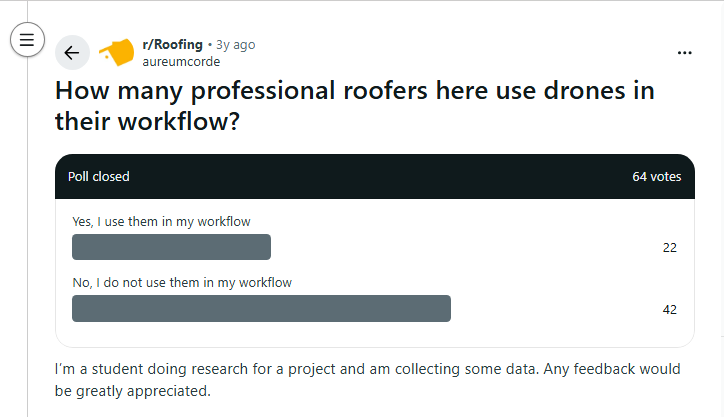
A Redditor opened this poll three years ago, asking roofers about their usage of drones in daily work. One-third of respondents said they used drones to measure roofs. However, other roofers replied by explaining that drones didn’t generate detailed inspections, so they needed to climb a roof to actually see what’s up there. This shows us the flaws and potential of drones.
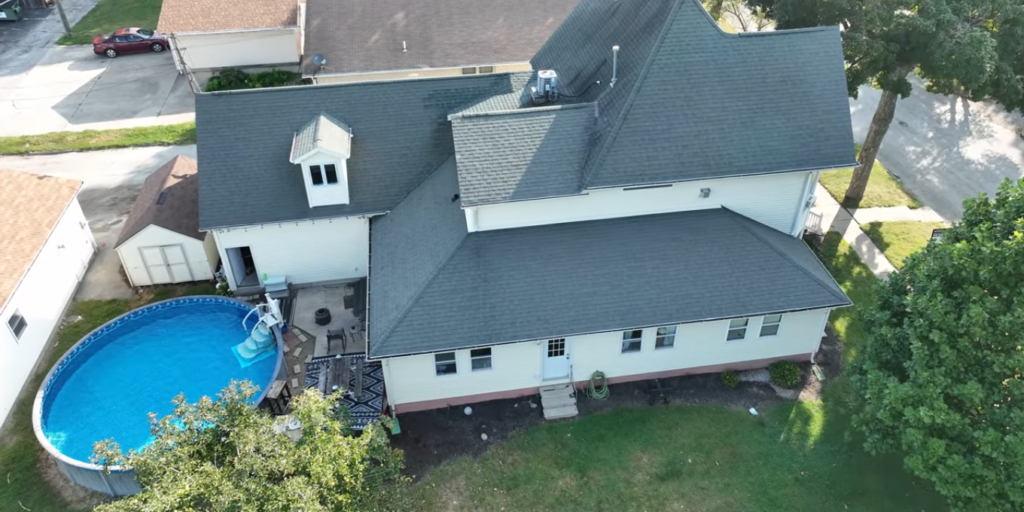
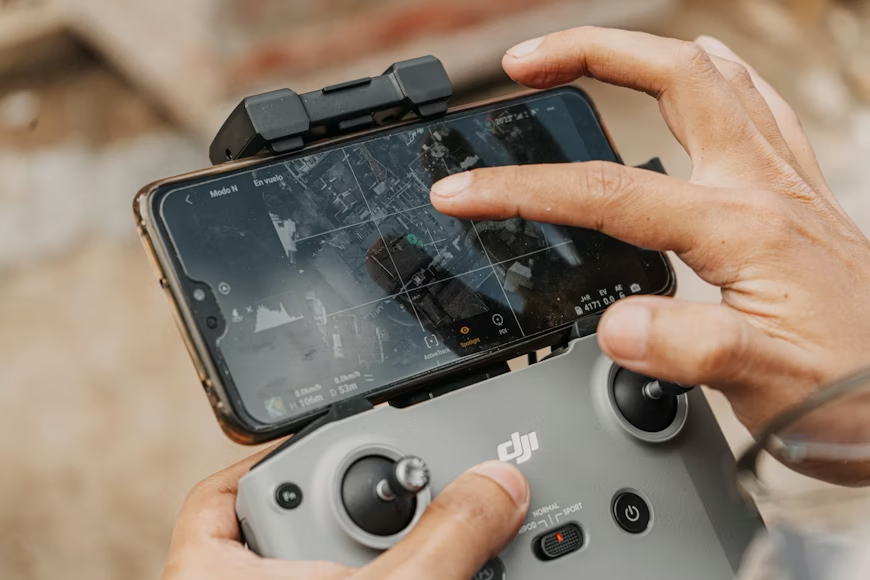
Drone technology has introduced a powerful middle ground between manual inspection and satellite imagery. Instead of relying on distant satellite photos, drones capture high-resolution images directly above the property. Those images can then be processed into detailed roof diagrams and measurement reports. Drones are especially great for complex roofs where valleys, pitch breaks, and dormers make measurements more challenging.
- The imagery is current. You capture the photos yourself, which means the report reflects the exact condition of the roof that day.
- Drones provide excellent visibility from multiple angles. This helps estimators understand roof geometry without stepping onto steep slopes.
- Drones improve safety by reducing how often estimators need to walk on fragile or high-pitched roofs.
Drone Adoption and Ethical Concerns
Drone adoption has grown rapidly across industries. The Federal Aviation Administration reports that more than 383,000 commercial drones have been registered in the United States, reflecting widespread commercial use in fields such as construction, inspection, and surveying. Also, this market is worth around $200m today, but is expected to exceed $889m in the next 9 years.
Even laypeople are using drones to survey their leaking roofs. You can use drone hail damage software to inspect clients’ houses. But therein lies the problem, i.e., many clients complain that roofers are using AI to generate images of roofs, which can lead to hallucinations and incorrect estimates. Secondly, insurance companies often use drones to look for damage without alerting the homeowners, sometimes demanding repairs worth $18k based on Google Earth images.
Of course, drones also require training and compliance with aviation regulations. Commercial operators must follow FAA rules regarding registration, flight visibility, and restricted airspace.
All of this shows that roofing isn’t an AI-proof industry, but AI isn’t always welcomed here.
Choosing the Right Measurement Method for Each Job
The most successful roofing companies rarely rely on a single measurement method. Instead, they combine tools depending on the situation.
A typical workflow might look like this: You start with a satellite report to generate a quick estimate. If the homeowner wants a detailed inspection, you capture drone imagery to confirm measurements and document roof conditions. Finally, before installation begins, your crew performs a physical inspection to verify structural details.
This layered approach provides three benefits.
- You move quickly when responding to leads.
- You maintain accuracy when planning installations.
- You reduce safety risks during early inspections.
Choosing the right method is not about replacing traditional measurement. It is about building a system that supports speed, precision, and safety at the same time.
Keeping Measurement Data Organized
Even accurate measurements can cause problems if the information becomes difficult to manage. Many contractors store inspection photos on their phones, measurements in spreadsheets, and homeowner messages in text threads. When details are scattered across multiple tools, mistakes become inevitable.
A measurement might get lost. A note might disappear. A photo might never reach the production team. That is why many roofing companies rely on systems that organize the entire job file from the first inspection to the final invoice.
A communication-first CRM like ProLine allows you to attach roof measurements, inspection photos, and homeowner conversations in one place. When your team can quickly access every detail of the job, communication becomes smoother, and decisions happen faster.
Measurement Mistakes That Cost Roofing Companies Money
- One common mistake is relying on a single data source without verification. Satellite reports, drone diagrams, and manual measurements all have strengths, but cross-checking numbers helps prevent surprises during installation.
- Another issue involves underestimating roof complexity. Dormers, valleys, and steep slopes increase labor time and material waste. Estimators who focus only on square footage often overlook these factors.
- Weather conditions also affect measurement accuracy. Wet or icy surfaces make physical measurements dangerous and unreliable, which is why aerial inspection tools often provide safer alternatives.
- Finally, poor documentation can cause problems long after the inspection ends. When photos, diagrams, and notes are difficult to locate, contractors may need to revisit the property or redo their work.
Measure Smarter, Sell Faster, and Stay Safer
When measurements, photos, job notes, and homeowner conversations live in one system, your team can move faster without losing track of details. That clarity helps you close more jobs, communicate better with customers, and avoid costly surprises during installation.
That is exactly where ProLine helps. A communication-first CRM keeps inspections organized, follow-ups consistent, and job details accessible so you can sell more jobs while keeping your schedule under control. With the right systems in place, you can manage your jobs, keep your customers informed, and still make it home for dinner. So, get started today!
FAQs | Best Roof Measuring Tools & Methods
What is the most accurate way to measure a roof?
Handheld measurements taken directly on the roof have traditionally been considered the most precise because you can verify every dimension in person. However, modern drone imaging & high-resolution satellite reports provide accurate measurements when reviewed carefully.
Are drone roof measurements safe and legal?
Yes, drone inspections are legal in the United States when operators follow Federal Aviation Administration rules. Commercial drone pilots must register their aircraft.
How accurate are satellite roof measurement reports?
Satellite measurement reports are generally reliable for standard roof designs. However, roofs with complex geometry, multiple dormers, or steep pitch changes may require additional verification during a physical inspection.
Do roofing contractors still measure roofs manually?
Yes, many contractors still perform physical inspections to confirm structural conditions, flashing, and ventilation, even when they use aerial measurement tools for initial estimates.
Which roof measurement method is great for fast estimates?
Satellite reports are often great for quick estimates because they allow contractors to generate measurements without visiting the property. Many roofing companies use them to respond quickly to homeowner inquiries.