Growth exposes every crack in your process. Missed calls. Lost photos. Estimates scattered across three apps. That’s when most contractors realize something loud and simple. The tools that got you here won’t get you to the next stage.
And that’s where choosing the right roofing software becomes a turning point, not a tech decision.
Roofers who scale don’t chase shiny features. They look for systems that cut noise, tighten communication, and keep jobs moving even when the schedule explodes. The wrong platform slows you down. The right one turns a small crew into a sharp, reliable machine.
This guide shows you how to spot software that grows with your company instead of holding it back.
The “Looks Good on a Demo” Traps
Most roofing software looks sharp in a demo but falls apart the minute real work starts. You’ve seen it. The polished screens. The smooth clicks. The sales rep promising it will change your life. Then storm season hits, crews need updates, leads flood in, and you realize the truth most roofers eventually say out loud: your roofing CRM sucks once it touches real pressure.
A lot of these tools were built by people who’ve never stepped on a roof. They don’t understand what your day looks like. They don’t get that you need to snap photos with gloves on or give job updates while balancing on a ladder. So the software feels stiff and slow instead of helping you move.
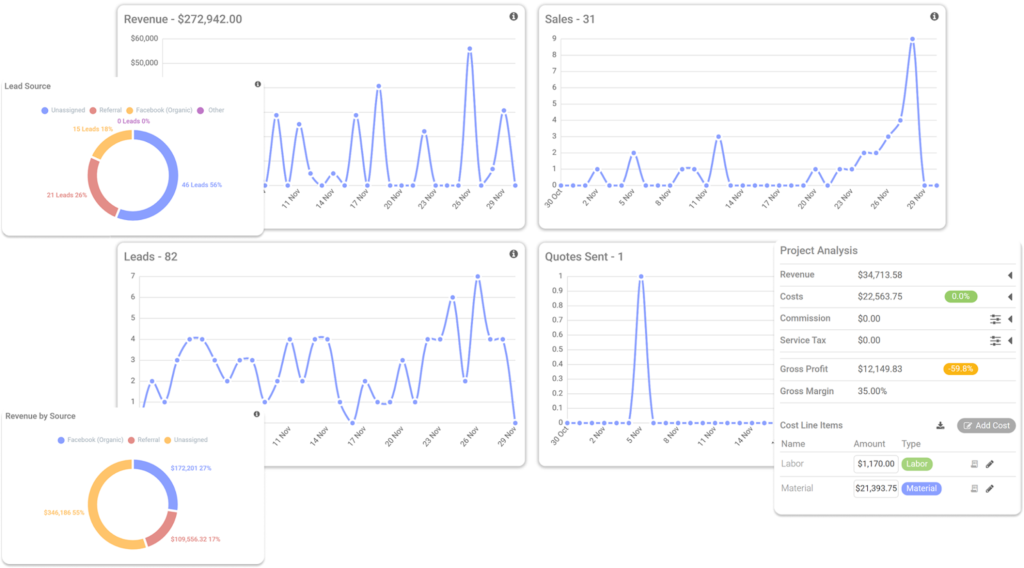
And those fancy dashboards that looked impressive during the pitch? They become anchors the second your schedule gets packed. Too many tabs. Too many filters. Too many clicks just to find the one detail you need. When you’re juggling inspections and homeowner calls, you don’t need pretty charts. You need something fast.
Here’s where the cracks get even worse:
- Automations that buckle during busy weeks
- Message delays that make you look unresponsive
- Buried notes that crews can’t find
- System “quirks” that only show up when you’re slammed
These hidden limits stay invisible until storm season punches your business in the mouth.
The Playbook for Choosing Roofing Software Built for Roofers, Not Tech People
Scaling exposes weak tools fast. When jobs stack up and crews spread out, software either supports your day or jams every gear in your operation. And with cloud-based roofing platforms exploding across the industry, the pressure to choose wisely is real. The U.S. now accounts for 32 percent of global roofing estimating software adoption, and nearly half of contractors say they want one thing above all: a platform that keeps all communication and job data in one place.
Here’s the real playbook for selecting tools built for roofers, not tech people.
Lead Capture That Fires the Second a Homeowner Reaches Out
Speed closes contracts. If your software waits to “sync,” “refresh,” or “load,” you’re already losing ground. The right platform grabs the lead immediately and kicks off follow-up before the competitor even sees the notification.
There’s a reason companies using CRM systems report:
- 29 percent higher sales
- 34 percent more sales productivity
- 42 percent better forecast accuracy
All tied to faster lead capture and consistent follow up.
If your system slows that down, it’s not built for growth.
A Communications Hub That Stops the Text Chaos
A scaling roofing company can’t run on scattered messages. Everything needs a home base. One spot where calls, texts, and emails stay organized so no homeowner feels forgotten.
Look for:
- Instant text and call tools
- Simple templates for updates
- Reliable outbound communication during peak weeks
- Reminders that fire without you babysitting them
ProLine stands out here because it was built by people who understood one simple truth. Roofers don’t need more data. They need cleaner communication that cuts through the noise and keeps every job moving.
Job Timelines Your Crew Can Check Without Calling You
When you’re growing, you can’t be the walking update board. Crews should see the job status without blowing up your phone. Good software makes job timelines clear at a glance:
- What’s approved
- What’s pending
- What’s scheduled
- What still needs homeowner action
If your team still relies on group texts or memory to track a job, that’s one of the clearest signs you’re picking the wrong roofing CRM.
Document Handling That Never Turns into a Scavenger Hunt
Every roofing job produces a mountain of files. Photos. Estimates. Contracts. Insurance reports. If the software turns all of this into a digital scavenger hunt, it’s not built for a growing team.
You want:
- Fast capture in the field
- Automatic sorting
- Easy access for crews and office staff
- Zero digging through folders
The right tool makes documentation clean and instant, not a daily chore.

When Your Software Quietly Costs You Money
Most roofing companies don’t stall because of bad installs or weak crews. They stall because their software chips away at time and money in ways that are subtle but constant. You feel it the moment work gets busy. That creeping frustration where you start to hate your CRM without knowing exactly why.
- It often shows up when a quick task turns into a twenty-minute detour.
Updating a job should take seconds, but instead, you’re clicking through cluttered screens. Sending a quote should be simple, yet the system asks for three extra steps every time. Scheduling an inspection becomes a guessing game because the calendar never shows what you need. These small drags add up across an entire week.
- Homeowners feel the impact too. Slow replies make them nervous.
They don’t see your workload. They only see the delay. When the software slows down your ability to answer, they start doubting whether you’re organized enough to handle their roof. In insurance work especially, hesitation from a homeowner often means the job slips away.
- Crews get caught in the slowdown as well.
Missing notes. Lost photos. Updates that never appeared. Suddenly, your team is waiting on information you assumed the CRM delivered. When a crew stands idle for ten minutes here and twenty minutes there, it erodes your profit on every job.
- And then the day ends, and you’re doing admin work instead of resting.
Sorting documents. Rebuilding timelines. Fixing details the system should have captured correctly the first time. These late-night tasks aren’t just annoying. They drain the energy you need to run the business tomorrow.
The Three Test Rules of a Scalable System
Most roofing software works fine when things are slow. The real test is what happens during your busiest week of the year when calls stack, crews spread out, and homeowners want answers right now. That’s when weak systems break and strong ones prove their worth.
Put every platform through these three tests before you trust it to grow with your company.
Test 1: It Must Make You Faster on Day One
If you need a training manual just to send a follow-up, the tool will drag you forever. A system built for roofers should save time immediately.
Ask yourself:
- Can you move through your daily tasks quicker
- Can you send updates without hunting for buttons
- Does it help you respond faster to new leads
When contractors try ProLine, this is usually the first thing they notice, speed picks up right away because the workflow matches how roofers already operate.
Test 2: It Must Remove Steps, Not Add Them
Growth exposes clutter. Software should clean up your process, not bury you in more clicks.
A scalable tool should:
- Cut out duplicated work
- Simplify follow up
- Keep everything in one place
- Trigger actions automatically when you don’t have time
This is where ProLine’s design makes a difference. The platform focuses on clear communication and quick movement instead of piling on features that slow you down.
Test 3: It Must Hold Up During Your Busiest Storm Week
Your slow season doesn’t matter. The software has to perform when:
- Leads jump from five a day to forty
- Crews need updates while you’re on another call
- Homeowners expect fast, steady communication
- Adjusters shift plans at the last minute
Some tools choke when the pressure hits. Others stay smooth because they were built for these moments. ProLine was shaped around storm season realities, which is why contractors lean on it when the chaos starts.
FAQs
What is the best roofing software?
The best option is the one that makes you faster, keeps communication clean, and doesn’t collapse during busy weeks. Roofers usually pick tools that handle lead capture, follow-up, and job tracking in one place.
How much does a roof CRM cost?
Plans usually range from about $60 per user to thousands per month, depending on features like calling, automation, and reporting.
Build the Company Your Future Crew Will Thank You For
Scaling a roofing business gets easier the moment your software stops fighting you and starts carrying real weight. The right system speeds up your day, keeps homeowners confident, and gives your crews the clarity they need to move without constant check-ins. That’s how companies grow without burning out the people running them.
If you want software that fits the way roofers actually work, fast, clear, and communication-first, it’s worth seeing how ProLine handles a real job from lead to close.
Book a demo and get a look at the tools built to help you sell more jobs and still make it home for dinner.