What makes roofing lead conversion so important yet tricky? A roofing estimate is not a closed deal, but it is far too valuable to forget. Homeowners may need weeks or months to make a decision, compare contractors, talk with their insurance company, or find room in their budget. If your sales team only follows up for a few days, you can lose opportunities that were never truly dead.
A strong roofing lead conversion system gives every estimate a defined next step, keeps communication consistent, and continues nurturing homeowners long after the initial proposal. The goal is simple: make sure no legitimate opportunity disappears because a salesperson forgot to call, send an update, or check back at the right time.
Why Roofing Leads Need a Longer Follow-Up Window

Roofing sales does not always follow the clean timeline that sales managers want to see on a spreadsheet. A homeowner can request an inspection today, receive an estimate next week, and still not be ready to make a decision. They might need to discuss the project with a spouse, compare financing options, wait for an insurance decision, or simply think about spending $15,000 or more on a new roof.
That delay does not necessarily mean the opportunity is lost. It means the homeowner is not ready yet. This is especially important because roofing is a high-ticket, one-time purchase. Most homeowners are not going to replace their roof again for another 15 to 20 years, so your salesperson cannot rely on a future repeat purchase to recover the cost of acquiring that customer.
Every legitimate opportunity deserves enough follow-up to determine whether it can eventually become revenue. The problem is that salespeople are human. They forget. They get busy with new leads, inspections, production issues, and homeowners who are ready to buy right now. Without a system, yesterday’s estimate gets pushed aside by today’s opportunities. That is where a structured conversion process becomes valuable.
What a Roofing Lead Conversion System Should Do
A lead conversion system should answer one basic question at every stage: What happens next?
When a homeowner becomes a lead, the system should capture their information and assign an appropriate status. Once the inspection happens, the opportunity should move into the next stage. When the estimate is delivered, there should be a defined follow-up schedule. If the homeowner says they are not ready, that should change the timing of the next contact rather than ending the relationship.
A useful system should also make it obvious when something is stuck. If an estimate has been sitting untouched for two weeks, the salesperson should not have to remember it from memory. The system should surface the opportunity and tell the rep what needs to happen.
That visibility is one of the biggest differences between a sales process and a collection of individual salespeople managing their own notebooks, spreadsheets, and phone reminders.
Start by Defining Your Lead Stages
Before automating anything, define the stages of your roofing sales process. Your exact pipeline will depend on your company, but a simple structure might look like this:
- New lead
- Contacted
- Inspection scheduled
- Inspection completed
- Estimate presented
- Follow-up
- Verbal approval
- Contract signed
- Lost or deferred
The important part is not the exact names. It is making sure every opportunity has a clear place in the process.
A homeowner should never be sitting in your CRM as simply “active.” That tells the salesperson almost nothing. If the homeowner received an estimate three days ago and said they wanted to talk to their spouse, that context matters.
If another homeowner has been waiting for an insurance supplement decision, that requires a completely different follow-up strategy. The more accurately your pipeline reflects reality, the easier it becomes to decide what should happen next.
The Follow-Up Math Roofing Companies Get Dead Wrong
Build a Follow-Up Sequence Around the Estimate
The estimate is one of the most important points in the roofing sales process because the homeowner has now seen what you recommend and what it will cost. This is where many sales teams make a mistake: they treat sending the estimate as the end of the sales process. It is actually the beginning of a different conversation.
A strong follow-up sequence should change based on what happened during the presentation. If the homeowner is ready to move forward, the next communication should focus on signing and scheduling. If they are comparing contractors, the salesperson should reinforce the value of the company’s proposal and answer questions. If they simply need time, the follow-up should keep the relationship alive without becoming annoying.
The system should automate reminders and routine communication while allowing the salesperson to personalize important conversations. Even if you get free roofing leads, follow-up can help nurture those leads and keep viable opportunities moving.
One study found that more than 4 in 10 sales reps follow up only once; don’t repeat this mistake. Build a proper follow-up sequence to boost your roofing business.
The First 30 Days Matter
The first month after an estimate is presented is usually when the sales team should maintain the most active contact. The exact schedule will vary by company, but the principle is simple: do not send an estimate and disappear.
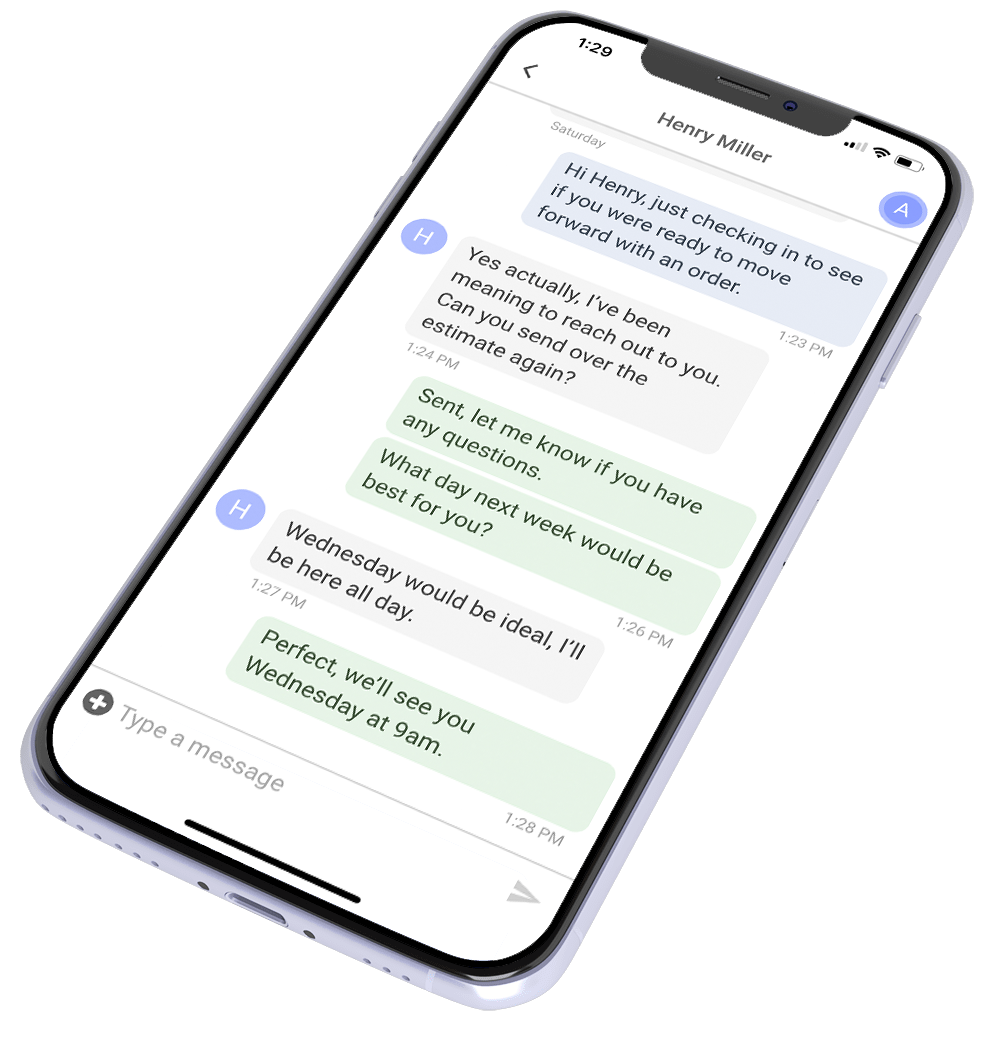
The first follow-up can confirm that the homeowner received the proposal and give them an easy opportunity to ask questions. Subsequent communication can address common concerns, clarify scope, provide relevant project information, or simply check whether the homeowner has made a decision.
The goal is not to bombard them with messages. It is to remain available and demonstrate that your company is still engaged. That matters because communication is one of the few signals homeowners have when evaluating a roofer. A contractor who consistently answers questions and follows through can create more perceived value than a contractor who offers a lower price but becomes difficult to reach.

Do Not Abandon the Lead After 30 Days
This is where a long-term nurture system becomes especially valuable.
Some homeowners simply need more time. A roof may not be leaking badly enough to require immediate replacement. A family may need to wait for a bonus, tax refund, insurance payment, or another financial event. Someone may have received several estimates and still be deciding which contractor they trust. If your CRM marks that homeowner as “lost” after 30 days, you may never contact them again.
Instead, create a deferred or nurture stage for opportunities that remain viable but are not ready today. The communication frequency can decrease, but the relationship should not disappear. For example, a homeowner who is not ready this month might receive occasional educational or project-related communication over the following several months. The objective is to remain relevant without treating every message as a sales pitch.
Build a 12-Month Nurture Strategy
A 12-month nurture strategy does not mean calling the homeowner every week for a year. That would quickly become irritating. It means creating a structured system that knows when to re-engage the homeowner and why.
During the first few months, follow-up can be relatively frequent because the project is still fresh. As time passes, the communication can become less frequent and more useful. Seasonal maintenance reminders, information about roofing materials, storm-related inspections, warranty information, or answers to common homeowner questions can provide legitimate reasons to stay in touch.
The system should also respond to homeowner behavior. If someone opens a message, responds to a text, requests additional information, or asks for another estimate, the opportunity should move back into active sales follow-up.
Automation should not create a rigid sequence that ignores what the homeowner does. It should create a framework that helps your team respond to those signals.
Use Automation to Eliminate Forgotten Follow-Ups
The simplest benefit of automation is memory. Your salespeople should not have to remember that they promised to call someone next Tuesday. They should not have to scroll through old text messages to find a homeowner who asked for an updated proposal. They should not have to maintain a personal spreadsheet of estimates that need attention.
The system should create tasks, reminders, and communication triggers based on the opportunity’s status. For example, when an estimate is presented, the CRM can automatically create the next follow-up task. If the homeowner responds, the salesperson can take over personally. If there is no response, another reminder can appear according to the company’s follow-up rules.
This creates consistency across the sales team. Your best salesperson may follow up eight or ten times, while another rep might stop after two attempts. A system establishes a minimum standard so your revenue does not depend entirely on individual memory.
Keep Every Conversation Connected to the Lead
Long-term follow-up becomes much harder when communication is scattered across personal phones, emails, spreadsheets, and notes.
- A salesperson might remember speaking with a homeowner but forget exactly what they discussed. Another employee may call the same homeowner without knowing that the customer already rejected a particular material or expressed concern about financing.
- A communication-first CRM keeps those interactions connected to the opportunity. Calls, texts, emails, notes, estimates, and follow-up activity should give the team enough context to continue the relationship intelligently.
That is where ProLine’s approach fits the roofing sales model. Communication is not treated as a secondary administrative function. It is the foundation for the relationship, and the relationship is what ultimately drives revenue.

Track the Metrics That Actually Matter
A lead conversion system should make performance easier to measure. Start with basic metrics such as:
- Lead-to-inspection conversion
- Inspection-to-estimate conversion
- Estimate-to-contract conversion
- Average time from estimate to contract
- Number of follow-ups per closed job
- Open estimates by salesperson
- Deferred opportunities
- Lost opportunities by reason
These numbers help managers identify where the sales process is breaking down.
If inspections are strong but estimate-to-contract conversion is weak, the issue may be the presentation, pricing, perceived value, or follow-up. If reps are generating plenty of estimates but leaving many of them untouched, the problem may be pipeline discipline rather than lead generation. Without visibility, owners tend to solve the wrong problem.
So, book your demo today to see what ProLine can do for your roofing business!
FAQs
What is roofing lead conversion?
Roofing lead conversion is the process of turning a potential homeowner into a qualified opportunity and eventually a signed roofing customer through communication, follow-up, and sales activity.
How long should roofing companies follow up after an estimate?
There is no universal timeline, but valuable opportunities should not automatically disappear after a few weeks. A structured nurture process can continue for 12 months or longer when the homeowner remains a potential future customer.
How can automation improve roofing lead conversion?
Automation creates reminders, follow-up tasks, and communication sequences so salespeople do not forget open estimates or promising leads.
What is the most important metric for roofing lead conversion?
Offer-to-close (i.e. you sent someone a quote and they signed it) conversion is one of the most useful metrics because it shows how effectively your company turns qualified sales opportunities into revenue. It should be evaluated alongside lead quality, follow-up activity, and sales-cycle length.