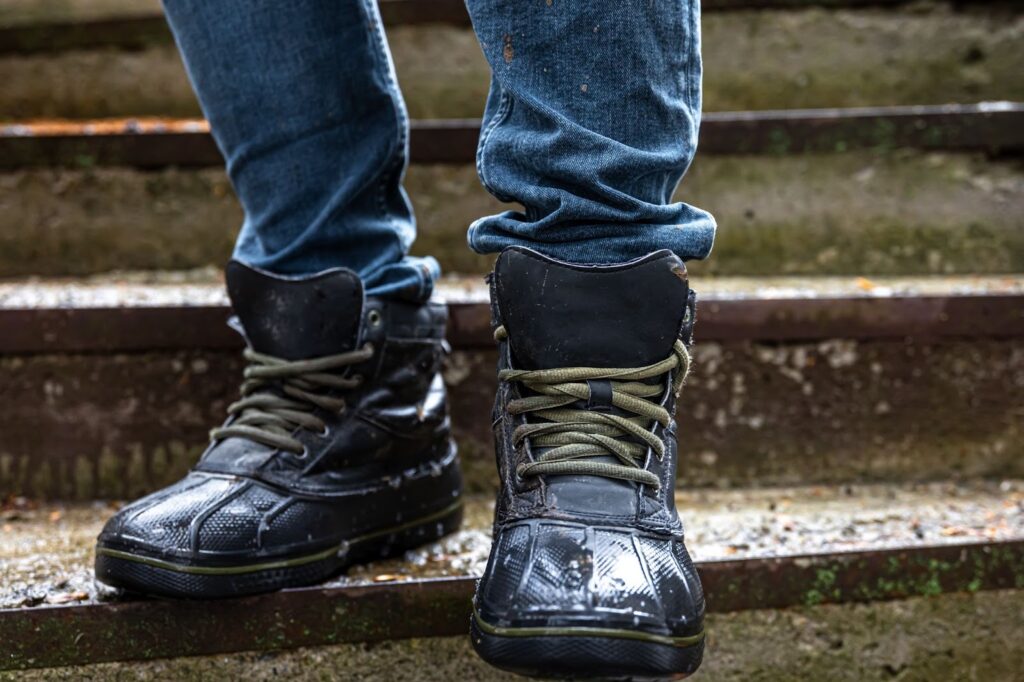
Roofing shoes aren’t a fashion choice. They’re a safety decision, a productivity decision, and sometimes a “do I make it home without limping” decision. Yet most roofers buy boots the same way they buy lunch (whatever’s close, familiar, or on sale). That’s a grave mistake.
Facts tell a terrifying tale. Falls remain the leading cause of death in construction, accounting for over 38% of fatalities, and roofing consistently ranks among the most dangerous trades; OSHA says that falls are a leading cause of work-related injuries and deaths among roofers. These accidents can be easily prevented by wearing the right type of shoe on a job!
Your footwear matters more than you think. So, let’s settle a question roofers argue about on ladders, in trucks, and even in supply yards: Thorogood vs Cougar Paws vs Merrell? Which roofing shoe actually makes sense for your work?
We’re breaking this down based on:
- Traction on real roofs
- Comfort over long days
- Durability and lifespan
- Where each shoe shines (and fails)
- Which type of roofer should wear what
Why Roofing Shoes Deserve More Thought Than You Give Them
Roofing accidents are no joke; millions of families suffer every year! A slick roof doesn’t care how tough you are. It doesn’t care how long you’ve been roofing. It doesn’t care how many jobs you’ve knocked out this week. And it definitely doesn’t care how confident you felt stepping off the ladder. Traction changes fast. Sometimes by the hour.
- Morning dew turns asphalt into glass.
- Loose granules act like ball bearings.
- Metal panels amplify every mistake.
- Dust, heat, slope, and pitch all stack against you.
One bad step isn’t dramatic. It’s quiet. Your foot slides six inches. Your weight shifts. Your brain reacts a half-second too late. That’s how injuries actually happen.
Roofing consistently ranks among the most dangerous construction trades, and falls remain the leading cause of serious injury and death on jobsites. In fact, Roofing Contractors said in a recent article that more than 80% of fatalities taking place in 2023 among roofers happened because someone fell from a high place.
But here’s what doesn’t get talked about enough. Footwear doesn’t just affect safety. It affects how you move, how fast you work, and how confident you feel on a slope. When shoes slip, roofers slow down. When shoes hurt, focus drops. When shoes feel unstable, shortcuts creep in.
That’s where danger starts. Good shoes won’t make you invincible. They won’t stop the bad weather. They won’t fix poor technique. But they do remove hesitation.
Bad shoes do the opposite. They force your brain to constantly compensate. You lean differently. You rush ladders. You step where you shouldn’t. Over time, that false confidence turns into carelessness.
And carelessness doesn’t last long in this trade.
That’s why smart roofing companies treat footwear the same way they treat ladders, harnesses, and documentation. It’s not a preference; it’s part of the system.
Crews that stay consistent, communicate clearly, and track job details in one place tend to catch small safety issues before they become big problems. That level of organization is exactly why many growing teams lean on platforms like ProLine to keep standards tight as workloads increase. Remember, roofing automation is saving lives… and so are roofing shoes!
Thorogood
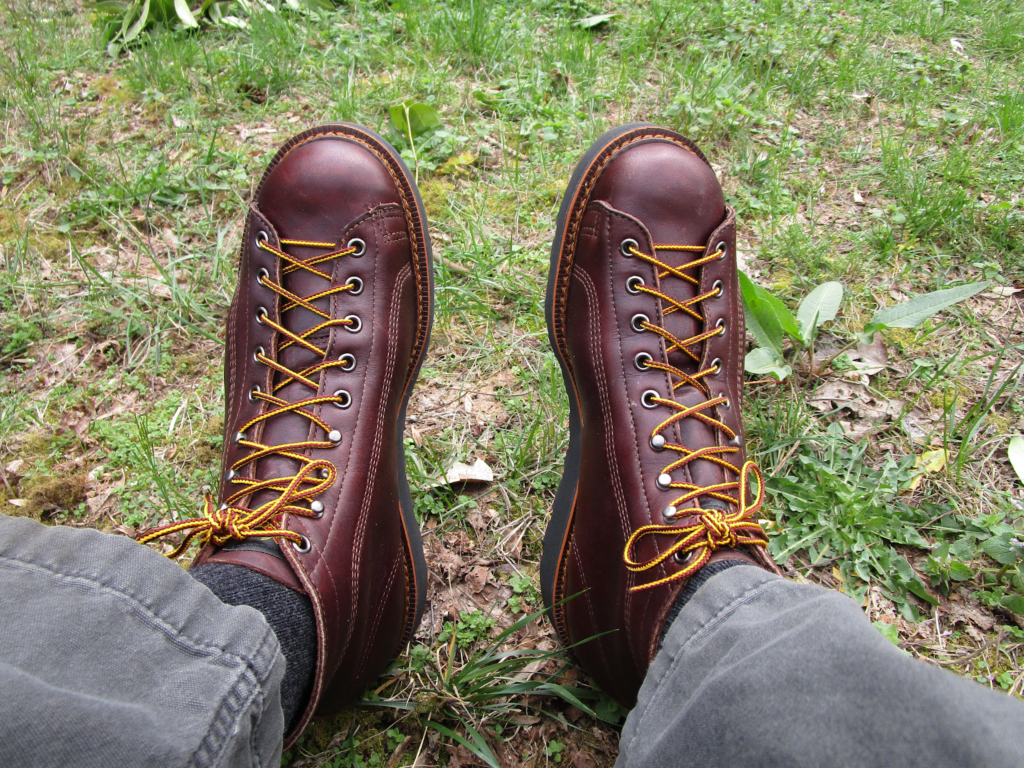
What Thorogood Does Well
Thorogood boots are work boots first, roofing boots second. They’re known for:
- Thick leather uppers
- Strong ankle support
- Goodyear welt construction
- Long-term durability
These boots shine on:
- Tear-offs
- Commercial flat roofs
- Jobs with Groundworks
- Groundwork and material handling
If your day involves climbing ladders, hauling bundles, and walking uneven surfaces, Thorogood feels dependable. They’re also popular with foremen and owners who split time between the roof and the office.
Where Thorogood Falls Short for Roofing
Traction. Thorogood outsoles are designed for general construction (not steep asphalt slopes). On dry shingles, they’re acceptable. On dusty, granulated, or damp roofs, grip drops fast. That’s why roofers online (Redditors) constantly give good reviews to Thorogood boots.
That stiff sole also reduces “roof feel,” which matters more than people admit. Feeling the pitch under your foot helps with balance and confidence. Thorogood boots also:
- Run in heavier-than-athletic-style shoes
- Can feel hot in summer
- Require break-in time
For long residential days on steep slopes, fatigue creeps in quicker. Roofers based in Florida face extreme heat when they’re up on clients’ roofs, trying to inspect the nature of the damage there. They find the sun their biggest enemy. They need shoes that help them stay steadfast and stand unshaken even when the July sun is beating down on them, and they choose Thorogood.
Best For
- Commercial roofing
- Owners and supervisors
- Crews doing mixed ground + roof work
- Cold-weather jobs
Cougar Paws: Purpose-Built for One Thing—Staying Put
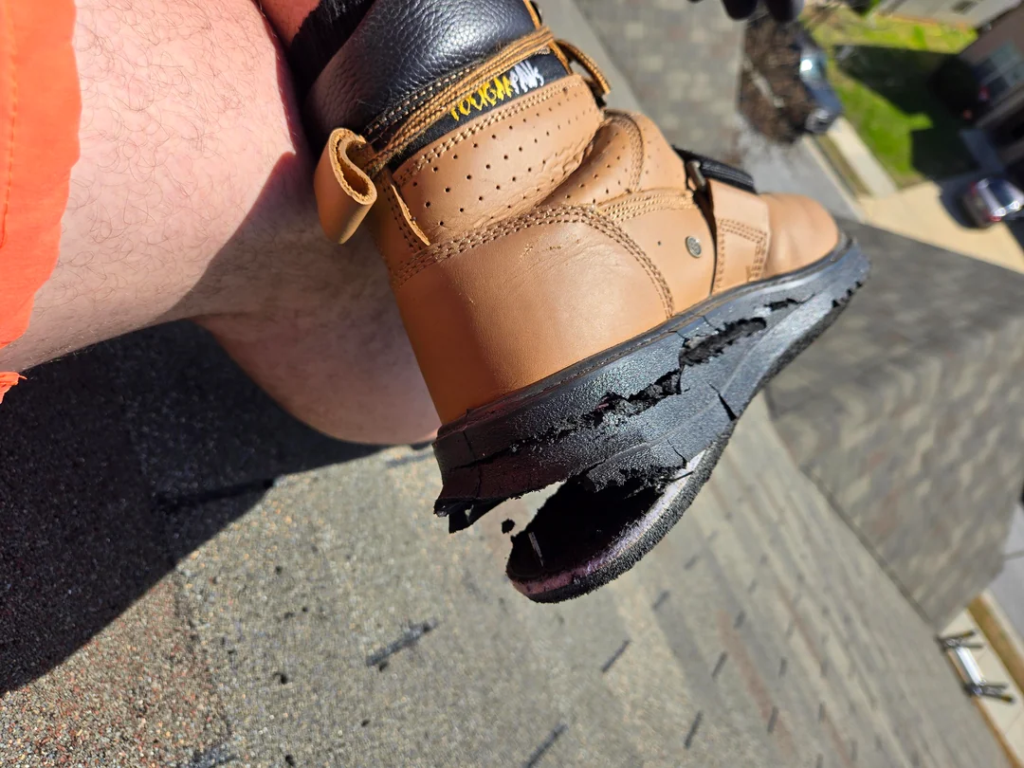
What Makes Cougar Paws Different
Cougar Paws aren’t exactly subtle. They’re not stylish. And they don’t pretend to be all-purpose. They’re built for traction on steep roofs. Cougar Paws use replaceable foam pads instead of traditional rubber outsoles. That foam compresses against shingles, increasing surface contact and friction. The result? Insane grip. On:
- Steep asphalt roofs
- Dry residential shingles
- Walkable but risky slopes
Cougar Paws outperform almost everything else. Many insurance carriers and safety trainers recommend them specifically for steep-slope inspections. They’re widely used by:
- Residential crews
- Sales reps doing inspections
- Adjusters walking claims
The Tradeoffs You Can’t Ignore
Cougar Paws are specialized, and specialization comes with limits. Downsides include:
- Pads wear out fast (sometimes weekly on rough jobs)
- Poor performance on wet or muddy surfaces
- Awkward on ladders and ground work
- Not ideal for metal roofing
They also require discipline. Worn pads lose effectiveness, and some roofers push them too long. That’s where organization matters. When crews track equipment condition the same way they track jobs, safety stays consistent.
This is why companies using structured workflows (often managed inside tools like ProLine) catch these issues before accidents happen.
Best For
- Steep residential roofing
- Roof inspections
- Sales reps and estimators
- Short, high-risk roof access
Merrell: Comfort-First Shoes That Roofers Quietly Love
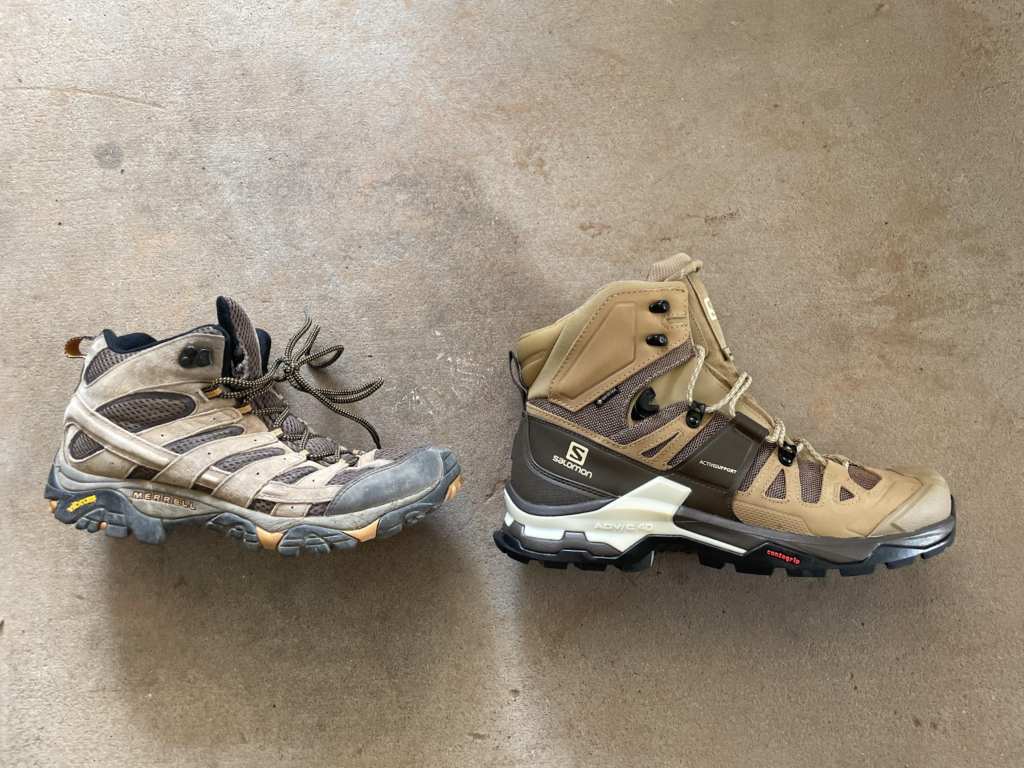
Why Roofers Choose Merrell
Merrell isn’t a roofing brand. It’s an outdoor footwear company. But many roofers swear by them anyway. Merrell shoes feel good very fast. Merrell’s Vibram outsoles provide decent grip on asphalt shingles and better adaptability than stiff boots. These shoes are:
- Lightweight
- Flexible
- Cushioned
- Easy on knees and feet
Models like the Merrell Moab or MQM series are common on roofs because they offer solid traction without the stiffness of a boot. They shine during:
- Long days
- Hot weather
- Inspection-heavy schedules
- Sales-focused roles
The Downsides
Merrell shoes are not built for abuse. They also aren’t safety boots. No steel toe. No heavy-duty shank. For installers carrying bundles or working tear-offs, that’s a deal breaker. But Merrell prioritizes comfort and mobility over protection. That’s why you should expect:
- Faster wear
- Less ankle protection
- Limited toe protection
- Reduced lifespan under heavy loads
Best For
- Sales reps
- Inspectors
- Owners on roofs occasionally
- Warm climates
Side-by-Side Roofing Shoe Comparison
| Thorogood | Cougar Paws | Merrell | |
| Traction | Moderate | Excellent | Good |
| Comfort | Moderate | Low to Moderate | High |
| Durability | High | Low to Moderate | Moderate |
| Ankle Support | High | Moderate | Low |
| Ladder & Ground Work | Good | Poor | Goods |
| Best Use Case | Commercial/Mixed | Steep Residential | Sales/Inspections |
Which Roofing Shoe Is Actually Right for You?
The “best” roofing shoe depends on your role, not your pride.
- Shoes for roofers who are installers
If you’re on steep slopes all day, you should wear Cougar Paws for grip, while Thorogood wearables are ideal for tear-offs and ground work. Many seasoned crews rotate footwear depending on the job.
- Shoes for roofers who are sales reps & inspectors
If you are a salesperson or want to inspect a client’s roof (unless you’re using drones for this part of your roofing company’s services), you need confidence on roofs, comfort for hours, and easy ladder movement. Merrell or Cougar Paws (with fresh pads) make more sense than heavy boots.
- Shoes for roofers who own or manage a company
As a roofing company owner, you’re splitting time between site visits, roof inspections, and office work. Thorogood or Merrell provides versatility without overcommitting to one environment.
Shoes Don’t Make You a Pro, But They Protect One
Thorogood, Cougar Paws, and Merrell all have a place on a roof. The mistake is assuming one shoe fits every role. The pros choose footwear the same way they choose tools, based on the job, the conditions, and the risk. They don’t guess. They don’t wing it. And they don’t ignore small details that lead to big problems.
That mindset (i.e., structure over chaos) is what separates companies that scale cleanly from those constantly putting out fires. When your crews, jobs, and safety standards are organized in one system, consistency becomes automatic.That’s why growing roofing companies rely on tools like ProLine to keep operations tight, communication clear, and jobs moving without confusion. Because staying upright on a roof starts with your shoes, but staying profitable starts with structure. So, book a demo with us today and learn how to close more jobs to expand your roofing business.
FAQs
Are Cougar Paws required for roofing?
No, but they’re often recommended for steep-slope residential work due to their superior traction on asphalt shingles.
How often should Cougar Paw pads be replaced?
It depends on roof type and frequency, but many roofers replace pads every 1–2 weeks during heavy use.
Are Merrell shoes safe for roofing?
They’re safe for inspections and light work but lack the protection needed for heavy installs or tear-offs.
Do Thorogood boots work on steep roofs?
They work, but traction is limited compared to purpose-built roofing footwear.
Should roofing companies set footwear standards?
Yes. Clear safety guidelines reduce injuries, liability, and downtime, especially as crews scale.