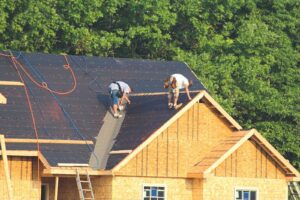
What is a good closing rate in roofing sales? Close too many deals, and you’re probably underpricing. Close too few, and your business stalls. Here’s how to find the right balance.
Believe it or not, a good closing rate in roofing sales sits around 30% to 40%. At first, that might sound strange. Wouldn’t a 100% close rate be ideal? Why wouldn’t you want to land every single deal? After all, if a baseball player hit a home run every time, they’d be a legend.
But roofing sales isn’t baseball—it’s business. And there’s a lot more to a strong close rate than just stacking up numbers. A close rate that’s too high can signal problems just as much as one that’s too low.
In this article, we’ll cover:
- How to calculate your close rate
- Why a high close rate can hurt your business
- How to fix a low close rate and improve your sales process
Let’s dive in.

| Type of close rate | Typical range | What that range says |
|---|---|---|
| General sales across many industries | 15–25% | You close some deals, lose plenty, live in a mix of hot and cold leads. |
| Home services / contractors | 20–35% | Decent process, mixed lead quality, room for better follow-up and pricing control. |
| Roofing companies with solid process and pricing | 30–40% | Healthy range for most roofers who price for profit and run a repeatable process. |
| Strong roofers doing their own marketing | Around 50% | Tight sales process, solid branding, good lead quality, strong pricing discipline. |
| Outliers and “freaks of nature” | 60–75%+ | Rare killers who close nearly everything at strong margins or sell in unique markets… Or you’re underpriced and bleeding money. |
What Is A Good Closing Rate In Roofing Sales?
A good closing rate in roofing sales sits around 30–40%. That means out of every 10 qualified leads, you close 3 or 4 into paying roofing jobs. Rates much higher than 50% often signal that your prices are too low, while rates below 20% usually show problems with lead quality or your sales process.
Now, Chuck Thokey of Top Rep would argue that if you’re doing your own marketing, 50% is your benchmark. And honestly, that’s a fair point. So long as you’re not winning those jobs by waging price wars or lying to homeowners, 50% is amazing. And there will always be freaks of nature who close 75% of deals at a healthy profit with a straight face. But in general, 30-40% is considered normal, 50% is ideal, and much more than that can signal that something’s wrong under the hood. More on that in a second!
How to Measure Sales Closing Percentage
Your closing rate tells you what percent of your leads turn into paid roofing jobs. You can track it by total leads, by set appointments, or by quotes sent. Start simple. Track total leads and closed jobs first. Then break it down by lead source once you have a handle on the basics.
Basic Roofing Sales Closing Rate Formula
Here’s the standard sales closing percentage formula:
Closing Rate (%) = (Number of Closed Jobs ÷ Number of Leads) × 100
If you booked 100 leads in a month and closed 20 of them into jobs:
Closing Rate = (20 ÷ 100) × 100 = 20%
You can use the same formula for other points in your pipeline:
- Close rate on inspections
Closed jobs ÷ inspections set × 100 - Close rate on quotes
Closed jobs ÷ quotes sent × 100 - Close rate by lead source
Closed jobs from [source] ÷ leads from [source] × 100
Track each stage. You will see where money leaks out. Low quote-to-close rate points at problems in your sales pitch or pricing. Low lead-to-inspection rate points at slow follow-up or weak appointment setting.
Why Tracking Lead Sources Matters
One of the most important things you can do is track where your leads are coming from. Different sources will have different closing rates.
Take that earlier example—100 leads, 30 closed deals. Looks solid, right? But what if all 30 of those deals came from referrals? Even worse, what if you’re spending thousands every month on Facebook ads, but none of those leads convert? Time to turn off the ad spend—or figure out why it’s not working—and double down on referrals.
Most cases aren’t that extreme. You’ll likely have one source that crushes it (usually referrals), a couple that are decent, and some that either need work or aren’t worth your time.
But you’ll never know what’s working and what’s wasting money unless you track it. If it’s measurable, it’s fixable.
And when you track lead sources alongside every stage of your sales process—inspections, quotes, closed deals, reviews, and referrals—you can build a precise strategy to boost your closing rate. Instead of saying, “Our closing rate sucks—we need to fix it,” you can say, “We need to increase our closing rate for open quotes from Google LSA leads by 15%.” One is a panic button. The other is a game plan.
Why a High Closing Rate Can Be a Huge Problem
A sky-high closing rate might sound like a dream, but in most cases, it’s a warning sign. More often than not, it means your price is too low.
Roofing is packed with low-ballers who see the cost of a new roof and think, If I charge three grand less, I’ll close way more sales, and everything will be fine. Think again.
Most roofers reading this already know that strategy is a death trap. But for those still chasing the lowest price, here’s the reality—you’ll wake up one day wondering where all the money went. If you have a 75% close rate but you’re barely scraping by on gross profit, you’re toast. And you’ll join the long list of roofers who show up every season with a truck, close a ton of deals, then vanish because they never actually made any money.
It’s Okay to Lose Sales Because You Charge More
Let that sink in. It’s okay to lose sales because your price is too high. In fact, if you ask around on Reddit, a close rate above 50% should probably set off alarms. It’s a strong sign that you could raise your prices.
Now, there are always a few lucky roofers who manage to have an insanely high closing rate and charge a profitable price. These guys aren’t cutting corners or racing to the bottom. More often than not, they’re using ProLine.
Why ProLine Users Close More Deals at a Profitable Price
The average ProLine user has a 46.62% close rate on open quotes—and they’re not slashing prices to get there.
The reason? ProLine automates a ton of the most effective closing strategies right inside the CRM. Follow-ups, reminders, and sales-boosting communication happen on autopilot. The best roofing sales processes don’t rely on memory—they run like a machine.
And if you’re looking to close more without tanking your profits, you’re in the right place. Up next, we’re diving into how to fix a low closing rate the right way.
5 Ways to Increase Your Roofing Sales Close Rate
This could easily be an entire article on its own, but here are five high-impact strategies that have helped hundreds of roofers close more deals. Some of these, ProLine will automate for you. Others will require investing in an outside agency or training your team to master them.
1. Respond to Leads Instantly
The faster you respond to a new lead, the more likely you are to close the deal. If a homeowner fills out a form on your website or reaches out through a platform like Directorii, you need to respond within seconds—not minutes, not hours. The longer you wait, the more likely they are to go with a competitor.
Technically, responding within 1 to 5 minutes puts you ahead of 95% of your competition. But even then, you’re still losing to roofers who reply instantly.
Here’s the problem—your sales reps aren’t ninjas when it comes to follow-up. Expecting them to text and email within seconds of a new lead coming in? Unrealistic. That’s why ProLine exists. ProLine automatically texts and emails new leads at the rep level within seconds of them entering your CRM.
Don’t use ProLine? You could try setting up something similar with MailChimp and Zapier, but trust us—it’s a hassle.
2. Rehash Your Old Leads
You have money sitting in your CRM.
Old leads, ghosted prospects, homeowners who told you, Not right now—check back later. These people already showed interest. Some even got quotes but never moved forward. Others hired someone else and might regret it.
Reaching out to old leads costs nothing and can bring in extra deals every month. Even better, you already paid to acquire these leads, so getting another shot at closing them is pure profit.
ProLine can automate this for you with lead rehash campaigns, but even if you don’t have automation, you should manually go through your old leads once a week.
3. Ask for Referrals
Referrals are cheat codes for roofing sales. They close at a way higher rate than any other lead source.
The key? Ask at the right time.
Ask for a referral:
- At the point of sale – When the homeowner is excited and feeling great about choosing you.
- After the job is done – When they’re happy with the work and still have positive emotions toward your company.
You can also automate referral requests to make sure you never miss an opportunity.
Want to boost referrals even more? Offer instant, tangible incentives. Don’t promise discounts on future work—that feels too abstract. Instead, give them something they can use right away. A $50 Texas Roadhouse gift card works way better because they can hold it, use it, and remember you when they do.
If you ask for referrals consistently and reward them properly, you’ll have a steady stream of high-closing leads every single month.
4. Punch Up Your Brand
Homeowners forget generic roofers. And if they forget you, they’re not hiring you.
Your brand needs to stand out in a crowded market. Roofing branding is a deep topic, but here’s how to make sure you’re memorable without getting scammed by a second-rate creative agency:
- Do the opposite of your competitors. If they have a blue logo with a roof on it, make yours red with something other than a roof.
- Pick a name that includes ‘Roofing’ but avoids generic words. No more Shingle Layer Roofing Company nonsense. Think Yeti Roofing, Tiger Roofing, Rainstoppers Roofing. Names like these stick in people’s heads.
- Avoid the ‘Blue Triangle Club of Death.’ Every other roofer has the same boring logo and branding. Stand out, or you’ll blend into the noise.
5. Get More Google Reviews
Homeowners always check your Google reviews before choosing you. And if your reviews are bad—or nonexistent—you’re in trouble.
Here’s how reviews affect your close rate:
- If you have three Google reviews, you look like a guy with a truck.
- If you have 100 reviews but half are 1-star, you look like a scammer.
- If you argue with customers in the replies, you look unhinged.
The easiest way to get reviews? Automate your review requests. Asking for reviews feels awkward, so let ProLine or another tool handle it for you.
Once reviews come in, respond to every single one—especially the bad ones. A bad review isn’t the end of the world if you handle it right. In fact, how you respond to negative reviews determines how future customers perceive you. Turn a bad experience around, and that angry customer could become a raving fan.
Read: 10 Proven Roofing Sales Tips That Boost Profit
FAQs About Roofing Sales Closing Rates
What is a closing rate in roofing sales?
A closing rate in roofing sales is the percentage of leads that become paying roofing customers in a given time period. You take the number of closed jobs, divide by the total number of leads you tracked for that stretch, and multiply by 100. The result tells you how often your sales work turns interest into signed contracts.
What is a good closing rate in roofing sales?
For most roofers, a good closing rate sits in the 30–40% range across all leads. That means you close three or four out of every ten qualified leads into jobs and still keep healthy margins. Around 50% looks ideal when you run your own marketing and price for profit. When your closing rate climbs far past that, your price or your filters might need a hard look.
What is a good closing rate in sales in general?
Across many industries, sales trainers peg a “normal” close rate near 15–25%. Some teams sell at lower price points and close more. Others sell complex offers and close fewer deals. Roofers often sit higher than that because the pain feels urgent and the ticket size stays high. That is why a 30–40% close rate in roofing feels strong instead of weak.
How do I calculate my sales closing percentage?
Use this formula:
Closing Rate (%) = (Number of Closed Deals ÷ Number of Leads) × 100
Pick a time frame. Count every lead that came in. Count every job you actually sold from that batch. Divide closed jobs by total leads and multiply by 100. You can run the same math by quotes sent, inspections run, or by each lead source to see where your best work comes from.
Why can a very high close rate be a bad sign?
A close rate that looks too high can hurt you. If you close almost every job you quote, you might price too low or say yes to bad fits. That eats profit, burns your team out, and blocks growth. A strong roofing company loses some bids because the price sits higher and the value stands firm. A little “no” protects your margins.
How can I increase my roofing close rate without dropping my price?
Focus on speed, clarity, and follow-up, not discounts. Respond to new leads in minutes. Show up on time. Give a clear, line-item quote that explains scope and price in plain words. Answer questions, then follow up by text, email, and phone until the homeowner makes a choice. Tighten your process and your messaging before you reach for a price cut.
Conclusion: What Is A Good Closing Rate In Roofing Sales?
Follow these strategies, and your closing rate should land in that healthy 30% to 40% range. If you really pour gas on the fire—tighten up your follow-ups, rehash old leads, and build a killer brand—you’ll have two great options:
- Increase your close rate even more by refining your sales process.
- Raise your prices without losing deals.
And that’s the sweet spot. Because the last place you want to be?
- Closing too many sales but making no money because your prices are too low.
- Struggling to close any deals at all and wondering why your business is stalling.
Dial it in. Track your numbers. Make smart moves. And watch your profits rise right alongside your close rate.
If you’re serious about closing more deals and running a more efficient roofing business, here are a few ways to take the next step:
- See how ProLine works in action. Check out our quick overview video and see how automation can help you close more sales without extra effort.
- Want to sell more roofing jobs with less hassle? Book a demo of ProLine and see firsthand how better follow-ups, automated outreach, and streamlined communication can boost your closing rate.
- Not sure which CRM is right for you? We broke down the 8 best roofing CRMs to help you find the one that fits your business best.