Best Roofing Pants 2026: Durable, Comfortable, and Crew‐Approved

Best roofing pants Gear comfort
"Choosing your wardrobe is as important as choosing your tools. This blog covers the 6 best rofoing pants for professionals. Get crew-approved pantaloons today."

Share This Post

If you spend your days on roofs, you learn one thing fast: regular pants don’t survive roofing work. Between rough shingles, steep pitches, ladders, nail guns, and long hours kneeling, cheap workwear gets destroyed quickly. You see torn knees, ripped pockets, and stiff fabric that makes climbing miserable.

The right pair of roofing pants fixes that. Good roofing pants should do three things well:

  1. Protects you from abrasion and sharp materials
  2. Moves with you when climbing, kneeling, and stretching
  3. Lasts long enough that you’re not replacing them every month

That’s why professional roofers rely on heavy-duty work pants with reinforced knees, flexible fabrics, and smart tool storage. Many include knee-pad pockets, reinforced seams, and breathable materials designed for long days outdoors. Remember, roofing is a tough job for your crew and can mess up their body if you don’t provide them with the right wardrobe.

In this guide, you’ll find crew-approved roofing pants for 2025, plus tips on choosing the right pair so you stay comfortable, safe, and productive on every job.

Unsafe Attire That Can Put Roofers at Risk

  • Loose or Baggy Pants

Pants that are too loose can catch on nails, hooks, or ladder rungs, causing trips or falls. Baggy cuffs can also interfere with climbing ladders or stepping on fragile shingles, which may lead to injuries. Roofers need pants with a secure fit around the waist and ankles that still allow bending and kneeling.

  • Non-Durable Fabrics

Jeans or work pants without reinforced knees, stress-point stitching, or abrasion-resistant fabrics may tear or wear through quickly. When pants rip mid-job, it’s more than inconvenient; it can expose skin to sharp edges, shingles, or hot surfaces, increasing the risk of cuts and burns. These fabrics also fail to protect roofers from asbestos, especially in construction.

  • Slippery Materials

Some casual pants or synthetic fabrics can reduce traction on sloped surfaces, especially if dust, debris, or water gets on the roof. Slick fabrics make it harder to maintain a stable footing on steep pitches, contributing to slips and falls. We recommend getting the right roofing shoes for your crew as well, so they won’t get injured when climbing steep roofs.

  • Overloaded Pockets

While tool pockets are essential, stuffing pants with too many tools or heavy items can throw off your balance, especially when moving across steep or uneven surfaces. Roofers need to distribute weight wisely and avoid carrying heavy items in back pockets or unsecured cargo pockets.

Top Roofing Pants for 2025

Unsafe attire might seem like a minor issue compared to storms or heavy materials, but clothing mishaps account for a surprising number of minor and major accidents on roofs. Experts all over the world have opined that roofing is one of the most dangerous professions out there. But you can alleviate these risks by getting the right wardrobe solutions that won’t “malfunction.”

Choosing purpose-built roofing pants (i.e., with reinforced knees, durable fabrics, proper fit, and thoughtfully placed tool storage) isn’t just about comfort. It’s about reducing risk, staying efficient, and keeping every crew member safe. Let’s discuss a few major options here.
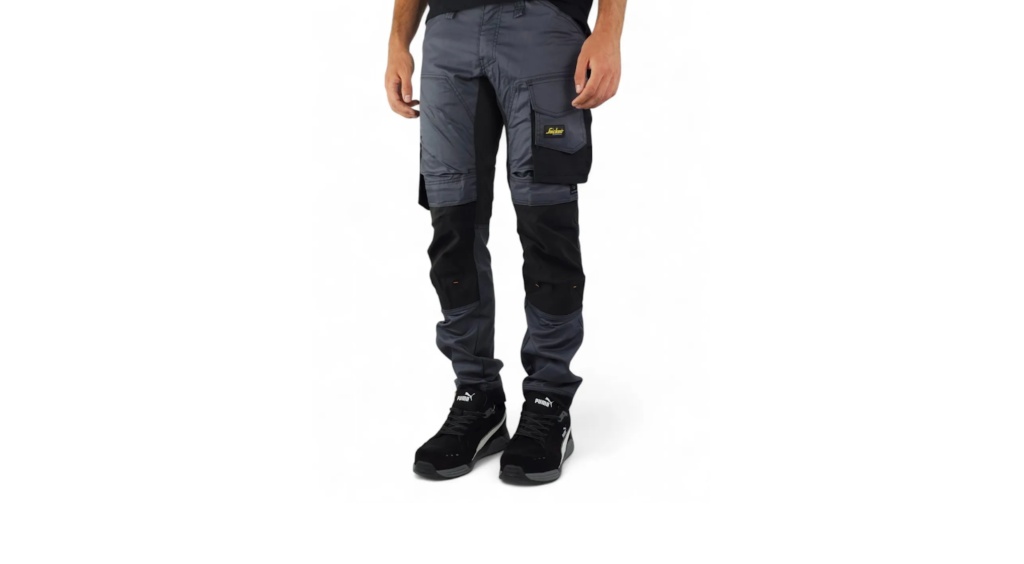
Image 43 roofing followup

1. Snickers Workwear 6341 AllroundWork Pants

If you talk to experienced contractors, Snickers Workwear often comes up as a premium option. These pants are built specifically for tradespeople who kneel, climb, and carry tools all day. When you get these pants, it means your crew will enjoy:

  • Integrated knee-pad pockets
  • Durable stretch fabric panels
  • Reinforced tool storage
  • Excellent flexibility when climbing ladders

Many tradespeople consider Snickers pants expensive, but worth it because they last longer than cheaper alternatives. On construction forums, one user explained that switching to Snickers pants with built-in knee pads was a major efficiency upgrade for daily work.

Great for roofers who want premium durability and built-in knee protection.
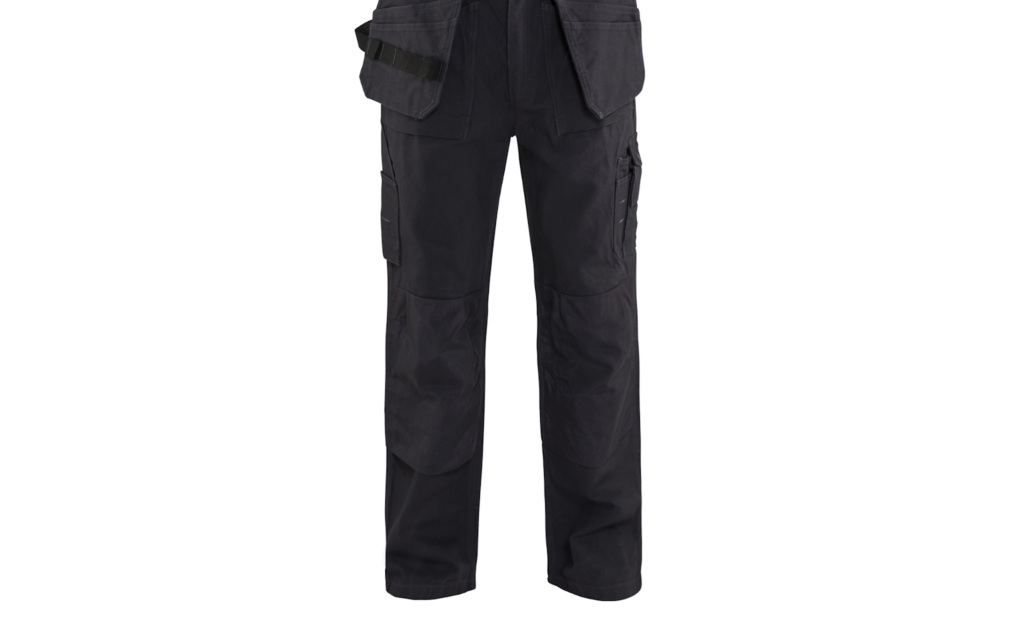
Image 42 roofing followup

2. Blaklader 1630 Craftsman Pants

Blåkläder (often written Blaklader) is another brand known for durability and tool-heavy designs. These pants are legendary in European construction trades. Their key features include:

  • Heavy-duty cotton construction
  • Multiple reinforced pockets for tools
  • Adjustable waistband for comfort
  • Reinforced seams and stress points

Blaklader pants are designed to carry nails, knives, and other tools without wearing out quickly. Roofing work destroys pockets and seams faster than almost any trade. Blaklader solves that problem with reinforced storage areas designed for daily abuse.

Great for contractors who want maximum durability and lots of tool storage.

Image 41 roofing followup

3. Carhartt Rugged Flex Rigby Dungaree

Carhartt has been a staple in construction workwear for decades. The Rugged Flex Rigby Dungaree is a modern version designed for mobility and comfort. Their major characteristics include the following:

  • Stretch canvas fabric
  • Reinforced pockets
  • Relaxed fit for movement
  • Durable cotton blend

Carhartt work pants are known for heavy-duty duck canvas fabric and reinforced stitching designed to survive demanding job sites. (Journeyman HQ) They’re affordable, comfortable, and easy to find. Many roofing crews wear Carhartt because they strike a good balance between price and durability.

Great for roofers who want reliable work pants without spending premium prices.
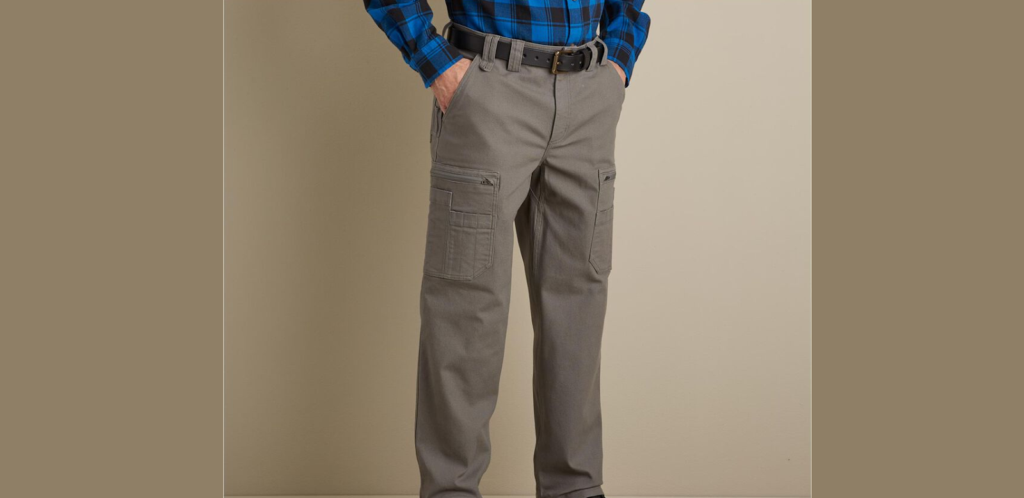
Image 40 roofing followup

4. Duluth Trading Fire Hose Flex Work Pants

Duluth’s Fire Hose line is famous for its extremely tough fabric designed for rugged jobs. These pants are built for movement and durability. You’ll appreciate these traits in these pants:

  • Flexible canvas fabric
  • Reinforced stress points
  • Tool pockets and cargo storage
  • Comfortable fit for climbing

The Fire Hose material is designed to resist tearing and abrasion from rough surfaces. Roofing work involves constant friction from shingles, nails, and ladders. Tough fabrics like Duluth’s Fire Hose help pants last longer.

Great for roofers who want flexible pants that can handle rough environments.
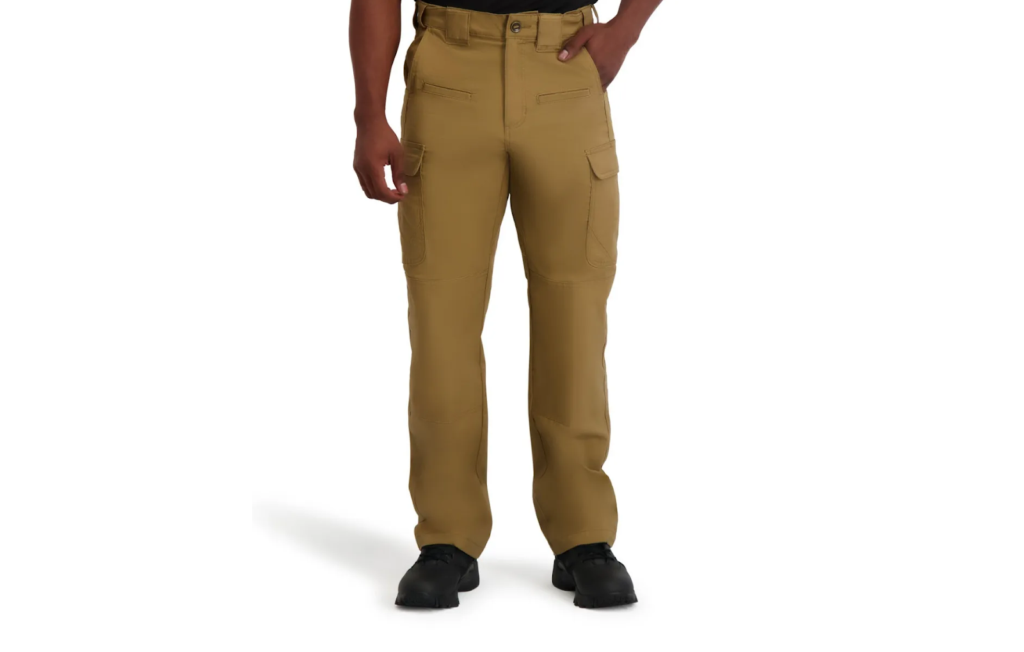
Image 39 roofing followup

5. Propper Kinetic Tactical Pants

Roofers who prefer maximum mobility and utility storage often lean toward tactical‑style work pants like the Propper Kinetic series. Originally designed for active professions that require movement and gear accessibility, these pants have crossed over into roofing because they combine comfort, stretch, and thoughtful pocket design in ways traditional work pants don’t always match.

  • Reinforced knee areas compatible with removable pads
  • Teflon‑treated fabric resists stains and debris
  • Multiple cargo and utility pockets sized for tools
  • Articulated knees and stretch fabric for climbing and squatting

Roofing work often requires repeated climbing, bending, and balance shifts on steep surfaces. The combination of articulated motion and well‑placed pockets makes these pants particularly practical when you’re moving fast across large roofs or carrying multiple tools.

Great for roofers who prioritize mobility and utility, especially those on crews that move quickly between assignments.
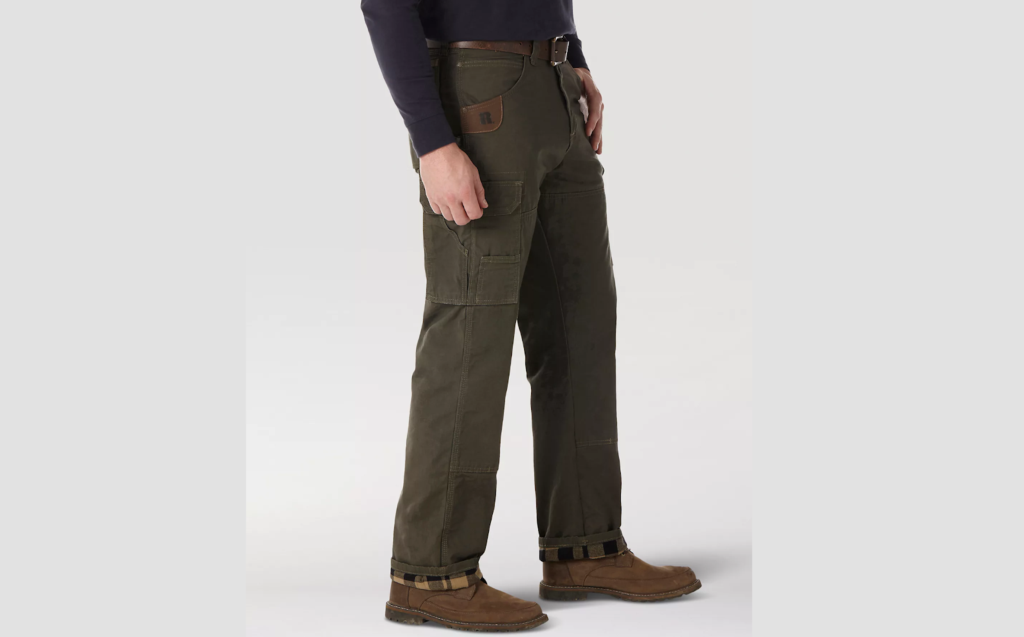
Image 38 roofing followup

6. Wrangler Riggs Ranger Work Pants

Wrangler’s Riggs Ranger line might not have the same high‑end reputation as some premium workwear brands, but it’s gained traction with roofers for its blend of affordability, durability, and practical design built around real job‑site needs. You’ll appreciate features like:

  • Reinforced stitching in high‑wear areas
  • Deep pockets with secure closures
  • Hammer loop and utility pocket options
  • Straight cut with room for movement

Many crews outfit multiple workers, and the cost of replacing pants on a regular basis adds up. Wrangler Riggs pants offer rugged construction at a more accessible price point, without severely sacrificing durability or comfort. They don’t have all the bells and whistles of premium tactical models, but they’re solid performers for roofing crews who need reliable pants on a budget.

Great for roofing companies that need budget‑friendly, everyday work pants that still stand up to job‑site wear.

Features Roofing Crews Care About Most

Just as using technology & automation will help you cut costs and save lives, the right pants will keep your crew safe and comfortable on a job. But if you’re not happy with our suggestions in this blog, we’ll help you figure out the best roofing pants of your own choice. After talking with contractors and reviewing workwear recommendations, a few features consistently stand out.

Knee Protection

Roofers spend hours kneeling during installs. That’s why many roofing pants include knee-pad pockets or reinforced knee panels. These reduce fatigue and help prevent injury during long days on the roof.

Durability

Your best roofing pants should survive:

  • Abrasive shingles
  • Sharp fasteners
  • Constant climbing

Duck canvas and reinforced cotton fabrics are commonly used because they resist tearing.

Mobility

Roofers climb ladders, walk slopes, and crouch frequently. That’s why you should look for:

  • Stretch fabric
  • Gusseted crotch
  • Articulated knees

Tool Storage

Many roofing pants include features that help keep tools within reach without carrying a heavy tool belt all day.

  • Hammer loops
  • Utility pockets
  • Reinforced cargo pockets

Experts have also suggested that using sun protection and working in pairs can also keep roofers safe & sound on a tough job. If you need estimates, you can always use drones to measure a client’s roof and make the life of your diligent crew way easier…

The Right Pants Make Roofing Easier

Roofing is tough work. Your gear should make it easier… not harder. The best roofing pants combine durability, mobility, and comfort so you can focus on the job instead of worrying about ripped fabric or sore knees. You can get any of the pants we’ve mentioned above or find the best roofing pants on your own with the traits & features we’ve mentioned to make sure that your crew can work comfortably.

Whether you choose premium workwear like Snickers or dependable staples like Carhartt, investing in the right pants can save you money, improve productivity, and keep your crew comfortable through long days on the roof. Because when your gear works as hard as you do, every job gets a little easier.

FAQ | Best Roofing Pants

What pants do professional roofers wear?

Professional roofers wear heavy-duty work pants with reinforced knees, stretch fabric, and tool pockets.

Are knee-pad pants worth it for roofing?

Yes, roofers kneel frequently during installations, so pants with knee-pad pockets reduce strain and improve comfort during long workdays. 

How long should roofing pants last?

High-quality work pants can last months or even years, depending on how often they’re used and the type of roofing work performed.

Should roofing pants be loose or fitted?

Roofing pants should allow freedom of movement without being overly baggy. A relaxed fit with stretch panels usually works best for climbing and kneeling.

Get ProLine's Roofing AI Guide

Learn how the most successful roofing businesses use AI to sell more jobs and make it home for dinner.

More To Explore

Meta Title: Why Roofing Revenue Stalls | 6 Key Reasons | ProLine Meta Description: This blog covers 7 major reasons why your roofing revenue stalls. Learn how to boost your roofing revenue with these simple tips. Boost earnings with ProLine. SEO Slug: why-roofing-revenue-stalls-7-reasons Why Roofing Revenue Stalls—and How to Boost Yours Fast Let’s talk facts! Did you know that the US roofing market will be worth over $43 billion by 2033? But many roofing companies still face stalled revenues. Why your roofing revenue stalls so much? Most roofing crews stall at $500k to $2 million, even though roofing is a $100-billion industry in the year 2025. Storms have flooded the market with fresh leads. But disorganized follow-ups & manual callbacks keep close rates stuck as a frustrating 27%. You can now change all that with ProLine. ProLine’s CRM captures these crazy leads the instant they hit your website. It sends automated texts and AI-powered calls, driving the close rate up to 64%. You can save over 14 hours per worker each week with our CRM. Now, we’ll discuss the top 6 reasons why your roofing revenue stalls. You’ll also learn a few amazing tips to boost your revenue in 2026. Embrace ProLine to stay fairly profitable. Why Your Roofing Revenue Stalls? 6 Major Reasons We previously published a blog on what average roofing company owners make. We learned that an average roofer makes $70k to over $150k. As per the Roofing Contract Magazine, the business seems to have cooled across North America in Q3 2025. This revenue decline stems from labor shortages that cut job volumes by 20-30 percent. Also, 63% of roofers are struggling to find crews amid rising wages and overtime costs. Material costs have also spiked 15% in 2025. They have squeezed gross margins to single digits (from at least 25%). Close rates may drop below the already frail 27% mark. Moreover, no review automation drops 85% of 5-star referrals. Winter pipelines are dry after fresh summer surges. Manual quoting and chaotic scheduling waste 1,200 hours yearly. These problems trap small crews at $500k to $2 million. Your roofing revenue stalls because of the reasons we shall mention in this section. So, keep an eye on these reasons and solve by embracing ProLine’s CRM. Slow Lead Response Times Did you know that 6 in 10 roofing contractors struggle to generate enough leads? Manual processes often miss the mark, i.e., checking email or voicemails multiple times a day. Try automated systems. Homeowners who experience hail damage usually call three roofers for quotes. The first company to respond with a call/text often books the inspection the same day. You finally check your message at lunch three hours late. By this time, your two competitors must’ve already texted back and won the job! Remember, even strong leads tend to go stone-cold simply within hours after major storms. Weak Follow-Up Systems Industry-wide close rates limp along at a pathetic 27%. That’s because contractors often drop the ball on follow-ups. If you don’t have automated reminders, leads can ghost you completely. So, you can climb a client’s roof for inspection on Tuesday and then hand them a paper quote the next day. By Friday, your homeowner may have forgotten your name amid three other bids from local roofers. When the storm season hits you, you start juggling 50 leads. Total chaos ensues! You lack systematic follow-up schedules. The result? You drop countless opportunities. One single missed follow-up can make you lose a $10-20 thousand replacement job. Text messages can boost your open rates, taking them as high as 98%. Manual phone calls land straight in the voicemail purgatory. Pipeline gaps b/w roof inspection and contract creation lead to massive roofing revenue stalls for your business. No Review Generation If you don’t have automation, it means you’re generating 85% fewer 5-star Google reviews. Satisfied clients never share their success stories online. You do a flawless roof replacement with all premium materials and perfect cleanup. But the homeowner doesn’t even bother to leave a positive review. If their neighbor searched the keyword roofers near me, they will only find your rivals on Google. Keep in mind that online reviews drive 70% of local service leads. Zero reviews = zero trust and no phone calls. Normally, a satisfied client refers at least two friends to your company. Silent satisfied clients create dry pipelines when the storm season ends. So, you need to do something about this. Chaotic Scheduling Sales teams book inspections all day. But production foremen often don’t get all the details. Entire crews sit idle on Tuesday as they wait for jobs that exist only a sales rep’s notebook. Sudden storm surges can throw 20 hot leads on your lap overnight. But what to do if you only have five crews on call? Massive bottlenecks can cripple operations everywhere. Ditch the endless game of “phone tag” between sales reps, foremen, and office staff. It’s delaying the start of your roofing job. Frustrated customers may cancel and call your competition instead. You’ll actually get fewer jobs than the ones brought to you by sales. Slow Quoting Process Paper quotes and email proposals may take three whole days. Another roofer may sign your client by sending a mobile quote the same afternoon. If you spend two hours measuring the roof and then another three hours back at your office typing a formal proposal, your rival will take the lead on you by pulling up a professional template right on their phone. Data shows that quoting delays kill 73% of potential roofing clients. You can never secure contracts on-site without mobile e-signatures. Cash Flow Bottlenecks The 30-day payment term has destroyed momentum during peak seasons. You can complete 5 hail damage jobs worth $75k, but then you have to wait 45 days for insurance checks to clear. Zero cash flow means no money for your truck fuel or advertising. No material stockpiles. Even the busiest storm weeks pass you by completely. Material prices have jumped 15% amid tariff-driven supply shortages. You turn down winnable jobs because your crew lacks asphalt shingles. Instant digital billing can transform your cash flow from crisis to opportunity. Try ProLine today! How to Boost Your Roofing Revenue Fast Many roofers ask, “Is owning a roofing company even profitable these days?” The answer is yes. We can see that tech adoption separates top earners from bottom feeders in the world of roofing. In fact, tech adoption revived US roofing profitability in 2025. Not even one-third of roofers use CRMs, yet they capture twice as many leads as manual rivals. ProLine users double profits through instant AI texts, on-site e-signature quotes, and 85% more 5-star reviews that fueled referrals. On the other hand, manual roofers starved on 30-day cash waits. Digitized chasers are turning their $500k stalls into $2m growth amid the $99.8-billion industry boom. The system beats sweat alone! So, check these tips to boost your roofing revenue. That’s how you win over your competitors. Grab Leads without Delay: ProLine captures website form submissions and calls instantly. It then sends automated texts within 60 seconds of inquiry. AI agents place outbound calls in the same hour. That’s how the CRM schedules roof inspections. Close rates leap from the standard 27% mark. While your competitors check their inbox tomorrow morning, you just confirmed multiple inspections today. Automate Client Follow-Ups: Visual pipelines track every lead from inquiry through signed contracts. Stalled quotes trigger automatic text reminders. For instance, our CRM sends your clients messages like: “Ready for Thursday roof inspection?” These reminders have an open rate of 98%. So, no need to manually grind through your contact list. Auto-Request Reviews: Post-job completion triggers automatic Google review requests via a text message. You can generate 85% more five-star reviews without putting much effort. A happy client will refer at least 2 friends to your company. Your winter pipeline will stay full consistently. Sync Sales & Crews: Dual calendars display sales pipelines alongside production schedules. Your sales reps can book inspections right away. Also, your production foremen will receive automatic crew assignments. You can toggle these calendars instantly to view daily dispatch assignments. This way, ProLine eliminates all delays for 20% more roofs completed monthly. Quote, Bill, and Track Live: Lastly, you can generate professional e-signature quotes right there on the work site. Homeowners will approve contracts even before your ladder hits the ground. You’ll get instant digital invoices with payment links delivering same-day cash flow. How ProLine Helps Roofers Close More Jobs ProLine captures leads right away. Texts go automatically within a minute. AI agents place outbound calls as well. That’s how ProLine takes your close rate from 27% to 64%. Your competitors are busy replying to their emails hours late; you can book at least three inspections on the same day. Keep in mind, roofers spend a decent amount on marketing. But tech adoption makes the real difference! ProLine’s custom quoting templates will generate professional bids on the spot. You can simply put the roof measurements from the ladder. Choose material options and pricing tiers. The homeowner will see the total cost (along with relevant warranties). E-signatures will secure contracts before the worker even comes down! Ditch the lengthy paperwork or days of waiting. Approve these contracts digitally before your rivals. Fix these weak spots with ProLine to get rid of roofing revenue stalls. Get Your All-in-One CRM Today Revenue stalls cost thousands every week silently. The $99.8 billion roofing industry rewards organized systems over raw sweat. ProLine eliminates every stall with instant 64% closures and massive time savings. Capture leads, close faster, reclaim family dinners. Start your free trial.
The ProLine Blog

What is the Average Roofing Salesman Salary?

Discover the real roofing salesman salary ranges, from rookie earnings to six figure closers. Learn what drives higher income and how better systems help reps close more jobs.

The ProLine Blog

Door Knocking Tips That Actually Sell Roofs

The next time you’re out there, try these door knocking tips to level the playing field. Turn random clients into closed contracts. Boost your sales career

Want to Sell More Jobs?

Let's chat about what ProLine can do for your business.