Roofing franchise opportunities are everywhere right now. If you’ve been thinking about getting into roofing, or you’re already a contractor wondering if a franchise model is your next move, the opportunity is real.
But not every franchise opportunity is worth your time, your money, or your next five years.
Some franchisors have their systems dialed in. They’ll hand you a playbook, deploy technology that actually works, and support you from day one. Others will sell you a brand name and leave you figuring out the rest on your own — rebuilding templates, chasing down answers, and wondering why you’re paying royalties for a system that doesn’t function.
The difference between a franchise that accelerates your business and one that drains it comes down to what’s behind the logo. This guide breaks down exactly what to evaluate before you sign, so you can say yes to the right roofing franchise opportunity and avoid the ones that waste your time.
Why Roofing Franchises Are Growing in 2026
Roofing sits in a unique position compared to other home service trades. Demand is driven by weather events, aging housing stock, and insurance claims — factors that aren’t going away. And unlike some industries where independent operators can compete on price alone, roofing customers increasingly value brand trust, warranty backing, and professionalism.
That’s where franchises have an edge. A strong roofing franchise gives you built-in brand recognition, established vendor relationships, proven sales processes, and (ideally) technology and systems that let you focus on running jobs instead of building an operation from scratch.
But “ideally” is doing a lot of heavy lifting in that sentence. The reality is that some roofing franchises deliver on those promises, and others don’t. The fastest way to tell the difference is to look under the hood before you commit.
Why Most CRMs Fail Roofing Franchises
Did you know that the roofing industry is expected to exceed $41 billion in value by 2032? Here’s a hard truth: most franchisors assume any CRM will do, and that’s where they stumble. Generic platforms often fail because:
- Onboarding new franchisees is manual and slow. Templates, automations, and campaigns must be rebuilt for every location.
- You can’t get a portfolio-wide snapshot without logging into multiple dashboards.
- Critical workflows like insurance claims, supplements, and production tracking aren’t built in.
- Communication scatters across apps, emails, and phones, causing confusion and delays.
Franchisors who try to scale with these systems spend more time fixing software than growing their business. Even worse, one mistake at a single location can ripple across the entire franchise, damaging your brand.
“Don’t just put a warm body there because you are not interested in it. You need a really good bookkeeper,” says Carnie.
The fix? Invest in a roofing-native, communication-first CRM like ProLine. Centralize messages, photos, workflows, and performance tracking so every location runs smoothly while you focus on expansion.
What to Evaluate Before You Buy Into a Roofing Franchise
The sales pitch will always sound good. Every franchisor will tell you about their amazing culture, their growth trajectory, and their support team. Here’s what to actually dig into:
1. How Fast Can You Be Fully Operational?
This is the first question most prospective franchisees forget to ask — and it’s one of the most revealing.
Some franchise systems can deploy your entire operating setup (templates, workflows, automations, CRM configuration, email campaigns) in seconds with one click. Others require days or even weeks of manual setup where someone on the franchisor’s ops team is rebuilding everything from scratch for your account.
Ask the franchisor directly: “If I sign today, how long until my systems are fully operational?” If the answer involves “a few weeks of onboarding” just for the tech setup, that’s a red flag. Every day you’re waiting on software configuration is a day you’re not generating revenue.
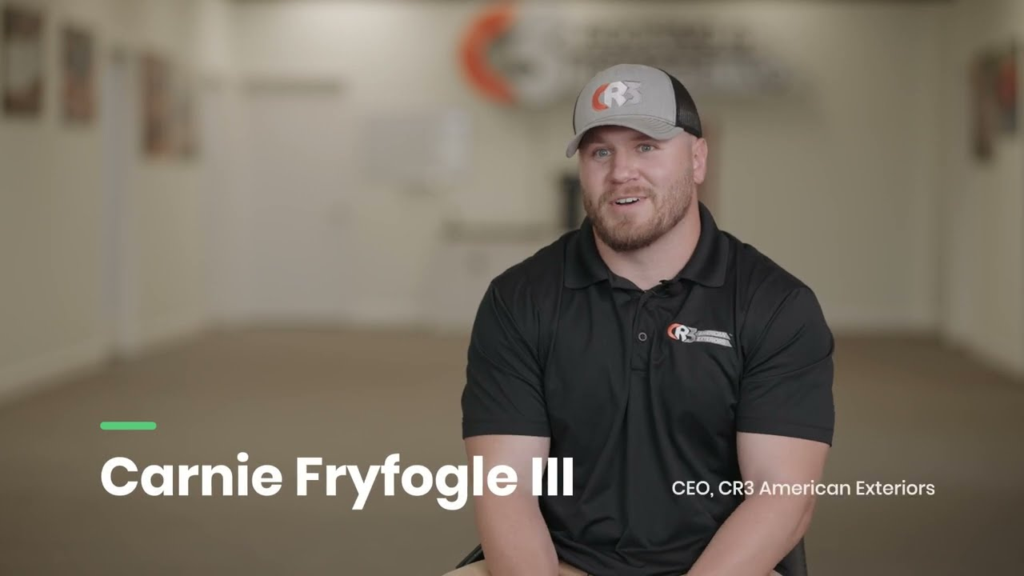
Carnie Fryfogle, CEO of CR3 American Exteriors, who scaled from $0 to nearly $15M before launching his franchise model, puts it bluntly: “If we signed on a new strategic partner today, within about 12 seconds they could get our full CRM deployment template into their account, and then they have access to everything that we’ve worked on the last seven or eight years on.”
That’s the standard you should be measuring against.
2. What Technology Are They Putting in Your Hands?
This might be the single most important differentiator between roofing franchises in 2026. The technology your franchisor uses determines how you track leads, manage jobs, communicate with customers, document inspections, handle insurance supplements, and report on your business.
Here’s what to look for:
Is the CRM built for roofing? Many franchises use generic CRMs that were designed for HVAC, plumbing, or general service businesses. They can track leads and schedule appointments, but they fall apart when it comes to roofing-specific workflows like insurance supplements, production tracking, and crew management. If the franchisor’s CRM doesn’t natively handle roofing workflows, you’ll end up duct-taping together multiple apps to get the job done.
Is communication centralized? You want a system where texts, calls, emails, photos, and job notes live in one place — accessible to your office, your crews, and your customers. If the franchisor’s tech stack scatters communication across separate apps, you’ll spend more time chasing information than closing jobs.
Can you see your entire business in one dashboard? Real-time visibility into leads, active jobs, revenue, and KPIs should be standard. If the franchisor can’t show you a single dashboard that gives you a clear picture of your operation, ask why.
Does the franchisor have oversight tools? This one might seem counterintuitive — why would you want your franchisor watching your account? Because good oversight means good support. Franchisors with portfolio-wide visibility can spot problems early, share best practices from top-performing locations, and help you before small issues become big ones. If the franchisor can’t see into your account without borrowing your login credentials, their ability to support you is limited.
Carnie describes what this looks like in practice: “If a franchisee in Florida calls us about a customer, we can just type in the name or the address, and it’ll do a search across all of our portfolio companies. We click on it, and it drops us right into that project.”
3. How Standardized Are Their Operations?
A franchise is only as valuable as the systems behind it. When you buy into a franchise, you’re paying for a proven playbook — not just a logo. Evaluate how standardized the following are across their existing locations:
- Lead handling and follow-up cadences. Is there a defined process, or does each location wing it?
- Inspection and documentation workflows. Are checklists, photo requirements, and approval processes consistent?
- Proposal and estimate formats. Do all locations present the same professional experience to homeowners?
- Customer communication standards. Does every homeowner get the same quality of updates regardless of which location serves them?
If the franchisor can’t show you standardized templates and workflows that deploy to every location, you’re not buying a system — you’re buying a name and building the system yourself.
4. What Does Training and Support Actually Look Like?
Every franchisor will tell you they offer “comprehensive training.” Push past the buzzword and ask specific questions:
- What does initial onboarding cover, and how long does it take?
- Is there ongoing training after launch, or does support drop off once you’re operational?
- Do they provide CRM and technology training, or are you expected to figure out the software on your own?
- Are there documented SOPs and operational manuals, or is knowledge passed down informally?
- How accessible is the corporate team when you have questions or problems?
“Some of us are here to build a legitimate business and an asset. Others are just here playing business,” says Carnie. “To build an asset takes time. Your team needs to mature. The system needs to mature. People in your organization need to mature.”
The best franchisors invest in your maturity. The worst ones hand you a login and wish you luck.
5. How Is Revenue Share Handled?
Royalties are part of the deal — that’s how franchises work. But how those royalties are tracked and collected matters more than most prospective franchisees realize.
In some systems, revenue share is calculated and collected automatically at the point of sale. Clean, instant, no ambiguity. In others, it’s tracked manually in spreadsheets, reconciled monthly, and prone to disputes.
Ask the franchisor: “How exactly are royalties calculated and collected?” If the answer involves manual tracking, that’s a process that creates friction, errors, and tension as your business grows. Automated revenue share protects both you and the franchisor.
6. What’s the Financial Reality?
“Financial literacy is lacking tremendously in the roofing and construction space,” Carnie says. “A lot of people say, ‘I’m operating at a 40% gross profit,’ and they have no idea. They don’t know the difference between margin and markup.”
Before you buy into any roofing franchise opportunity, understand the full financial picture:
- Total investment required — not just the franchise fee, but equipment, vehicles, insurance, initial marketing, and working capital to cover the ramp-up period.
- Realistic revenue timeline — how long did it take existing franchisees to become profitable? Ask for actual numbers, not projections.
- Ongoing costs — royalties, marketing fund contributions, technology fees, and any required vendor relationships.
- True job margins — materials, labor, permits, dump fees, insurance, fuel. If the franchisor can’t help you understand your real cost structure, that’s a problem.
Carnie’s advice on the early years: “My first four or five years in business, to go from zero to $15 million, I paid myself a salary of $50,000. No less, no more. Every dollar that you take out of that organization is a dollar that cannot be invested in the future of that organization.”
Patience and financial discipline are the difference between franchisees who build real wealth and franchisees who flame out in year two.
Red Flags When Evaluating Roofing Franchise Opportunities
Not every franchisor deserves your investment. Watch for these warning signs:
They can’t show you their tech stack in action. If a franchisor won’t demo their CRM, dashboards, and communication tools during the discovery process, they’re either hiding something or don’t have anything worth showing. Technology should be a selling point, not an afterthought.
Existing franchisees seem frustrated. Ask to speak with current franchisees — not just the ones the franchisor hand-picks. Ask them about support responsiveness, technology quality, and whether the systems they were promised actually work. If multiple franchisees describe the same pain points, believe them.
Onboarding is vague or unstructured. “We’ll get you set up” is not a training program. If the franchisor can’t walk you through a specific onboarding timeline with defined milestones, you’ll be figuring it out as you go.
Everything requires an add-on. If the core technology doesn’t handle communication, job tracking, reporting, and production management natively — and the franchisor’s answer is “we integrate with XYZ for that” — you’re signing up for a patchwork system that will frustrate you daily.
No centralized oversight or permission controls. If the franchisor can’t control what’s standardized across locations, there’s no real brand consistency. You’re paying for a franchise that operates like a loose collection of independent contractors.
Green Flags: Signs of a Well-Run Roofing Franchise
On the flip side, here’s what signals a franchise that’s built to support your success:
One-click deployment. Your entire operating system — templates, workflows, automations, campaigns — is deployed to your account instantly. You’re operational in seconds, not weeks.
Roofing-native technology. The CRM handles insurance supplements, production tracking, crew management, and job documentation natively. No workarounds, no duct tape.
Communication lives in one place. Texts, calls, emails, photos, and job notes are centralized in a single system. Your office, your crews, and your customers are all connected.
The franchisor has real-time visibility. They can see your pipeline, your job progress, and your KPIs without borrowing your login. That means they can actually support you proactively.
Financial processes are automated. Revenue share is collected at point of sale. Reporting is clean and real-time. No manual reconciliation, no surprises.
Existing franchisees are happy. They speak positively about support, technology, and the systems behind the brand. They’d do it again.
Franchises that run on purpose-built roofing platforms like ProLine tend to check these boxes. When a franchisor invests in technology that was designed specifically for roofing operations — not retrofitted from another industry — it signals that they take systems seriously. That matters for your day-to-day experience as a franchisee.
Your Roofing Franchise Evaluation Checklist
Use this when you’re comparing opportunities. Be honest with yourself — and push franchisors for real answers, not sales pitches.
| Question | What a Good Answer Looks Like |
|---|---|
| How long until I’m fully operational? | Seconds to minutes for tech deployment, structured onboarding with defined milestones |
| Is the CRM built for roofing? | Natively handles supplements, insurance workflows, production, and crew management |
| Is communication centralized? | Texts, calls, emails, photos, and notes in one thread per job |
| Can I see my full business in one dashboard? | Real-time leads, jobs, revenue, and KPIs in a single view |
| Does the franchisor have portfolio oversight? | Single sign-on across accounts, global search, rollup reporting |
| How standardized are templates and workflows? | Locked at the franchisor level, deployed automatically to every location |
| What does ongoing training look like? | Structured programs beyond initial onboarding, regular check-ins, accessible support |
| How are royalties collected? | Automatically at point of sale — not manual spreadsheets |
| What do existing franchisees say? | Positive feedback on support, technology, and systems — willing to do it again |
| What’s the total cost of ownership? | Clear breakdown of all fees, realistic revenue timeline, transparent margin expectations |
Patience Wins the Long Game
“It’s a long game. Patience. We are in an instant gratification type environment,” Carnie explains. “I sacrificed basically my entire 20s… I am very well aware that I gave up my 20s, and I’m probably going to give up my 30s to get where I want to see us go. The ‘what if’ will kill you.”
The best roofing franchise opportunity isn’t necessarily the one with the flashiest pitch or the lowest buy-in. It’s the one with systems that actually work, a franchisor who invests in your success, and technology that lets you focus on roofing instead of fighting your software.
Do your homework. Ask hard questions. Talk to existing franchisees. And when you find the right opportunity, go all in.
If you’re a prospective franchisee evaluating roofing franchise opportunities, ask your franchisor what CRM they use and whether it was built for roofing. If they can’t give you a clear, confident answer, that tells you something. Franchises that run on ProLine can. Learn more about what ProLine does for roofing franchises here.
FAQs
When should I add a new franchise location?
Only after your first locations are stable, systems are tested, and teams are executing your playbook consistently.
What role does technology play in franchise growth?
The right CRM centralizes communication, standardizes workflows, automates reporting, and allows you to monitor multiple locations in real time, saving hours of manual oversight.