
Most roofing companies offering roof insurance supplement services don’t lose supplement revenue because they misunderstand insurance work. They lose it because they assign a revenue-critical process to a role that was never designed to carry it. On the surface, it looks efficient. One organized person keeps everything moving. In reality, it quietly turns a structured revenue stream into an inconsistent administrative task.
Roof insurance supplement services are not paperwork. They are not tracking tasks. They are not inbox management. They are revenue recovery systems tied directly to job profitability. And when they get handled like general office work, the process usually becomes reactive instead of intentional. That’s where the problem starts.

The Core Issue Is Misalignment Between Work Type and Workload
Most project managers in roofing companies are strong operators. They are organized, responsive, and capable of handling multiple moving parts at once. But the work they are usually hired to do is fundamentally different from supplement work.
Office management is built around coordination. It rewards responsiveness, multitasking, and keeping daily operations stable. Supplement work is built around persistence. It rewards technical interpretation, structured follow-up, and the ability to push through multiple insurance touchpoints until resolution. Those are not the same operating environments.
So, when supplements get added into an already full workload, they don’t fail because of incompetence. They fail because they are competing with higher-frequency operational demands that always feel more urgent in the moment.
That’s how revenue starts slipping quietly in the background.
Roof Insurance Supplement Services Are a Revenue System, Not Admin Work
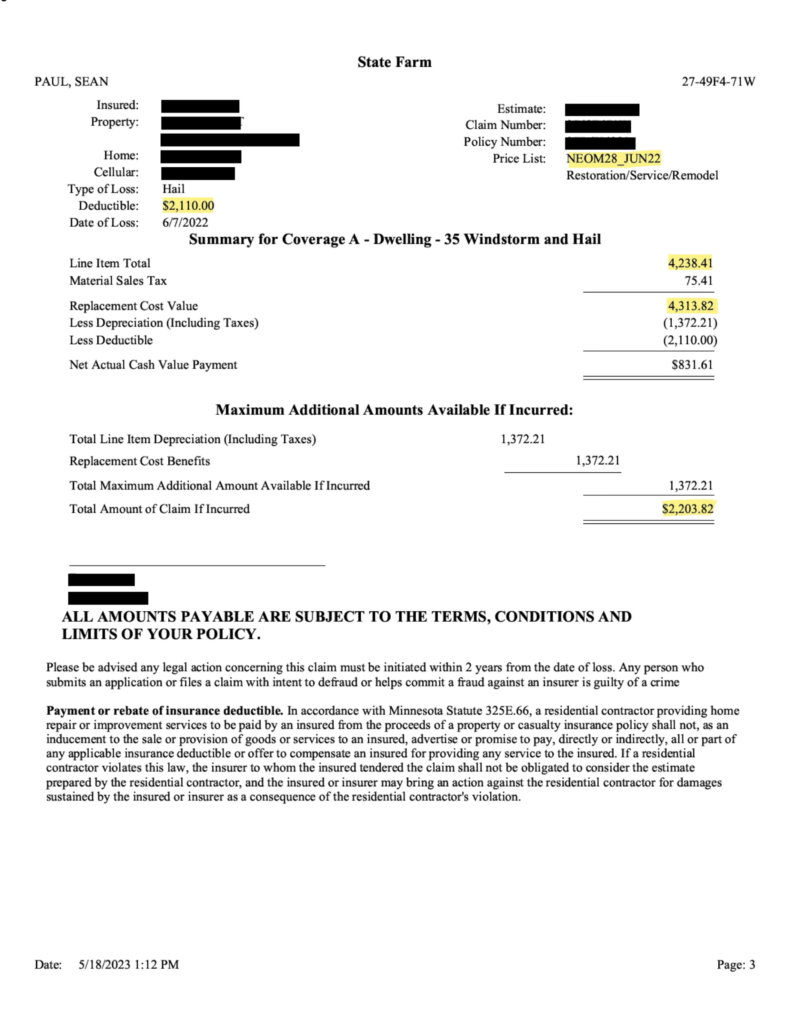
The biggest misconception in roofing is thinking supplements are an administrative extension of estimating. They are not. They are a structured attempt to recover missed or underpaid scope after the insurance estimate has already been issued. That means every supplement directly affects the margin. A typical supplement process includes work that goes far beyond paperwork:
- Reviewing the adjuster’s estimate line by line
- Identifying missing or undervalued scope items
- Matching construction requirements to insurance pricing structures
- Collecting supporting documentation tied to specific scope gaps
- Communicating with adjusters across multiple follow-ups
- Responding to requests for clarification or additional evidence
- Tracking approvals, partial approvals, and rejections
Each of these steps affects revenue. Not theoretically, but directly. This is why roof insurance supplement services have evolved into a specialized function in more mature roofing operations. It’s about systematically recovering what the initial estimate missed.
The Office Manager Role Is Already Operating at Capacity
In most roofing companies, the office manager is already functioning as an operational hub. They are not idle. They are actively managing the flow of the business.
Their responsibilities typically include scheduling crews, handling inbound customer communication, coordinating vendors, processing invoices, managing documentation, and supporting both sales and production teams. That workload is already fragmented across multiple priorities.
When supplements are added on top of that, they don’t become a dedicated function. They become an interruption-based task. And interruption-based tasks rarely get the consistency required for revenue recovery.
Insurance carriers don’t respond to urgency inside your office. They respond to structured follow-up cycles. If supplements are not actively managed according to a defined rhythm, they slow down regardless of how hard the office team is working. That is where revenue delay turns into revenue loss.
Follow-Up Is Where Most Supplement Revenue Disappears
Most contractors assume the critical step is submitting the supplement. In reality, submission is only the entry point. The actual revenue is recovered in the follow-up cycle that comes after.
This is where most breakdowns happen. Adjusters request additional documentation. Clarifications are needed on scope. Certain items get partially approved. Others get pushed back for review. Sometimes nothing happens until someone follows up again. At that stage, consistency matters more than effort.
Research on structured follow-up systems shows that consistent cadence and accountability significantly improve completion rates in multi-step approval processes because they reduce delays and prevent requests from stalling inside review queues.
Roof insurance supplement services operate in exactly this type of environment. The process is not linear. It is iterative. And without structured follow-up, momentum drops quickly. Once momentum drops, recovery rates usually follow.
Technical Roofing Knowledge Changes the Outcome More Than Most Expect
Another reason supplements struggle inside general office workflows is the technical layer involved. Identifying missing scope is not always obvious unless you understand how roofing systems are built and priced. Insurance estimates often reflect standardized assumptions that don’t always match real-world installation requirements.
For example, understanding when additional items should be included requires construction context such as:
- Ice and water shield coverage beyond minimum code requirements
- Starter strip requirements based on manufacturer specifications
- Steep slope labor adjustments for safety and installation difficulty
- Drip edge requirements tied to local code enforcement
- Ventilation components required for system compliance
- Permit, disposal, or access-related costs that vary by jurisdiction
These are not administrative details. They are construction and insurance interpretation details. Without that technical layer, supplement work becomes conservative. Teams tend to only request what is obvious rather than what is fully recoverable. That is where margin leakage begins.
The Real Problem Is Visibility, Not Effort
When supplement work is handled manually or spread across inboxes and spreadsheets, visibility becomes fragmented.
- At low volume, this is manageable.
- At higher volume, it becomes a problem.
Leadership eventually loses clarity on basic questions such as how many supplements are still open, which ones are waiting on carrier response, what the total outstanding recovery value is, or where bottlenecks are forming in the process.
When visibility drops, decision-making becomes reactive instead of proactive. That is usually the point where roofing companies realize they don’t have a supplement effort problem. They have a system design problem.
A communication-first CRM like ProLine addresses this by tying supplement workflows directly to job records, communication history, and follow-up triggers. Instead of tracking supplements as separate administrative items, they become part of the operational system. That is what creates consistency at scale.
The Industry Is Already Moving Toward Structured Supplement Systems
The shift away from manual supplement handling is already happening across the industry.
Operators like Remko Bloemhard, through SuppTrax, have built systems around structured supplement tracking and process discipline.
As roofing companies grow, supplements stop being something that fits inside general office work. They become a defined process with its own structure, ownership, and performance expectations. That evolution is not theoretical. It is already happening in companies trying to scale beyond small-team operations.
Why Software Is Replacing Manual Supplement Handling
The shift toward software is not about replacing people. It is about removing dependency on memory, inbox tracking, and individual discipline.
Manual systems fail in predictable ways. Tasks get delayed when the office gets busy. Follow-ups get missed when priorities shift. Information gets lost across communication channels. Software doesn’t eliminate those issues, but it reduces their frequency by enforcing structure. A properly designed system can:
- Keep all supplement activity tied to job records
- Trigger follow-up reminders automatically
- Centralize communication with adjusters and internal teams
- Maintain visibility into approval status across all jobs
- Prevent supplements from getting lost in email threads or spreadsheets
This is where systems like ProLine become operational infrastructure rather than just software tools. The value is not in tracking. The value is in consistency.
The Real Question Isn’t Who Handles It
The common question is whether office managers should handle supplements. That is not the real issue. The real issue is whether your supplement process consistently recovers revenue without relying on availability, memory, or individual bandwidth.
Because when supplements depend on spare time, they behave like spare-time work. When they depend on systems, they behave like structured revenue operations. That difference is what determines whether supplement revenue is predictable or accidental. This is one of the best roofing practices for those who wish to streamline operations.

Automate Insurance Supplements in Your Company
The roofing companies that perform best in supplement recovery are not necessarily the ones with the most effort. They are the ones with the most structure. They build systems that keep supplements visible, trackable, and actively managed from submission through resolution.
ProLine helps roofing teams create that structure through a communication-first CRM that connects jobs, communication, and supplement workflows in one place so you can recover more revenue, reduce operational friction, and focus on running a scalable roofing business instead of chasing information. Long story short, you’ll be able to sell more roofing jobs!
FAQs
Why shouldn’t office managers handle roof insurance supplement services?
Because supplements require technical roofing knowledge, structured follow-up, and revenue-focused workflows that go beyond general administrative responsibilities.
What is the biggest risk of assigning supplements to office management?
The biggest risk is inconsistent follow-up, which leads to stalled claims, delayed approvals, and lost revenue over time.
How do roofing companies lose supplement revenue?
Most losses come from missed scope identification, weak documentation, delayed follow-up cycles, and lack of visibility into supplement status.
Do supplements require technical roofing knowledge?
Yes. Understanding roofing systems, installation standards, and insurance estimating logic is essential for identifying and justifying recoverable scope.
How can software improve supplement management?
Software improves visibility, standardizes follow-up, centralizes communication, and reduces reliance on manual tracking, ensuring supplements move consistently through the approval process.