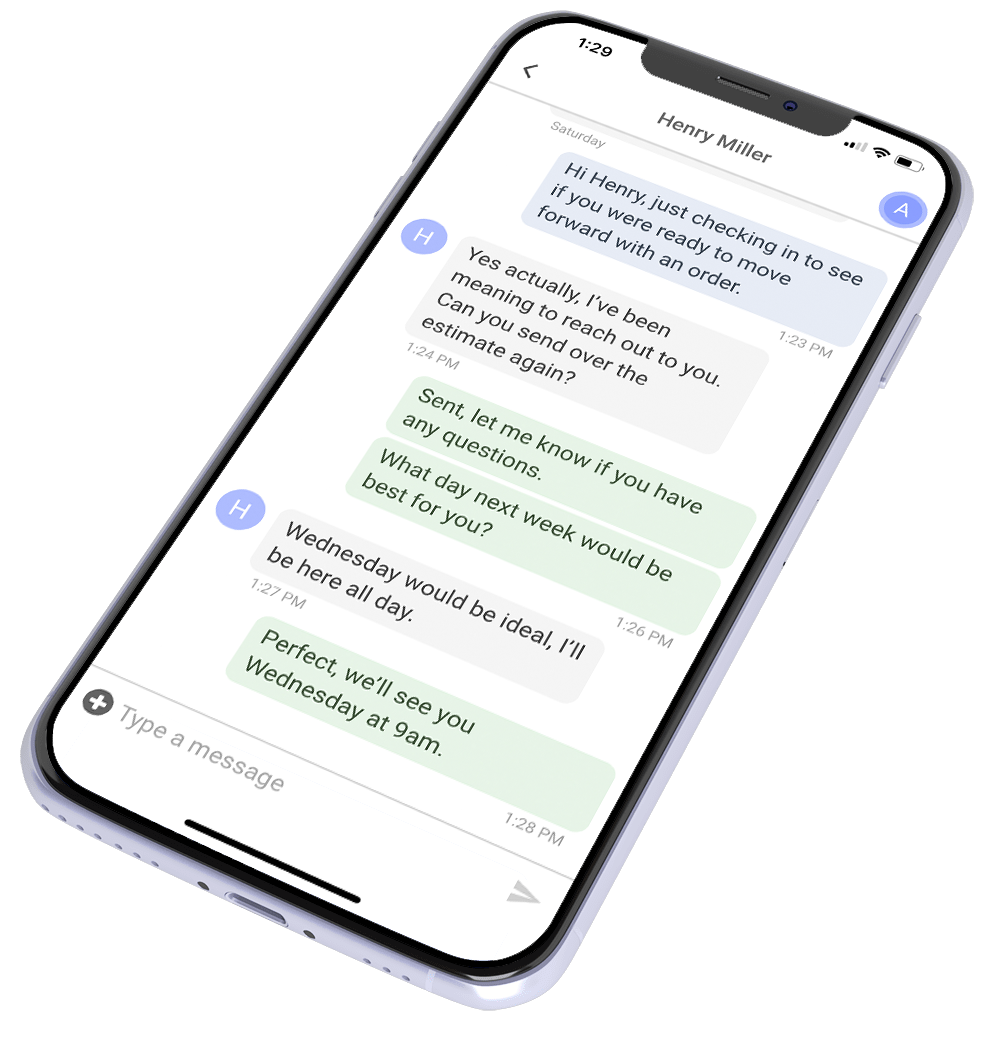
So, why do you need a roofing contractor AI answering service? A roofing company can lose a valuable lead simply because nobody answered the phone. That problem becomes even more expensive after a storm, when homeowners call multiple contractors and often move forward with the company that responds first.
Traditional human answering services have helped contractors cover missed calls, but the first generation of AI answering systems now offers another option. These tools can answer immediately, collect homeowner information, help qualify leads, and trigger the next step without waiting for an employee to become available. The question is whether they can actually improve the roofing sales process.
Here’s how AI compares with traditional answering desks and what contractors should consider before buying.
Why Answering the Phone Matters So Much in Roofing
A missed call is more than a missed phone conversation. For a roofing company, it can mean losing a homeowner who has already taken the first step toward becoming a customer. That homeowner may have found your company through Google, a referral, an advertisement, or by seeing your crew working in the neighborhood, which means your business may have already spent money or time creating that opportunity.
The economics of roofing make this especially important. A roof replacement can easily be worth thousands of dollars, while most homeowners will only replace their roof once or twice in their lifetime. There is no recurring monthly revenue to make up for a missed opportunity.

Every closed job has to help fund the acquisition of the next customer, so allowing good leads to disappear because nobody answered the phone can become an expensive operational problem.
Communication also shapes how homeowners perceive your company. They are making a major financial decision with a contractor they may have never met, and the first interaction becomes one of the signals they use to decide whether the company is trustworthy.
A fast, helpful response can increase perceived value before a salesperson ever arrives at the property, making your sales pitches more effective!
How Traditional Human Answering Services Work
Human answering services became popular because they solved a straightforward problem: roofing companies needed somebody to answer calls when the office was closed, or employees were busy. A third-party agent could pick up the phone, collect the homeowner’s information, and send a message to the appropriate person at the roofing company.
That can still be useful, particularly for contractors who previously allowed every after-hours call to go to voicemail. The problem is that a traditional answering desk often sits outside the company’s actual sales process. The agent takes a message, someone at the roofing company reviews it later, the information gets entered into a CRM or spreadsheet, and a salesperson eventually calls the homeowner back.
That creates several opportunities for the lead to go cold. The homeowner may not remember what they originally asked about, may become frustrated waiting for a response, or may simply call another contractor who answers immediately. The answering service can solve the availability problem, but it doesn’t necessarily solve the workflow problem.
Where Human Answering Services Still Make Sense
It would be a mistake to assume that AI automatically makes human answering services obsolete. People are still better at handling complicated conversations, unusual requests, emotional customers, and situations where judgment matters more than following a predefined process. A homeowner dealing with serious property damage may want to explain the situation in detail and speak with someone who can respond appropriately.
Human agents can also recognize when a caller is confused or upset and adjust their approach. That flexibility is difficult to replicate perfectly with an automated system, particularly when the conversation moves outside the scenarios the system was designed to handle.
For some roofing companies, a human answering service may still be the right choice. If call volume is manageable, the service captures accurate information, and messages reach the sales team quickly, there may not be enough operational pain to justify changing the system.
The important question is not whether humans or AI are universally better. It is whether the answering process gets homeowners from their first call to the next step quickly and reliably.
What a Roofing Contractor AI Answering Service Changes
The first generation of AI answering systems approaches the problem differently. Instead of simply taking a message, the system can have an immediate conversation with the homeowner, ask questions, collect information, and potentially move the opportunity forward without waiting for an employee to become available.
For a roofing company, that could mean identifying whether the caller is dealing with storm damage, a leak, an aging roof, an inspection request, or an existing project. The system can collect information such as the homeowner’s name, address, phone number, and reason for calling, then route that information into the appropriate workflow.
The biggest difference is speed. A homeowner who calls at 8:30 p.m. does not necessarily have to wait until the following morning just to explain why they called. If the system can provide a useful response and create the appropriate next step immediately, the roofing company has reduced the gap between homeowner interest and sales follow-up.
AI vs. Human Answering: What Should Contractors Compare?
How to Automate Your Roofing Business With AI Agents
Response Speed
AI has a clear advantage when immediate response is the priority. An automated system can answer calls around the clock without waiting for an employee or answering agent to become available. That matters particularly after storms, when call volumes can increase rapidly, and homeowners may be contacting several contractors at the same time.
Speed alone does not close a roofing job, but it helps keep the conversation alive. When a homeowner receives an immediate response instead of being sent to voicemail, the company has a better opportunity to build trust and guide the homeowner toward an inspection.
Information Capture
Both humans and AI can collect basic information, but contractors should look at what happens to that information afterward. A good system should capture the details the sales team actually needs, including the homeowner’s contact information, property address, reason for calling, and preferred next step.
The information should then become part of the sales workflow rather than sitting in an isolated message. If a salesperson has to search through emails and manually reconstruct what happened during the call, the company has simply created another administrative task.
After-Hours Coverage
Human answering services can provide evening and weekend coverage, but AI can offer that coverage continuously without relying on staffing schedules. This becomes particularly valuable during storm events, when call volume can suddenly exceed what a small office team or answering service can handle.
A contractor should evaluate how the system performs during those high-volume periods rather than judging it only during a quiet product demonstration. The real test is whether homeowners still receive useful responses when the business is dealing with a surge in demand.
Consistency
Human agents can provide excellent service, but the experience can vary between individuals and shifts. AI follows the workflow established by the contractor, which can make the basic information-gathering process more consistent.
That consistency is valuable when a roofing company has multiple sales representatives or operates across several territories. Every homeowner should receive the same basic level of information and the same clear path toward the next step.
Escalation
This may be the most important area to evaluate. A good AI answering system should understand when a conversation requires human involvement instead of trying to handle every situation independently. When chatbots completely take over the conversation with zero human involvement, customers can feel like they have entered the uncanny valley. That’s why escalation is an important part of the conversation here.
Complex insurance questions, emergency situations, angry customers, and unusual project issues may require a salesperson, manager, or customer service employee. The AI should make that handoff easy and preserve the information already provided by the homeowner so they do not have to start the conversation over.
The Biggest Risk: Generic AI That Does Not Understand Roofing
Not every AI answering service is built for contractors, and that distinction matters. A generic virtual receptionist may be capable of answering basic questions, but roofing has its own terminology, workflows, and customer concerns. Storm damage, insurance restoration, inspections, supplements, scheduling, production, and homeowner updates can all create conversations that require more context than a generic answering system provides.

The best way to evaluate a system is to test it with real situations your team encounters. Ask what happens when a homeowner calls about hail damage, wants an emergency inspection, asks about insurance, or wants an update on a project already in production. You should also test what happens when the system does not know the answer, because that is when a poor implementation can damage trust.
The goal is not to make AI sound impressive. The goal is to determine whether it can provide a useful homeowner experience while giving your team better information and faster opportunities to follow up.
Why AI Still Needs a Human Handoff
The best contractors will not use AI simply because it is new. They will use it where it improves the homeowner experience, reduces administrative work, and helps salespeople respond to opportunities faster. When automated communication is connected to a strong CRM and a consistent follow-up process, it becomes part of a larger system for building trust and selling more roofing jobs. See how ProLine can help you connect call handling, follow-up, and customer communication in one system.…
FAQs
What is a roofing contractor AI answering service?
It uses AI to answer calls, collect homeowner information, qualify leads, schedule appointments, and route complex calls to your team.
Is AI better than a human answering service?
AI can offer faster responses and consistent lead capture, while human agents are better for complex or sensitive conversations. The right choice depends on your business and call volume.
Can AI schedule roofing inspections?
Yes, some AI answering systems can schedule inspections when connected to your scheduling workflow.
Can AI handle storm-damage calls?
AI can collect information about storm damage and identify potential leads, but complex insurance or emergency situations may still require a human.
How can AI help roofing companies sell more jobs?
By answering calls immediately and moving leads into your follow-up process, AI can help prevent valuable opportunities from being lost.