Home service marketing is the process of attracting homeowners who need a service, earning their trust, and turning their inquiries into booked jobs. It includes everything from local search and paid ads to customer reviews, sales follow-up, and referrals.
Unlike businesses that sell products online, specialty trade contractors often have to earn a customer’s trust before anyone buys. A homeowner isn’t just picking an item off a shelf. They’re letting someone into their home to do work that can affect their safety, comfort, property value, or budget.
That makes communication and trust a big part of the buying decision. A good marketing plan doesn’t stop when someone clicks an ad or fills out a contact form. It connects the first contact to the finished job and the customer’s experience afterward. If you want help with the marketing side, see our list of the best roofing marketing companies.
WATCH: The Marketing Strategy Most Roofing Companies Completely Overlook
1. Build a Local Visibility System
Before homeowners can hire you, they need to find you. Your first marketing system should make your company easy to find when people in your service area search for the work you do.
For most specialty trade contractors, local search is a key starting point. Homeowners often search for a service along with a city, neighborhood, or nearby area. Your business needs a clear presence where those searches happen. Build this system around three core assets. And don’t forget you can use Google Maps to collect leads too.
A Complete Google Business Profile
Your Google Business Profile gives potential customers a quick way to see what your company does, where you work, and how to reach you. Keep it accurate and complete. Pay attention to:
- Business information: Use the right business name, phone number, address or service area, and hours.
- Services: List the actual services your team provides instead of broad descriptions.
- Photos: Add real pictures of finished projects, technicians, equipment, and your team.
- Updates: Keep key info current, especially when service areas or hours change.
- Reviews: Make it easy for happy customers to leave feedback, and respond professionally.
Read Google’s review policies before you start asking for reviews. Offering discounts or gifts in return for ratings can break the rules, so don’t do it.
A Website Built Around Services and Service Areas
Your website should answer the questions a homeowner has before they contact you. A visitor should quickly see what you do, where you work, what kinds of projects you handle, and how to ask for an estimate or appointment.
Create a page for each of your main services. An HVAC contractor, for example, might have separate pages for AC installation, heating repair, and system maintenance. A plumbing company might build its site around drain cleaning, water heater installation, and emergency plumbing.
Avoid making dozens of thin location pages that repeat the same info with different city names. Each page should give useful, accurate details about the service or area it covers.
Consistent Business Information
Your company name, phone number, address, and service details should match across your website and your important online listings. Old phone numbers and wrong hours create needless friction. They can also send customers to the wrong place when they’re trying to reach you.
The goal: Make it easy for the right homeowners to find your company and see whether you can help.

2. Create a Lead Capture and Response System
Getting found is only the first step. Your next system needs to turn that attention into real conversations. A homeowner might call after finding your Google listing, fill out a website form, respond to an ad, or reach out because of a referral. These inquiries should go into one consistent process instead of depending on whoever happens to see a notification.
Give Homeowners Clear Ways to Contact You
Your website and marketing channels should make the next step obvious. Depending on your trade, that might mean:
- Requesting an estimate.
- Booking a service appointment.
- Scheduling an inspection.
- Calling for emergency help.
- Asking for a consultation.
Don’t make people dig through several pages to find your phone number or contact form. Keep your main call to action easy to see, and make forms simple enough to finish on a phone.
Decide Who Handles Every New Inquiry
A lead should never sit unanswered because the office manager thought a technician would call back, or a sales rep thought someone else already reached out.
Assign someone to own new inquiries. Set up a process for calls, website forms, text messages, and missed calls. If your team can’t answer right away, make sure someone owns the callback. Speed matters, but so does the quality of the response. A rushed message that doesn’t answer the homeowner’s question won’t build confidence.
Track Every Lead in One Place
A shared lead record should show where the inquiry came from, what service the homeowner needs, who’s responsible for it, and what happens next. This is where a CRM helps. Instead of relying on personal phones, spreadsheets, and scattered emails, your team can manage inquiries through one process.
The goal: Turn marketing inquiries into real conversations without losing people between channels or team members.
3. Build a Reputation and Referral System

Homeowners aren’t just comparing prices. They’re trying to decide whether they can trust your company in their home.
Your reputation helps answer that question before your team ever talks to a new customer. Reviews, referrals, project photos, and customer experiences all shape how people see your business. But reputation shouldn’t be left to chance. Build a repeatable process for earning and keeping it.
Request Reviews After Successful Jobs
Your team should know when and how to ask customers for feedback. A good time is after the work is done and the customer has had a chance to see the results. Keep the request simple. Send a direct link to the review site and thank the customer for choosing your company.
Don’t ask only the customers you expect to leave five stars. The point is to collect honest feedback from real customers, not to build a perfect rating.
Respond to Positive and Negative Feedback
A review is a public account of someone’s experience with your business. Thank customers who leave good feedback, and mention specific details when it fits. If someone raises a real concern, respond professionally and try to fix it through the right private channel. Avoid arguing, sharing private customer information, or making promises you can’t keep.
Turn Good Customer Experiences Into Referrals
A happy customer may recommend you to a neighbor, relative, or coworker, but don’t assume they’ll remember to do it.
Make referrals part of how you talk to customers. After a successful project, thank the customer and let them know you’re glad to help anyone they know who needs the same service.
You can also build relationships with related businesses. For example, a roofing contractor might build referral relationships with gutter companies or other local property-service providers. Make sure any arrangement is open and appropriate for your industry.
The goal: Make every finished job a chance to strengthen your reputation and set up future business.
4. Set Up a Follow-Up and Customer Nurturing System
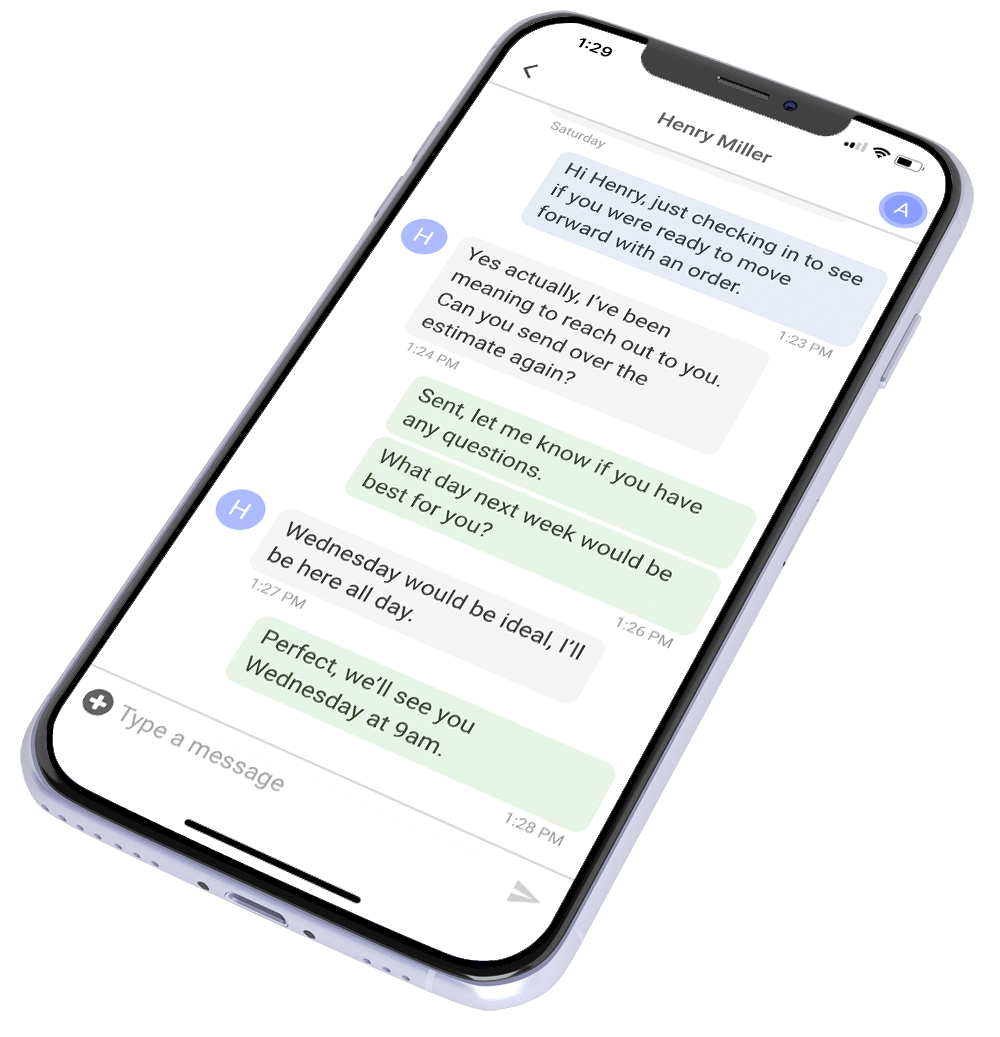
Not every homeowner is ready to hire you the moment they ask for an estimate. Some need time to compare bids, talk with family, line up financing, or figure out which option makes sense. If your team sends an estimate and waits, you’re leaving the relationship to chance. A follow-up system keeps the conversation going without making customers feel pressured. You may even be able to use AI agents to help with scheduling and follow-up.
Follow Up on Open Estimates
Create a consistent routine for estimates that haven’t gotten a response. Your messages should give the homeowner a useful reason to reconnect. For example, you might:
- Confirm the customer got the estimate.
- Ask whether they have questions about the work.
- Explain a product, service, or pricing detail they may want to compare.
- Check whether their timeline has changed.
- Close the loop if they decide not to move forward.
Timing will vary by trade and project. An emergency plumbing call needs a different follow-up process than a homeowner thinking about a major HVAC install or roof replacement.
Stay in Touch With Past Customers
Your relationship with a customer doesn’t have to end when the invoice is paid. Depending on your trade, you may have good reasons to reach out to past customers about maintenance, inspections, seasonal services, or warranty questions.
For example, an HVAC contractor might send a seasonal maintenance reminder. A pest control company might send a note about a scheduled service. A roofing contractor might offer a maintenance check. These messages should match the customer’s actual service history. Don’t turn every past customer into a target for unrelated promotions.
Automate the Routine, Personalize the Conversation
Automation can help your team send reminders, confirm new inquiries, and follow up on estimates. But it shouldn’t make your business sound like a call center.
Use templates as a starting point. Add the customer’s name, the service, project details, and what you’ve already talked about. Give people a clear way to ask questions or stop getting marketing messages.
If you send promotional emails, follow the federal CAN-SPAM rules. They include accurate sender information, a valid postal address, and an opt-out that works. Text marketing and automated calls can come with extra federal and state rules. Check the rules for the methods you use, and get any required consent before you send marketing messages.
The goal: Keep useful communication going so potential customers don’t fall through the cracks and past customers remember who to call.

5. Measure Marketing Performance and Improve the System
Your marketing budget should produce more than website visits, social media likes, and a growing list of inquiries. You need to know which activities lead to real jobs and whether those jobs are profitable.
Without tracking, it’s easy to keep spending on a channel because it looks busy while missing a smaller source that brings in better customers. Start by tracking the full path from inquiry to finished work.
Connect Marketing Data to Sales Results
Your CRM, call tracking, website analytics, and accounting system may each hold part of the picture. Try to connect them well enough to see what happens after a lead comes in. For example, if Google Ads brings in plenty of calls but few booked jobs, look at the quality of the leads, how fast your team responds, and how sales reps handle those calls.
If referrals bring in strong jobs but your team rarely asks for them, you may have a chance to improve your post-job process.
Review Performance Regularly
Set a recurring time to review marketing results with the people in charge of sales and operations. Look at which channels are working, where leads get stuck, and whether your team is following the process. Then make one or two real changes. You don’t need to rebuild your whole plan every month. You need to find the biggest leak and fix it.
The goal: Spend marketing dollars based on business results instead of guesses.
Build a Marketing System That Wins More Than Leads
More leads won’t automatically make a healthier contracting business. You need a system that helps homeowners find you, see your value, trust your team, and get steady communication through the buying process. If you’re a roofing contractor ready to put communication at the center of your sales process, check out ProLine, the communication-first CRM built to help roofers sell more jobs and make it home for dinner.
FAQs
What is the most effective marketing for home service businesses?
No single channel works best for every contractor. Local search, customer reviews, referrals, paid ads, and steady follow-up can all help you grow. The right mix depends on your trade, service area, competition, and how well you turn inquiries into profitable jobs.
How much should a home service contractor spend on marketing?
There isn’t one budget that fits every trade. Your budget should reflect your revenue goals, profit margins, average job value, cost to win a customer, and capacity. Track the results of each channel before you spend more.
How do I get more leads for my home service business?
Start with a complete Google Business Profile, a useful website, clear service pages, real customer reviews, and easy ways to contact you. Once those basics are in place, think about paid ads and other channels that reach homeowners in your area.
Why is follow-up important in home service marketing?
Many homeowners need time to compare estimates, ask questions, or plan a project. Steady follow-up keeps your company in the picture while they decide and gives them the info they need.