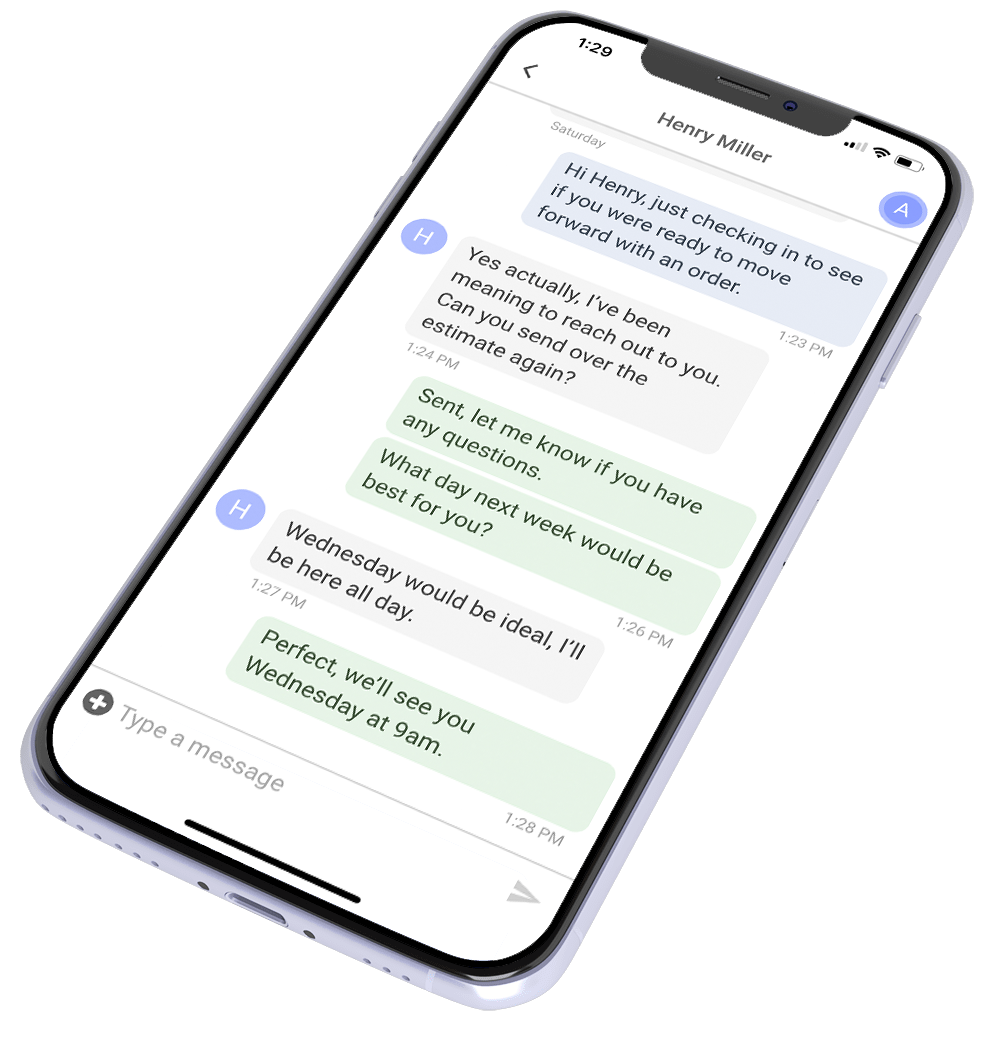
Most roofing owners don’t stall out because they lack opportunities. They stall out because they can’t stop doing everything themselves long enough to act on the opportunities in front of them.
They want growth, but still approve every estimate. They want multiple crews, but still dispatch every job. They want a business that runs without them, while running it as if it depends entirely on them. That contradiction is where most roofing companies quietly cap their own ceiling.
Delegation is the thing that breaks the cap. Not hiring, not software, not another marketing channel. Delegation. If you can’t hand off ownership of outcomes, you’re not building a company that scales. You’re just adding complexity while keeping every decision routed through one person.
Read on to learn how to delegate in a roofing business.
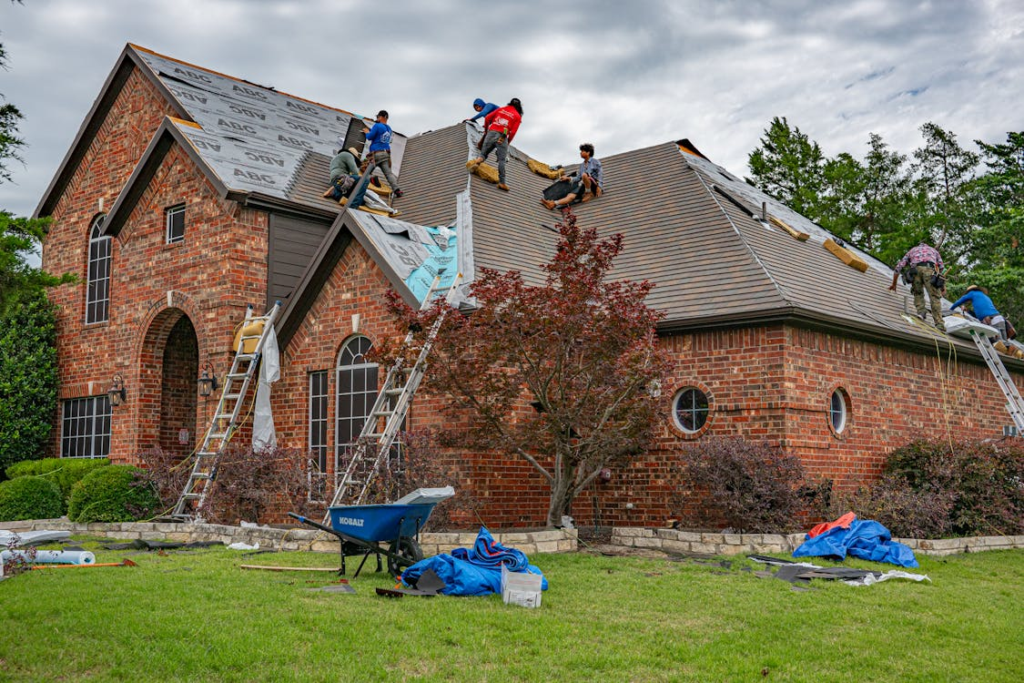
Delegation Is the Real Gatekeeper to Growth
Most contractors assume the barrier to scaling is external. Capital, leads, marketing. In reality the limit is internal: how much of the business depends on one person’s decisions.
A bigger company only works when the same job gets executed consistently by different people. Sales conversations, production workflows, customer communication, scheduling, follow-up. When those things are not clearly handed off, every problem collapses back to the owner, and the business multiplies workload instead of output.
On a recent Roofer to Roofer episode, Brian Huff of Modern Roofing put the principle plainly. He framed it as putting the right people in the right seats on the bus, and pointed out that not knowing how to do something yourself is no excuse for refusing to hand it off. As he put it, the CEO of a fast food chain probably couldn’t assemble a meal if you dropped them behind the counter, and that’s fine, because their job is to run the business, not work the line. His takeaway was direct: try to do it all yourself and you’ll never accelerate.
That’s the whole argument. The business stops growing the moment every decision still has to pass through you.
Most Contractors Think They’re Already Delegating
Here’s the trap. Owners see team members handling calls, inspections, scheduling, and paperwork, and assume delegation is happening. Usually it isn’t. That’s task assignment, not delegation.
Task assignment sounds like “call this customer,” “schedule that job,” “send this estimate.” Individual actions that still rely on you to connect the dots between them. Real delegation transfers ownership of the result. Instead of telling someone to call a customer, you make them responsible for the entire customer experience from inspection to completion. They own the outcome, not just the step.
The distinction matters because only one of these actually frees up your time. Assigning tasks keeps you in the loop on everything. Handing off outcomes gets you out of the loop on purpose.
Step-by-Step Guide: How to Delegate in a Roofing Business
This is where most articles wave their hands and tell you to “build systems.” Huff did something better on the show. He walked through the exact method he uses to get work off his plate, and it’s worth laying out in full because you can run it this week.
Step 1: Audit your time into four boxes
Huff credits a book called The World’s Greatest Assistant for the framework. You sort every activity you do into four boxes:
- Things you’re good at and like doing
- Things you’re not good at but like doing
- Things you’re good at but don’t like doing
- Things you’re terrible at and don’t like doing
The point is to find your drudgery zone. Some of what fills your day is work you’re wasting your time on, work someone else could do better. The boxes make that visible instead of letting it hide inside “I’m just busy.”
Step 2: Do the math on your own hours
Huff frames it bluntly. Pulling permits, paying for permits online, scheduling inspections, ordering an EagleView measurement, generating a quote template, scheduling projects, scheduling material deliveries. That’s roughly $50-an-hour work. As the owner, you need to be doing the $1,000-an-hour work. Every hour you spend in the drudgery zone is an hour stolen from the work only you can do.
So the rule is simple. Everything in your drudgery zone gets handed off. You’re not delegating because the task is beneath you. You’re delegating because your time is worth more somewhere else.
Step 3: Hire for the result, not the task
When you bring someone in, whether it’s a virtual assistant, an admin, or a new hire, you’re not buying their hours. You’re buying an outcome. Huff’s framing: “I need someone to get this result. Can you get us that result?” The right people in the right seats can take over work you don’t even know how to do yourself, because your job is to define the result and verify it got delivered, not to micromanage the steps.
For what to offload first, Jon Starry of Steadfast Roofing was specific. He runs three VAs and hands them the things his time isn’t well spent on: registering warranties for completed jobs, lead intake when a web form comes in or someone reaches out on Google or Facebook, creating social posts. He keeps a separate VA through a different agency whose entire job is implementing things in the CRM, and he’s the first to admit that VA knows ProLine better than he does. If you’re not sure who to hire, this guide to finding great roofing employees covers the hiring and onboarding side.
Step 4: Record one video per task
Here’s the mechanical part most owners skip, and it’s why their delegation attempts fall apart. A VA can’t stand behind your shoulder and watch you click. So you record the click path. Huff uses a Loom account and walks through each task out loud while doing it: “In this video I’m going to show you how to pull a permit in Denver. We go to this website, we use this login, we click here and here, we pay with the company card, the permit comes back to our email, we grab it and file it in the project in ProLine.” Done.
The discipline that makes this work: one video per task. Do not record one 25-task marathon video. Keep each one short and single-purpose so it’s searchable. When your VA forgets a step three weeks later, they pull up that one 90-second clip, watch it at 1.5x, and get unstuck in seconds instead of interrupting you. (Longer start-to-finish videos have their place for training a full-time employee on something like lead intake, contact creation, booking an appointment, and quote templates as one connected flow. But for handing single tasks to a VA, keep them granular.)
Step 5: Give them one place to see the whole job
A recorded process only works if the person running it can see the job. This is where a communication-first CRM earns its place. Permits, photos, customer messages, and job status all live in one project record, so your VA or admin can operate inside a defined workflow without pinging you for context. Centralizing job communication in one system is what lets someone own an outcome instead of waiting on you to connect the dots.
Run those five steps on a single task, prove it works, then do the next one. That’s the whole engine. The owners who scale aren’t doing anything more complicated than this, repeated until most of their week is off their plate.
Why Control Becomes the Bottleneck
Roofing runs on uncertainty. Weather delays, material shortages, insurance approvals, customer changes, scheduling conflicts. Because of that, owners develop a reflex to step in and fix things. Early on, that’s necessary. It keeps jobs moving.
Over time the same reflex becomes the constraint. When the owner is the central decision-maker, every issue eventually routes back to them, no matter how small. Teams wait instead of acting. Jobs slow down because something needs approval at every stage. The company looks like it’s growing from the outside, but internally it’s choking on its own org chart. More jobs just mean more pressure on the same person.
Jon Starry made a related point on the same episode that’s worth sitting with. You can be the best installer in the world and the worst business owner alive. Knowing how to put a roof on tells you nothing about the parts of the company that actually keep it growing. Those are different skills, and the owner who refuses to let go of the roof never develops the second set.
What Real Delegation Looks Like
Strong delegation isn’t informal. It’s structured, repeatable, and supported by clear operational design.
Roles get defined so every stage of a job has an owner. Sales handles acquisition and closing, production manages execution, admin handles documentation, billing, and communication. But role division alone isn’t the difference. The difference is the system around the roles: documented workflows that remove ambiguity, communication protocols that reduce confusion, responsibilities that don’t overlap. This is exactly what standard operating procedures do for a roofing office, getting the process out of your head and onto paper so the team executes consistently without you standing over their shoulder.
Visibility is the other half. You don’t need to be involved in every action, but you need to be able to see every action. Instead of chasing status reports, you see real-time job progression. Instead of micromanaging execution, you manage the system.
Why Contractors Resist It Anyway
Even owners who understand all of this still struggle to let go. The resistance is rarely logical. It’s psychological.
The most common version is fear of quality loss. Owners believe that if they aren’t personally touching every decision, the work slips. So they keep intervening even after systems are in place. Another version is prior failure. Plenty of contractors tried to delegate before, did it without structure, got inconsistent results, and concluded that delegation doesn’t work, when the real problem was the missing system.
Then there’s identity. For a lot of owners, being in the middle of every job is where their sense of importance lives. Stepping back can feel like becoming irrelevant, even though it’s the opposite.
Ali Baston, who hosts the show, named a fourth version that hides behind the others. She described a contractor sitting comfortably at four million in revenue who showed no interest in scaling, and she wondered out loud whether the lack of desire was genuine or whether it was self-doubt, a quiet fear that he wouldn’t be able to handle everything growth would bring. Jon’s answer was fair: staying small is a legitimate choice, and an owner-operator can keep growing in skill and adopting new technology without chasing revenue. Brian pushed a little further, noting that growth of any kind requires a willingness to challenge your own comfort zone, and without that willingness there’s no growth at all.
Worth being honest here. Not everyone needs to scale, and “I’m happy where I am” is a valid answer. But if you want to grow and aren’t, it’s worth asking which of these is actually stopping you.
What Breaks When Delegation Is Missing
When delegation isn’t real, the same problems show up in every roofing operation.
Jobs stall because approvals are delayed or unclear. Communication fragments because team members work independently without shared visibility. Production slows because people wait on decisions instead of executing a defined process. Revenue cycles drag because billing depends on operational completion that keeps slipping. And the owner becomes the single point of failure, holding decisions that should have been distributed long ago.
At that point, even a company with multiple crews behaves like a one-person shop with extra steps.
How Good Systems Make Delegation Automatic
The goal isn’t to remove responsibility. It’s to remove the dependency on your constant involvement. Strong systems do this by building structure into every stage. Jobs move through defined stages, each stage has an owner, communication gets logged in one place, and progress is visible without anyone filing a report.
In that environment, delegation stops being something you enforce. It becomes the natural result of how the system is built. This connects directly to choosing software that scales with you, because a tool that jams up under volume will quietly pull you back into the weeds the moment things get busy.
What Changes When You Finally Let Go
Once delegation is real, the whole rhythm of the business changes. You spend less time reacting and more time overseeing. Teams move with more clarity because expectations are defined. Jobs move faster because decisions aren’t stuck behind a bottleneck. And the company stops depending on you for every outcome.
That’s the point where growth stops being theoretical. The business is no longer limited by your personal capacity. It’s supported by structure, and that structure is what lets you take on more without drowning in it. If you want the bigger picture on building toward that, the guide to growing a roofing business lays out where delegation fits alongside leads, systems, and team building.
The contractors who succeed at scale aren’t the ones who work harder or stay more involved. They’re the ones who build systems that let other people operate well without supervision. If you want to grow beyond yourself, ProLine gives you a communication-first CRM that centralizes visibility, enforces workflow structure, and lets you delegate confidently without losing the thread.
FAQs
How do I actually start delegating?
Audit your time into four boxes to find your drudgery zone, hand off everything in it, hire for the result rather than the task, record one short video per task so the process is searchable, and give the person one system where they can see the whole job. Run that on a single task, prove it works, then repeat.
What’s the difference between task assignment and delegation?
Task assignment hands off individual actions. Delegation hands off ownership of outcomes. Real delegation needs systems, accountability, and clearly defined responsibilities behind it.
What should I delegate first?
Start with the low-value, repeatable work that doesn’t need your judgment: pulling and paying for permits, scheduling inspections and deliveries, ordering measurements, lead intake, warranty registration, and social posts. That’s the work eating your week that someone else can do as well or better.
Why do roofing contractors struggle to delegate?
Usually fear of losing quality, bad past experiences with delegation that lacked structure, emotional attachment to being involved in everything, and sometimes self-doubt about handling what growth brings.
Can a roofing company scale without strong delegation?
Not really. Without it, the business keeps collapsing back to one decision-maker, and adding crews or jobs just adds complexity instead of capacity.