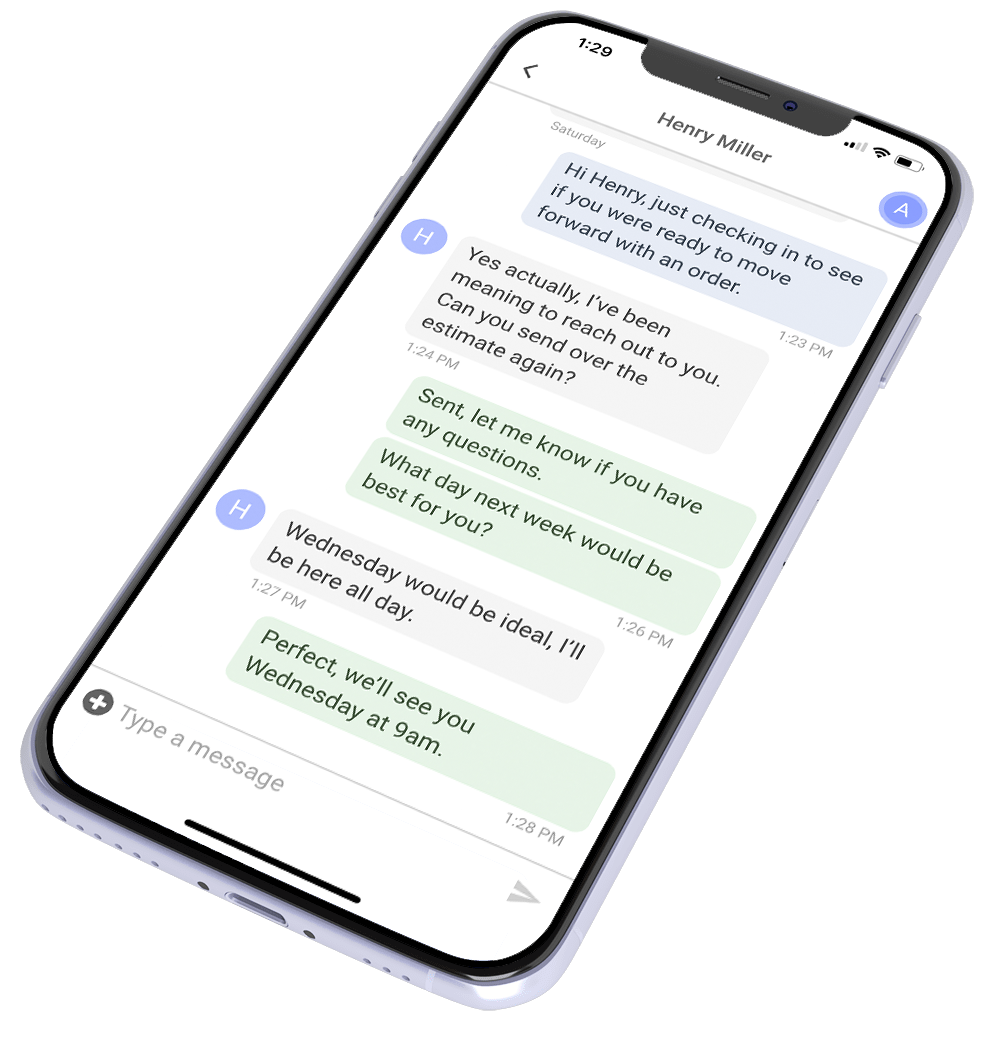
A customer doesn’t care that your Denver location is having a rough month. They booked a roofing company, and they expect the same professional, responsive experience they’d get anywhere else under your brand.
That’s the promise every roofing franchise makes. The top roofing franchise brands are the ones that actually keep it.
And keeping that promise at scale, across 10, 30, or 100+ locations, doesn’t happen by accident. It happens because of systems.
So what separates the franchises that grow from the ones that plateau? A duplicatable customer experience, built on consistent systems, not on hoping each franchisee figures it out. Let’s break down exactly how top roofing franchises build that consistency, and what tools make it possible.
Why Consistency Is the Product
When a homeowner calls your franchise, they’re not buying a roof. They’re buying the confidence that your company will show up, communicate clearly, do the work right, and follow through.
That’s what consistency sells. And when one location drops the ball, slow follow-up, a messy proposal, a crew that doesn’t communicate, it doesn’t just hurt that location. It chips away at the brand.
The stakes are real. 29% of consumers say they stopped buying from a brand due to poor customer experience, either online or in person. One bad location doesn’t stay contained. It bleeds into the brand.
Franchisors who have grown past a handful of locations know this pain. Every new location is a new set of humans with their own habits, their own shortcuts, and their own interpretation of “good enough.”
Carnie Fryfogle, CEO of CR3 American Exteriors, a roofing business that grew from $0 to nearly $15M in four years before launching its franchise model, put it plainly:
“When you have entrepreneurial-spirited individuals that are joining a franchise concept, naturally, they want to try and find things that help them improve their day-to-day… That leads to a lot of struggles.”
The instinct to personalize isn’t bad. But without guardrails, personalization becomes inconsistent. And inconsistency destroys brand value.
Step 1: Lock Down What Defines Your Brand
The first move in building a duplicatable experience is deciding what’s non-negotiable. What does every customer interaction look like, regardless of which franchisee handles it?
This means standardizing:
- Proposal and quote templates: Every homeowner gets a clean, professional document
- Follow-up sequences: Every lead gets contacted within a defined window
- Communication tone and cadence: Every customer gets the same level of responsiveness
- Onsite and post-job documentation: Every crew captures the same data at every job
This is where the right roof franchise CRM becomes the difference between a policy written in a handbook and one that’s actually enforced.
ProLine’s Super Admin, what franchise operators have nicknamed “God Mode”, gives franchisors over 100 granular permission settings. You decide which elements are locked and which have flexibility. Pricing? Franchisees can adjust that. The quote template your brand has refined over seven years? That stays exactly as built.
Fryfogle describes how this changed operations at CR3:
“The brand appearance out in the marketplace is locked and secure. But if you want to manipulate pricing in your marketplace because you want to make less or more money, you have the freedom and flexibility to do that.”
That’s the balance. Tight where it matters. Flexible where it doesn’t.
Step 2: Deploy Instantly, Not Eventually
Every time a new franchisee joins, you face a choice: spend days manually rebuilding their CRM from scratch, or deploy your entire operating system in seconds.
For most franchise software, it’s the former. Every template, every automation, every workflow gets rebuilt by hand. For a franchisor with 10+ locations, that’s a full-time job in itself.
Fryfogle on what that used to look like with their previous CRM:
“What we had to do is go into every single account and duplicate and rebuild everything. Every template, every automation, everything had to be rebuilt. The amount of time saved there was tremendous.”
With ProLine, a franchisor builds a setup profile once. When a new franchisee signs on, that entire system is deployed with one click. As Fryfogle put it:
“Within about 12 seconds they could get our full CRM deployment template into their account, and then they have access to everything that we’ve worked the last seven or eight years on.”
That’s not just a time-saver. It means every new location starts with the identical customer experience your brand has spent years building, not a rough approximation of it.
Step 3: Make Communication the Core, Not an Afterthought
The number one reason homeowners leave negative reviews isn’t workmanship. It’s communication. Slow responses, unclear timelines, and a crew that shows up unannounced. These are brand killers.
The top roofing franchise operators build communication into the system itself, so it’s not dependent on any individual rep’s habits.
That looks like:
- Automated follow-ups triggered the moment a lead comes in
- Appointment reminders sent to homeowners without anyone having to remember
- Job status updates that keep customers informed without extra calls
- Field-to-office communication that happens in real time, not at end of day
This is especially critical in the field. A crew member who uses a mobile-first CRM can capture photos, update job status, and send documents directly from the job site. The homeowner gets real-time updates. The office sees everything as it happens. No dropped balls, no “I forgot to log that.”
Think of it this way: there are 3 ways your roofing CRM should be selling jobs before a rep ever knocks a door.
- Speed to lead. The first contractor who responds wins more often than not. Automated lead follow-up takes that decision out of human hands.
- Professional proposals. A clean, branded, consistent proposal tells the homeowner this company has its act together before the first nail goes in.
- Frictionless follow-through. Customers who get clear communication at every step refer their neighbors. That’s compounding revenue.
Step 4: Visibility Across Every Location
You can’t coach what you can’t see. And if you’re jumping between individual logins to check on 20+ franchisee accounts, you’re not running a franchise. You’re doing data entry.
Forrester’s 2025 Customer Experience Index found that weak tech implementations remain one of the biggest drivers of declining customer experience quality. For roofing franchises, that often comes down to one problem: franchisors can’t see what’s happening across their portfolio in real time.
A single sign-on roof franchise CRM fixes that. Instead of chasing separate logins, franchisors get one dashboard showing pipeline by location, follow-up compliance, job status, and performance metrics across every account.
Fryfogle describes how game-changing this was for CR3:
“The single sign-on feature within Super Admin was arguably the single biggest reason that we moved to ProLine at first… Before, we were having to log into our franchises’ CRM account using their credentials, which is incredibly inefficient. You have people changing passwords. There’s a little bit of liability there too.”
And with ProLine’s global search, franchisors can find any customer across the entire portfolio instantly, without entering a single franchisee account:
“If a franchisee in Florida calls us about a customer, we can just type in the name or the address and it’ll do a search across all of our portfolio companies. We click on it and it drops us right into that project.”
That’s what real visibility looks like. Not a report you run at the end of the month. A live view of your entire business, available in seconds.
At a Glance: Building a Duplicatable Customer Experience
| Franchise Challenge | ProLine Solution |
|---|---|
| Inconsistent customer experience across locations | Locked templates and permission controls via Super Admin |
| Slow lead response times | Communication-first CRM with speed-to-lead automations |
| Manual onboarding for new franchisees | One-click setup profile deployment in ~12 seconds |
| Fragmented field-to-office communication | Mobile app with real-time photo capture and messaging |
| Chasing franchisee data across logins | Single sign-on and global search across the entire portfolio |
The ROI of Getting This Right
This isn’t just operational hygiene. It has a direct revenue impact.
When CR3 fully deployed ProLine’s Super Admin, the results were immediate. Fryfogle shared:
“When we turned the system on, we actually reduced our staff by two full people in about 60 days… It actually ended up saving us roughly about 100 grand a year within the first 60 days of turning it on.”
And the time savings compound:
“Hundreds and hundreds and hundreds of hours saved within 365 days between deploying the setups, the single sign-on, and the global search feature. Hundreds of hours in a year.”
Those hours don’t disappear. They go back into coaching franchisees, closing more jobs, and building the brand, which is where a franchisor’s time actually belongs.
What to Look for in a Franchise CRM
Not every CRM is built for franchises. Most are adapted from HVAC or plumbing software, with roofing bolted on later. If you’re serious about running the best roofing franchise operation you can build, your software needs to do these things natively:
- Granular permission controls: Lock brand-critical elements, allow pricing flexibility
- One-click deployment: New franchisee onboarded in seconds, not days
- Single sign-on: One login to access every account in the portfolio
- Portfolio-wide reporting: See every location’s performance without separate logins
- Communication-first workflows: Automated follow-ups, reminders, and field updates built in
- Mobile-first field tools: Crews update jobs, capture photos, and communicate from the roof in real time
The full breakdown of what to demand from your platform is in this roofing franchise CRM buyer’s guide. If a CRM can’t do these things, it’s not franchise software. It’s single-location software with an extra login.
The Bottom Line
The best roofing franchise isn’t the one with the most locations. It’s the one where every location delivers the same quality, the same responsiveness, and the same professionalism, every time.
That doesn’t happen because every franchisee is exceptional. It happens because the systems are.
Standardized templates. Instant deployment. Communication automation. Portfolio-wide visibility. These aren’t nice-to-haves. They’re the difference between a franchise that scales and one that just spreads chaos to more zip codes.
If you’re building toward that kind of operation, see what ProLine’s Super Admin can do for your franchise.
FAQs
What makes a roofing franchise customer experience “duplicatable”?
It means every customer gets the same response times, documentation, and communication regardless of which location serves them. Standardized CRM templates, locked brand settings, and automated follow-up sequences make this possible at scale.
Why do roofing franchises struggle with consistency across locations?
Franchisees are entrepreneurs who naturally adapt and improvise. Without enforced systems in the CRM itself, each location drifts toward its own habits. Different proposal formats and inconsistent follow-up chip away at the brand experience over time.
How does ProLine Super Admin help franchisors maintain brand control?
Super Admin gives franchisors over 100 granular permission settings to lock brand-critical elements while giving franchisees flexibility on pricing. New locations get the full system setup in approximately 12 seconds via one-click deployment.
Is mobile support important for a consistent franchise customer experience?
Yes. Field teams that can update job status, capture photos, and communicate in real time reduce errors and keep customers informed without delays. A mobile-ready franchise CRM keeps the experience consistent from the office to the roof.
What should roofing franchisors look for in a CRM?
Prioritize single sign-on, portfolio-wide reporting, one-click deployment, granular permission controls, and communication automation. If the CRM wasn’t built specifically for roofing franchises, it will create more admin work than it removes.