You know what a drip edge is. You know what flashing does. But does Mrs. Johnson on Elm Street understand these essential roof terms? Probably not. And when she doesn’t understand what you’re talking about, she doesn’t say, “Can you explain that?” She says, “Let me get a few more quotes,” and ghosts you.
Most roofing sales aren’t lost on price. They’re lost on confusion. The contractor who can translate technical roof terms into plain English — the kind that makes a homeowner feel informed instead of overwhelmed — is the one who walks away with the signed contract.
The U.S. roofing market continues to grow, and homeowners have more contractor options than ever. They’re not just comparing bids. They’re comparing experiences. And communication is consistently ranked as one of the top factors homeowners weigh when choosing (and recommending) a contractor.
So this isn’t a glossary. You already know the terms. This is a playbook for explaining them in a way that builds trust, eliminates objections, and closes jobs faster.
Why Speaking “Roofer” Matters
Experts believe that texting is the most powerful secret weapon in a roofing contractor’s arsenal. But you can’t text efficiently without knowing the meaning behind the words you’re using. Using roofing terms correctly doesn’t mean confusing homeowners. It means educating them, building trust, and showing them you know what you’re talking about.
In the roofing industry, communication and responsiveness are core parts of what homeowners pay attention to; your potential clients rightfully expect you to be an industry expert with all the insider knowledge. A recent industry report found that 90% of homeowners say clear communication during the roofing process builds trust.
So, your behavior determines if a homeowner hires you, stays confident through the process, and recommends you to others. When you speak clearly to your client:
- You reduce misunderstandings about cost, scope, and expectations.
- You also avoid delays that come from confusion.
- Your team can strengthen referrals and online reviews, because homeowners talk about the experience, whether it is good or bad.
Integrating Terms Into Your Process
Knowing essential roof terms isn’t enough for you. You need to prove your expertise by using these terms naturally and weaving them into everyday convos with clients to win roofing jobs.
Walk the roof with visuals
When you show homeowners a slope, a valley, or an area of cracked flashing and explain what it is, you demystify the job. Many homeowners prefer digital communication tools (photos, project updates, visuals) to stay informed during a project.
Explain measurements and materials
Talking to homeowners through pitch, square footage, or explaining why certain materials are needed makes your estimate feel transparent. Homeowners are more likely to trust a contractor who provides detailed project documentation rather than generic figures.
Highlight problem areas with clarity
Instead of jargon like “flashings require replacement,” you should say: “The metal flashing here is bent and cracked, which lets water seep in. Fixing it now prevents interior leaks later.” This type of plain‑spoken explanation aligns with what most homeowners say increases their confidence when contractors provide detailed project information.
Offer options in plain language
When you break down repair vs. replacement, material upgrades, and warranty differences, you give homeowners control… and that matters because a majority of your customers are likely to recommend a contractor who demonstrates professionalism throughout the project.
Roof Structure: What Homeowners Can’t See but Need to Understand
These are the terms that come up during inspections and estimates. Homeowners rarely know what’s under their shingles, so how you explain it shapes whether they trust your recommendation.
Roof Decking
What it is: The plywood or OSB panels nailed to the roof’s frame. Everything else sits on top of it.
How to explain it: “Think of decking like the subfloor in your house. You don’t see it under the carpet, but if it’s rotting or soft, nothing on top of it is going to hold up. We check this on every job.”
Why it closes sales: When you explain decking, homeowners understand why you might need to replace boards — and why that line item isn’t padding the estimate.
Underlayment
What it is: A protective layer between the decking and the shingles that acts as a secondary water barrier.
How to explain it: “This is your roof’s backup plan. If wind drives rain under a shingle, the underlayment keeps water from hitting the wood. Skipping it or using cheap material is like building a house with no insulation.”
Why it closes sales: Homeowners who understand underlayment are more likely to approve the upgraded synthetic option instead of pushing back on cost.
Rafters and Trusses
What they are: The skeleton of the roof. Rafters are individual sloped beams cut on-site; trusses are pre-fabricated triangle structures.
How to explain it: “These are the bones of your roof. They determine the shape, the strength, and how much weight it can handle. We inspect them to make sure everything underneath is solid before we put new material on top.”
Why it closes sales: Homeowners feel reassured that you’re not just slapping shingles on a compromised structure.
Pitch
What it is: How steep the roof is, expressed as a ratio (e.g., 6/12 means the roof rises 6 inches for every 12 inches of horizontal run).
How to explain it: “Your roof has a pretty steep pitch, which is great for shedding water but it does take more material and more safety equipment, so that factors into the cost.”
Why it closes sales: This is one of the simplest ways to justify pricing differences. A homeowner with an 8/12 pitch now understands why their quote is higher than their neighbor’s ranch-style house.
Functional Components: Where Leaks Start and Sales Stall
These terms come up when you’re pointing out problems. If a homeowner doesn’t understand what you’re showing them, they won’t feel urgency to fix it.
Flashing
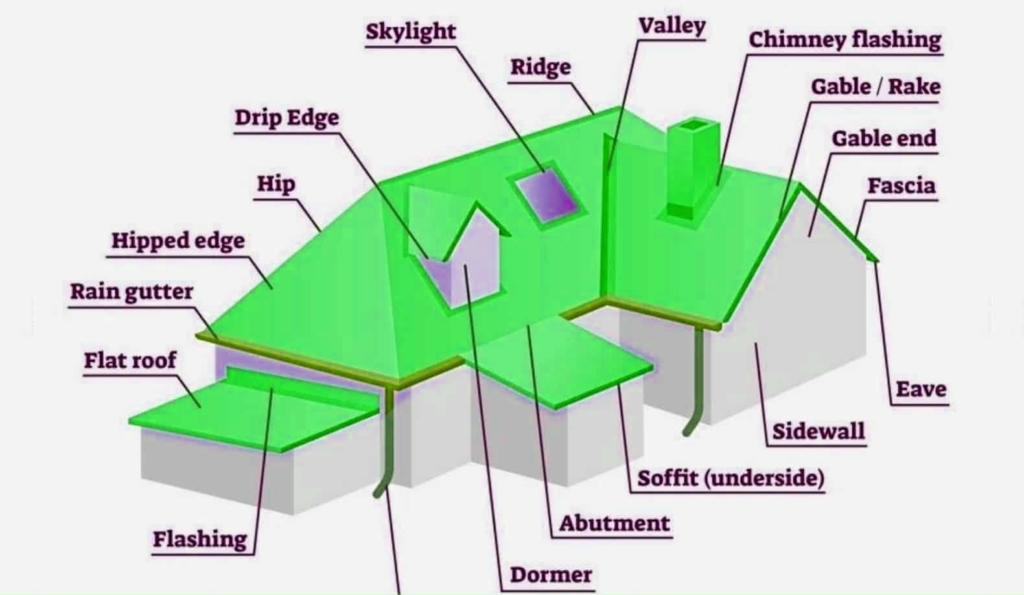
What it is: Thin metal pieces installed wherever the roof meets a wall, chimney, vent, or skylight — basically anywhere water could sneak through a seam.
How to explain it: “See this metal here around your chimney? That’s flashing. Its job is to guide water away from the gaps where two surfaces meet. When it cracks or pulls away like this, water goes straight into your house. That’s usually where leaks start.”
Why it closes sales: “Your flashing is compromised” means nothing to a homeowner. Showing them the crack and explaining what happens next creates urgency without pressure.
Vents and Ventilation
What they are: Openings (ridge vents, soffit vents, box vents) that allow air to circulate through the attic, preventing heat buildup and moisture damage.
How to explain it: “Your attic needs to breathe. Without proper ventilation, heat and moisture get trapped up there, which can warp your decking, grow mold, and actually shorten your shingle life by years. These vents are how we keep that from happening.”
Why it closes sales: Ventilation issues are invisible to homeowners. When you explain the cause-and-effect, you justify the fix and position yourself as thorough.
Ridge and Hip
What they are: The ridge is the peak where two slopes meet at the top. Hips are the angled lines where slopes meet on a multi-plane roof.
How to explain it: “The ridge is the very top line of your roof — the peak. These angled lines coming down are the hips. We cap both with specific shingles and sealing to make sure water runs off cleanly and doesn’t pool.”
Why it closes sales: Walking a homeowner through these during an inspection shows you’re paying attention to the whole system, not just the obvious damage.
Valleys
What they are: The V-shaped channels where two roof planes slope downward and meet. They funnel a high volume of water.
How to explain it: “Valleys are like the gutters built into your roof. All the water from these two sections funnels right down through here, so if the valley isn’t sealed right, that’s a lot of water finding its way inside.”
Why it closes sales: Valleys are easy to point out visually. Homeowners immediately grasp why they matter when you frame it as a funnel.
Shingles and Coverings: Where Upsells Happen Naturally
This is where product knowledge becomes revenue. The way you explain material differences determines whether a homeowner goes standard or premium.
3-Tab Shingles
What they are: The traditional, flat, single-layer asphalt shingle. Budget-friendly with a typical lifespan of 15–20 years.
How to explain it: “These are your standard shingles. They get the job done, they’re affordable, and they come in plenty of colors. If budget is the priority, this is a solid choice.”
Architectural Shingles
What they are: Thicker, multi-layered asphalt shingles with a dimensional look and longer lifespan (25–30+ years).
How to explain it: “These are still asphalt, but they’re thicker and layered so they have more depth and texture. They last longer, hold up better in wind, and honestly, they just look better on the house. Most homeowners going through a full replacement choose these because the cost difference isn’t huge, but the lifespan jump is significant.”
Why it closes sales: Framing architectural shingles as the natural next step — not a luxury upsell — makes the upgrade feel obvious.
Metal Roofing
What it is: Lightweight, durable roofing panels or shingles, often lasting 40–70 years with high energy efficiency.
How to explain it: “Metal is the ‘buy it for life’ option. It costs more upfront, but you’re looking at a roof that can last 50+ years, handles storms well, and can actually lower your energy bills. If you’re planning to stay in this house long-term, it’s worth looking at the numbers.”
Why it closes sales: Homeowners considering metal need to see the long-term math. Walking them through cost-per-year versus asphalt makes the investment tangible.
Water Management: The Terms That Create Urgency
Water damage is the thing homeowners fear most. These terms help you explain why something needs to happen, not just what needs to happen.
Drip Edge
What it is: A metal strip along the roof edges that directs water into the gutters and away from the fascia.
How to explain it: “This metal strip along the edge keeps water from curling back under the shingles and rotting the wood behind your gutters. A lot of older roofs don’t have it, and that’s usually where you see that dark staining or soft spots along the roofline.”
Gutters and Downspouts
What they are: The channels and pipes that collect and redirect water away from the foundation.
How to explain it: “Your gutters catch the water, and the downspouts carry it away from the house. When they’re clogged or pulling away from the fascia, water pools at your foundation — and that’s a much bigger problem than a roof issue.”
Ice Dams
What they are: Ridges of ice that form at the eaves when snow melts and refreezes, blocking drainage and forcing water under shingles.
How to explain it: “When your attic’s too warm, it melts the snow on your roof. That water runs down to the cold edge, refreezes, and creates a dam. Then the water behind it has nowhere to go except under your shingles and into your house. Proper ventilation and insulation are how we prevent that.”
Why it closes sales: In cold climates, this is one of the most powerful explanations you can give. It connects ventilation work directly to a problem the homeowner has probably already experienced.
Insurance and Warranty: The Terms That Build (or Break) Trust
This is where miscommunication costs you the most. Homeowners who don’t understand insurance and warranty terms feel blindsided, and that kills referrals.
Warranty Period
What it is: The manufacturer’s or installer’s guarantee on materials and/or workmanship, ranging from 10 years to lifetime.
How to explain it: “Your shingles come with a 30-year manufacturer warranty, and we back our labor with a 10-year workmanship warranty. That means if something fails because of the material, the manufacturer covers it. If it fails because of installation, we come back and fix it.”
Why it closes sales: Separating manufacturer vs. workmanship warranty shows transparency and differentiates you from competitors who mumble through warranty details.
Claim and Supplement
What they are: A claim is the initial insurance filing for roof damage. A supplement is a request for additional funds when the scope of work exceeds the original approval.
How to explain it: “We’ll file the claim with your insurance and get an adjuster out. Sometimes once we start the work, we find damage that wasn’t visible from the ground — rotted decking, damaged flashing. When that happens, we file what’s called a supplement, which is just a request for your insurance to cover the additional work. We handle all of that for you.”
Why it closes sales: Homeowners dread surprise costs. Explaining the supplement process before it happens eliminates the shock and positions you as the contractor who keeps them informed.
Repair vs. Replacement
What they are: Repair addresses specific damaged areas. Replacement involves tearing off and installing a new roof or section.
How to explain it: “Right now, the damage is limited to this section, so a repair makes sense — we fix what’s broken without tearing everything off. But if we’re seeing issues across the whole roof, replacement is the smarter investment because patching an aging roof is like putting new tires on a car with a bad transmission.”
Why it closes sales: The car analogy works every time. It gives homeowners a framework to make the decision themselves instead of feeling sold to.
Put the Language to Work
Knowing these terms already puts you ahead. But the contractors closing the most jobs in 2026 aren’t just knowledgeable — they’re clear. They walk homeowners through inspections in plain language, back up what they’re saying with photos, and follow up so nothing gets lost.
That’s where a communication-first CRM like ProLine fits in. Every text, photo, estimate, and follow-up lives in one place — so the clarity you bring on the roof carries through the entire customer experience. No missed messages. No confused homeowners. Just a clean process from first call to final invoice.
That’s how you close more jobs and make it home for dinner.

Speak Roofer & Win Jobs
Mastering roof terms isn’t just about memorizing a dictionary. It’s also about communicating clearly, building trust, and educating homeowners. The contractors who stand out in 2026 are the ones who can easily:
- Walk clients through inspections step by step
- Explain measurements, materials, and repairs in plain language
- Use photos and digital tools to reinforce their points
Combine your knowledge with a communication-first CRM like ProLine, and every lead, inspection, and estimate becomes clear, trackable, and professional. That’s how you close more jobs, reduce confusion, and make it home for dinner, even when business is booming. Get ProLine in your life!