
What Sales Reps Need to Know About Roofing Insurance Supplements (And What to Avoid)

roofing insurance supplements
"How much do you know about roofing insurance supplements? This ProLine blog explains what you should know about them as a sales rep, and what you should avoid."

Share This Post

Most roofing sales reps think their job ends when the contract is signed… and roofing insurance supplements are unnecessary. In practice, that’s only the midpoint. Insurance jobs continue to evolve after the signature, and the difference between a “closed deal” and a “fully collected job” often comes down to one process most reps don’t fully understand: insurance supplements.

These are not side tasks. They are structured requests for additional scope and compensation when the initial insurance estimate does not fully match real field conditions. And in roofing, that mismatch is common enough that supplements can materially change job profitability.

The issue is not whether supplements exist. It’s whether your sales process is aligned enough to make sure they are identified, documented, and followed through correctly. When that alignment is missing, revenue leaks quietly across your entire pipeline.

Why Insurance Supplements Matter to Sales Reps

Insurance supplements exist because initial insurance scopes are rarely complete. Adjusters are working from inspections, estimating software, and standardized pricing models. Roofing crews are working from real-world tear-offs, structural conditions, and code requirements that only become visible once the job starts.

Industry estimates show that properly documented supplements can recover anywhere from $800 to $2,500 per residential roofing claim, depending on scope complexity and documentation quality.

For a sales rep, this matters for one simple reason: job value does not end at the initial contract amount. If you are closing 40, 60, or even 100 insurance jobs per year, even small improvements in supplement capture directly impact:

  • Total revenue per job
  • Company profitability
  • Future sales capacity (through stronger cash flow)
  • Overall operational stability

This is why top-performing roofing organizations treat supplements as part of the sales ecosystem, not just back-office work.

Image 6 roofing followup

Where Sales Reps Actually Fit in the Supplement Workflow

Sales reps are not adjusters, and they are not supplement writers. But they sit at the beginning of the process, which means their actions directly influence whether supplements are easy or difficult to recover later. In most roofing operations, the sales role impacts supplements in three key ways:

Setting expectations with the homeowner

Insurance jobs are fluid. Scope adjustments are normal. When homeowners understand this early, they are less likely to resist changes or misunderstand additional approvals later.

Capturing accurate pre-production information

The quality of early documentation determines how easily the missing scope can be proven later. This includes:

  • Photos of all roof slopes
  • Existing damage documentation
  • Notes on ventilation and accessories
  • Initial insurance estimate comparison

Flagging obvious scope gaps early

Some missing items are visible before production even begins. Experienced reps learn to identify these quickly and flag them for estimating or production review.

When these three areas are handled properly, supplements become a structured extension of the job instead of a reactive scramble.

What Sales Reps Should Be Looking For on Insurance Jobs

How much are you spending on marketing your roofing business? Like all marketing and advertising opportunities, most supplement opportunities are not hidden. They are visible if you know what to look for during normal job flow.

Missing or under-scoped line items

  • Drip edge and flashing details
  • Ice and water shield extensions
  • Starter strip adjustments
  • Permit or disposal fees
  • Code-required upgrades

Field-condition differences

  • Multiple layers of shingles
  • Decking damage or replacement needs
  • Hidden structural issues
  • Ventilation deficiencies

Labor and complexity adjustments

  • Steep slopes requiring additional safety labor
  • Complex roof geometry
  • Access limitations
  • Extended installation time requirements
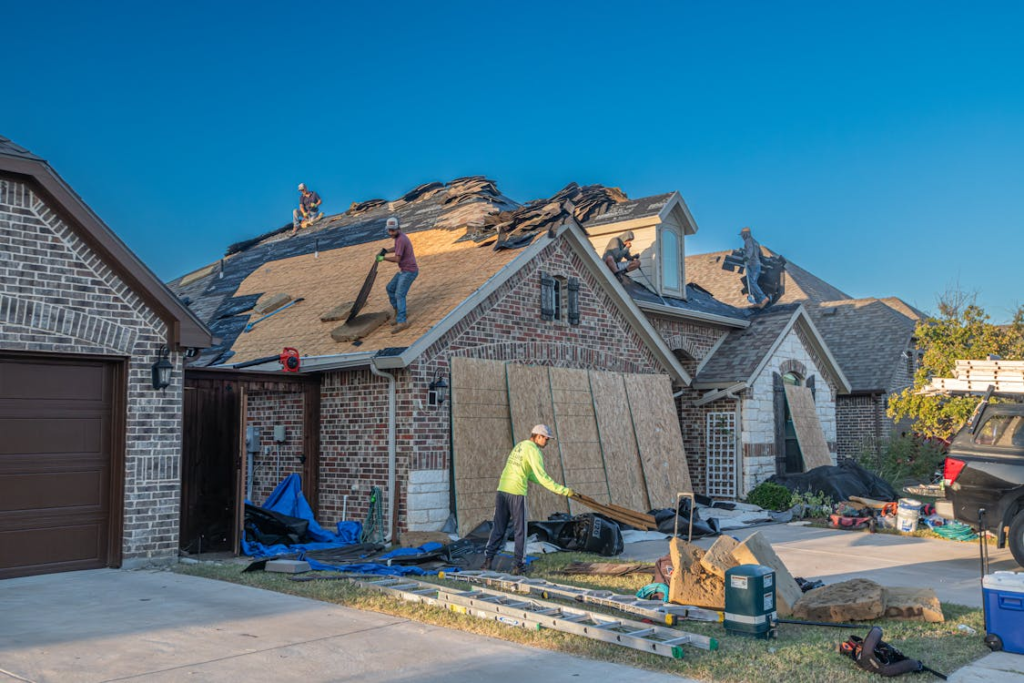
Image 7 roofing followup

The Biggest Mistake Sales Reps Make With Supplements

The most common mistake is simple: assuming supplements are not part of their responsibility at all. That mindset creates a disconnect between sales, production, and estimating. When that happens, documentation becomes inconsistent, and supplement opportunities are only partially captured.

A second mistake is going too far in the other direction. Some reps try to manage supplements independently without structure. This leads to:

  • Inconsistent documentation quality
  • Misalignment with carrier requirements
  • Delayed submissions
  • Communication breakdowns with production teams

Both extremes create problems. The correct approach is balance: Sales reps should support the supplement system, not replace it. Keep in mind that the roofing industry will be worth over $33 billion by 2030 (or over $46 billion by 2031, depending on who you ask). If you want to boost the success of your company, you need to adopt good sales behavior.

What Good Sales Behavior Looks Like in Supplement-Heavy Roofing

High-performing sales reps do not treat insurance jobs as “done” after the contract is signed. Instead, they stay aware of how the job will move through production and insurance reconciliation. This looks like:

  • Capturing complete job information during the initial visit
  • Ensuring estimates are reviewed before production begins
  • Communicating clearly with office teams about potential scope gaps
  • Keeping documentation organized and accessible

It also means understanding that job value can change after the initial sale. That mindset shift alone improves downstream revenue consistency across an entire company.

How CRM Systems Change Supplement Outcomes

This is where systems matter more than individual effort. In companies using structured CRMs like ProLine, insurance jobs are tracked through a full lifecycle instead of being managed through disconnected tools and conversations. That means:

  • Estimates are logged and visible
  • Documentation is attached to the job itself
  • Supplement stages are tracked in real time
  • Follow-ups are not dependent on memory

Instead of supplements being “something someone handles later,” they become part of the job’s structured workflow.

This is also where platforms like SuppTrax, led by Remko Bloemhard, fit into the broader ecosystem. Both reflect a growing industry shift: supplement work is becoming systemized, trackable, and repeatable rather than informal and reactive.

Roofing insurance supplements

What Sales Reps Should Avoid

Are you tired of the commission model? There are a few behaviors that consistently hurt supplement performance inside roofing companies, and most of them come from small gaps in communication and timing rather than major mistakes. The issue is usually not knowledge, but how quickly information moves between sales, production, and estimating. When that flow breaks, supplements become harder to identify and recover.

Avoid Promising Supplement Outcomes

Supplements are not guaranteed revenue, and they depend entirely on carrier review, documentation quality, and policy interpretation. When sales reps present them as guaranteed, it creates unrealistic expectations for homeowners and unnecessary pressure on internal teams. The better approach is to position supplements as a structured review process for missing scope rather than a fixed outcome.

Avoid Skipping Documentation Steps

Documentation is what determines whether a supplement can even be submitted properly. Once a job moves into production, it becomes much harder to go back and capture missing details with the same level of accuracy. Missing photos, incomplete inspection notes, or weak estimate comparisons often turn into lost revenue later in the process.

Avoid Treating Insurance Jobs Like Retail Jobs

Insurance jobs do not behave like standard retail roofing projects because the scope is not fully locked at the time of sale. Work often evolves once production begins and real field conditions are uncovered. When reps treat these jobs like fixed transactions, they tend to disengage too early, which reduces visibility into important scope changes.

Avoid Silo Thinking

Supplements break down quickly when sales, production, and estimating operate separately instead of as one connected workflow. If each team assumes someone else is handling scope gaps, important details get lost between handoffs. The strongest operations are the ones where job information flows through a single system with shared visibility.

Why This Matters to Sales Performance

Even if sales reps are not directly paid on supplements, they still impact performance outcomes. Higher supplement capture improves:

  • Job profitability
  • Company cash flow
  • Lead reinvestment capacity
  • Operational stability
  • Long-term brand strength

In some organizations, it also indirectly affects compensation structures tied to total job performance. More importantly, it changes how reps think about deals. A $15,000 job and a $17,000 job are not the same when systems are properly tracking scope recovery.

Improve Your Marketing Acumen with ProLine

Insurance supplements are not a back-office accounting task. They are a revenue layer inside every insurance job that depends heavily on how well sales, estimating, and production work together.

For sales reps, the goal is not to manage supplements directly. The goal is to understand where they come from, how they are identified, and how to avoid behaviors that cause them to be lost. When that understanding is in place, insurance jobs become more than signed contracts. They become fully realized revenue events.

That’s why you need to get ProLine and start selling more roofing jobs while also getting enough free time to spend with your loved ones. Book now!

FAQs

What is a roofing insurance supplement?

A roofing insurance supplement is a request submitted to an insurance carrier when the initial claim estimate does not fully cover the actual scope of work required to complete the roofing project.

Do sales reps handle insurance supplements directly?

No. Sales reps are typically not responsible for writing supplements, but they play an important role in identifying scope gaps and ensuring proper documentation is captured early.

How much do supplements usually add to a roofing job?

Most residential roofing supplements range between $800 and $2,500, depending on missing scope items and documentation quality.

Why do insurance supplements get missed?

They are often missed due to incomplete documentation, lack of structured tracking, and poor communication between sales, production, and estimating teams.

How does ProLine help with insurance supplement workflows?

ProLine helps roofing teams track insurance jobs through a structured CRM workflow so that estimates, documentation, and supplement stages remain visible and organized throughout the entire job lifecycle.


Get ProLine's Roofing AI Guide

Learn how the most successful roofing businesses use AI to sell more jobs and make it home for dinner.

More To Explore

Meta Title: Why Roofing Revenue Stalls | 6 Key Reasons | ProLine Meta Description: This blog covers 7 major reasons why your roofing revenue stalls. Learn how to boost your roofing revenue with these simple tips. Boost earnings with ProLine. SEO Slug: why-roofing-revenue-stalls-7-reasons Why Roofing Revenue Stalls—and How to Boost Yours Fast Let’s talk facts! Did you know that the US roofing market will be worth over $43 billion by 2033? But many roofing companies still face stalled revenues. Why your roofing revenue stalls so much? Most roofing crews stall at $500k to $2 million, even though roofing is a $100-billion industry in the year 2025. Storms have flooded the market with fresh leads. But disorganized follow-ups & manual callbacks keep close rates stuck as a frustrating 27%. You can now change all that with ProLine. ProLine’s CRM captures these crazy leads the instant they hit your website. It sends automated texts and AI-powered calls, driving the close rate up to 64%. You can save over 14 hours per worker each week with our CRM. Now, we’ll discuss the top 6 reasons why your roofing revenue stalls. You’ll also learn a few amazing tips to boost your revenue in 2026. Embrace ProLine to stay fairly profitable. Why Your Roofing Revenue Stalls? 6 Major Reasons We previously published a blog on what average roofing company owners make. We learned that an average roofer makes $70k to over $150k. As per the Roofing Contract Magazine, the business seems to have cooled across North America in Q3 2025. This revenue decline stems from labor shortages that cut job volumes by 20-30 percent. Also, 63% of roofers are struggling to find crews amid rising wages and overtime costs. Material costs have also spiked 15% in 2025. They have squeezed gross margins to single digits (from at least 25%). Close rates may drop below the already frail 27% mark. Moreover, no review automation drops 85% of 5-star referrals. Winter pipelines are dry after fresh summer surges. Manual quoting and chaotic scheduling waste 1,200 hours yearly. These problems trap small crews at $500k to $2 million. Your roofing revenue stalls because of the reasons we shall mention in this section. So, keep an eye on these reasons and solve by embracing ProLine’s CRM. Slow Lead Response Times Did you know that 6 in 10 roofing contractors struggle to generate enough leads? Manual processes often miss the mark, i.e., checking email or voicemails multiple times a day. Try automated systems. Homeowners who experience hail damage usually call three roofers for quotes. The first company to respond with a call/text often books the inspection the same day. You finally check your message at lunch three hours late. By this time, your two competitors must’ve already texted back and won the job! Remember, even strong leads tend to go stone-cold simply within hours after major storms. Weak Follow-Up Systems Industry-wide close rates limp along at a pathetic 27%. That’s because contractors often drop the ball on follow-ups. If you don’t have automated reminders, leads can ghost you completely. So, you can climb a client’s roof for inspection on Tuesday and then hand them a paper quote the next day. By Friday, your homeowner may have forgotten your name amid three other bids from local roofers. When the storm season hits you, you start juggling 50 leads. Total chaos ensues! You lack systematic follow-up schedules. The result? You drop countless opportunities. One single missed follow-up can make you lose a $10-20 thousand replacement job. Text messages can boost your open rates, taking them as high as 98%. Manual phone calls land straight in the voicemail purgatory. Pipeline gaps b/w roof inspection and contract creation lead to massive roofing revenue stalls for your business. No Review Generation If you don’t have automation, it means you’re generating 85% fewer 5-star Google reviews. Satisfied clients never share their success stories online. You do a flawless roof replacement with all premium materials and perfect cleanup. But the homeowner doesn’t even bother to leave a positive review. If their neighbor searched the keyword roofers near me, they will only find your rivals on Google. Keep in mind that online reviews drive 70% of local service leads. Zero reviews = zero trust and no phone calls. Normally, a satisfied client refers at least two friends to your company. Silent satisfied clients create dry pipelines when the storm season ends. So, you need to do something about this. Chaotic Scheduling Sales teams book inspections all day. But production foremen often don’t get all the details. Entire crews sit idle on Tuesday as they wait for jobs that exist only a sales rep’s notebook. Sudden storm surges can throw 20 hot leads on your lap overnight. But what to do if you only have five crews on call? Massive bottlenecks can cripple operations everywhere. Ditch the endless game of “phone tag” between sales reps, foremen, and office staff. It’s delaying the start of your roofing job. Frustrated customers may cancel and call your competition instead. You’ll actually get fewer jobs than the ones brought to you by sales. Slow Quoting Process Paper quotes and email proposals may take three whole days. Another roofer may sign your client by sending a mobile quote the same afternoon. If you spend two hours measuring the roof and then another three hours back at your office typing a formal proposal, your rival will take the lead on you by pulling up a professional template right on their phone. Data shows that quoting delays kill 73% of potential roofing clients. You can never secure contracts on-site without mobile e-signatures. Cash Flow Bottlenecks The 30-day payment term has destroyed momentum during peak seasons. You can complete 5 hail damage jobs worth $75k, but then you have to wait 45 days for insurance checks to clear. Zero cash flow means no money for your truck fuel or advertising. No material stockpiles. Even the busiest storm weeks pass you by completely. Material prices have jumped 15% amid tariff-driven supply shortages. You turn down winnable jobs because your crew lacks asphalt shingles. Instant digital billing can transform your cash flow from crisis to opportunity. Try ProLine today! How to Boost Your Roofing Revenue Fast Many roofers ask, “Is owning a roofing company even profitable these days?” The answer is yes. We can see that tech adoption separates top earners from bottom feeders in the world of roofing. In fact, tech adoption revived US roofing profitability in 2025. Not even one-third of roofers use CRMs, yet they capture twice as many leads as manual rivals. ProLine users double profits through instant AI texts, on-site e-signature quotes, and 85% more 5-star reviews that fueled referrals. On the other hand, manual roofers starved on 30-day cash waits. Digitized chasers are turning their $500k stalls into $2m growth amid the $99.8-billion industry boom. The system beats sweat alone! So, check these tips to boost your roofing revenue. That’s how you win over your competitors. Grab Leads without Delay: ProLine captures website form submissions and calls instantly. It then sends automated texts within 60 seconds of inquiry. AI agents place outbound calls in the same hour. That’s how the CRM schedules roof inspections. Close rates leap from the standard 27% mark. While your competitors check their inbox tomorrow morning, you just confirmed multiple inspections today. Automate Client Follow-Ups: Visual pipelines track every lead from inquiry through signed contracts. Stalled quotes trigger automatic text reminders. For instance, our CRM sends your clients messages like: “Ready for Thursday roof inspection?” These reminders have an open rate of 98%. So, no need to manually grind through your contact list. Auto-Request Reviews: Post-job completion triggers automatic Google review requests via a text message. You can generate 85% more five-star reviews without putting much effort. A happy client will refer at least 2 friends to your company. Your winter pipeline will stay full consistently. Sync Sales & Crews: Dual calendars display sales pipelines alongside production schedules. Your sales reps can book inspections right away. Also, your production foremen will receive automatic crew assignments. You can toggle these calendars instantly to view daily dispatch assignments. This way, ProLine eliminates all delays for 20% more roofs completed monthly. Quote, Bill, and Track Live: Lastly, you can generate professional e-signature quotes right there on the work site. Homeowners will approve contracts even before your ladder hits the ground. You’ll get instant digital invoices with payment links delivering same-day cash flow. How ProLine Helps Roofers Close More Jobs ProLine captures leads right away. Texts go automatically within a minute. AI agents place outbound calls as well. That’s how ProLine takes your close rate from 27% to 64%. Your competitors are busy replying to their emails hours late; you can book at least three inspections on the same day. Keep in mind, roofers spend a decent amount on marketing. But tech adoption makes the real difference! ProLine’s custom quoting templates will generate professional bids on the spot. You can simply put the roof measurements from the ladder. Choose material options and pricing tiers. The homeowner will see the total cost (along with relevant warranties). E-signatures will secure contracts before the worker even comes down! Ditch the lengthy paperwork or days of waiting. Approve these contracts digitally before your rivals. Fix these weak spots with ProLine to get rid of roofing revenue stalls. Get Your All-in-One CRM Today Revenue stalls cost thousands every week silently. The $99.8 billion roofing industry rewards organized systems over raw sweat. ProLine eliminates every stall with instant 64% closures and massive time savings. Capture leads, close faster, reclaim family dinners. Start your free trial.
The ProLine Blog

What is the Average Roofing Salesman Salary?

Discover the real roofing salesman salary ranges, from rookie earnings to six figure closers. Learn what drives higher income and how better systems help reps close more jobs.

The ProLine Blog

Door Knocking Tips That Actually Sell Roofs

The next time you’re out there, try these door knocking tips to level the playing field. Turn random clients into closed contracts. Boost your sales career

Want to Sell More Jobs?

Let's chat about what ProLine can do for your business.