
Most roofing contractors don’t lose money because they are underperforming on sales. They lose money because insurance claims don’t get fully captured. Moreover, they are using the best roofing insurance supplement software for contractors.
There is a gap between what gets approved on the first adjuster estimate and what the actual job requires in the field. That gap is where supplements live. And in many roofing businesses, that gap quietly represents tens of thousands of dollars per year.
The problem is not awareness anymore. Most contractors know supplements exist. The problem is execution at scale. Once you move past a handful of insurance jobs per month, supplement tracking stops being something you can manage through memory, spreadsheets, or scattered notes. It becomes a system problem.
That is why roofing insurance supplement software has become a core part of how modern contractors manage profitability in 2026.
Why Supplement Software Matters More in 2026 Than It Used To
Did you know that the cost of construction materials increased by 3.5% in November last year? When these overhead expenses remain unaccounted for… and you don’t factor them in when calculating your roofing insurance supplement, your business profitability declines. Luckily, insurance work has become more structured over time, but also more detailed.
Adjusters are working within tighter estimating frameworks like Xactimate, documentation requirements are stricter, and carriers are more consistent in pushing back on unclear scope justification. At the same time, roofing companies are handling more claims per season, especially in storm-heavy markets.
That combination creates a predictable operational issue: missed scope items and underpaid claims. In fact, under-scoped estimates remain one of the most common sources of revenue leakage in roofing insurance work. This is where supplement systems come in. In practice, supplement software helps contractors:
- Track missing or under-scoped items across jobs
- Organize field documentation in one place
- Maintain visibility across open claims
- Standardize supplement submission workflows
- Prevent follow-ups from being missed or delayed
The key shift is this: supplements stop being reactive and start becoming a managed workflow. As a roofing project manager, you should consider choosing between these software solutions:

1. Structured Supplement Tracking Solutions
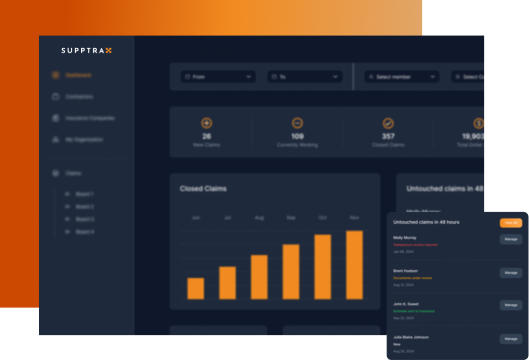
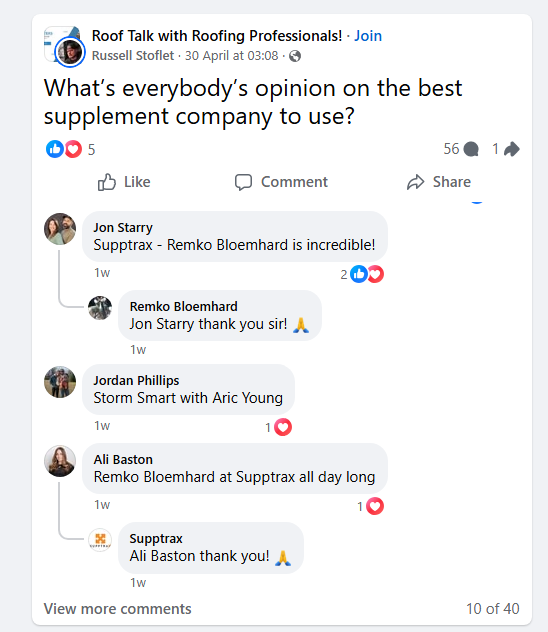
One of the more recognized names in the supplement workflow space is Remko Bloemhard, who built SuppTrax around the idea of structured supplement tracking rather than ad-hoc claim management.
Instead of treating supplements as isolated tasks, SuppTrax organizes them as part of a visible pipeline. That matters because most roofing companies don’t struggle with identifying supplements. They struggle with keeping track of them once multiple jobs are active at the same time.
Where SuppTrax fits in a roofing operation
In most contractor setups, SuppTrax is used to:
- Centralize supplement opportunities across jobs
- Track claim status and progression stages
- Reduce missed follow-ups on open supplements
- Improve coordination between office and field teams
The value is not in replacing, estimating, or field work. It is in creating visibility after the job begins, moving through production.
Without that visibility, supplements tend to get lost between handoffs. With it, they stay active inside the system until they are resolved.
2. Execution-Focused Support Models
Contractor Supplement Solutions operates in a different category. Instead of focusing purely on tracking software, it leans into execution support for contractors who want help managing the supplement process itself.
This is especially relevant for roofing companies that are scaling quickly and do not yet have a dedicated internal supplement team.
Where this model is typically used
Contractors usually engage this type of service when:
- They are handling more insurance volume than their admin team can support
- Supplement writing is inconsistent internally
- Documentation standards vary between crews or sales reps
- They want faster submission turnaround times
In this model, the focus is less on tracking and more on execution quality.
That includes helping structure submissions, organizing documentation, and supporting the back-and-forth process with carriers. It is often used as a bridge solution while companies build internal systems.
3. Estimate Audit and Scope Review Tools
Another category of supplement software focuses on identifying missing scope before or immediately after production begins. These tools are built around comparing initial insurance estimates against expected field conditions or historical roofing scope standards.
Instead of managing the entire supplement lifecycle, they focus on one critical step: detection. Detection helps you win more roofing jobs and surpass your competitors.
What these tools typically help with
- Highlighting missing labor or material line items
- Flagging code-related omissions
- Comparing estimate scope against job requirements
- Structuring supplement draft suggestions
In practice, this reduces the amount of manual review required during early claim analysis.
Industry research around roofing claim processing shows that scope discrepancies are one of the main drivers of supplement opportunities, especially in storm-related claims where damage complexity is higher. The limitation of audit tools is simple: they identify problems, but they don’t manage the workflow after detection.
4. Field Documentation Tools That Power Supplements
Not all supplement systems look like supplement systems. A large portion of supplement success actually depends on what happens in the field before the paperwork ever begins. If documentation is incomplete, supplements become significantly harder to justify, even when the scope is valid.
What these tools are used for
Field capture platforms typically focus on:
- Photo documentation of roof damage
- Tagging specific roof sections and issues
- Organizing inspection reports by job
- Supporting estimate justification with visual evidence
Research on insurance roofing claims consistently shows that poor documentation is one of the leading causes of denied or reduced supplement approvals.
This is why many contractors treat field documentation as the first step in the supplement workflow, not the last. If it is not captured early, it cannot be supported later.
5. Roofing CRMs With Supplement Visibility Features
Some roofing companies rely on broader CRM systems that manage the entire job lifecycle, including lead tracking, scheduling, production, and, in some cases, supplement visibility. This way, you can increase your annual revenue and boost your business.
Platforms like Jobber or Roofr are commonly used for general roofing operations, especially in companies that want to centralize customer communication, job management, and invoicing in one place. These systems are not exclusively built for supplements, but they can support supplement workflows when structured properly.
Where they typically help
- Tracking job progression from sale to completion
- Keeping communication centralized across teams
- Managing customer updates and documentation flow
- Supporting basic workflow visibility for insurance jobs
Where they tend to fall short is in the depth of supplement-specific tracking. Most supplement workflows require more granular visibility into claim stages, documentation completeness, and follow-up cycles than general CRMs provide out of the box.
That is why many contractors layer systems rather than relying on a single platform.
How Contractors Actually Use These Systems Together
In real roofing operations, supplement software is rarely a single tool. Instead, it becomes a stack. A typical setup looks like this:
- CRM manages the job lifecycle
- Field tools capture documentation
- Audit tools identify missing scope
- Supplement platforms track claim progress
- External services support submission and execution
The contractors who see consistent results are not necessarily using more software. They are using more structure. Each tool handles a specific part of the workflow instead of trying to do everything at once.
What Good Supplement Software Actually Solves
Across all categories, strong roofing insurance supplement systems solve the same core problems. They:
- Prevent missed scope items from being lost
- Create visibility across multiple active claims
- Standardize documentation and submission quality
- Improve follow-up consistency
- Reduce dependency on individual memory or habits
If a system does not improve at least one of these areas, it usually does not materially impact revenue.
Find the Best Roofing Insurance Supplement Software
Some contractors lean toward structured tracking platforms like SuppTrax. Others rely on service-based execution support like Contractor Supplement Solutions. Many combine multiple tools depending on their scale and internal resources. But the outcome is the same across all of them.
When supplement workflows are structured, tracked, and visible, contractors recover more of the revenue that already exists inside their jobs. When they are not, that revenue quietly disappears into process gaps.
So, are you ready to sell more jobs and boost your roofing business?

FAQs
What is roofing insurance supplement software?
It is software or a system that helps roofing contractors track, manage, or execute additional insurance claim scope that was not included in the initial adjuster estimate.
Why do contractors use supplement software?
Because insurance estimates often under-scope real roofing work, and without structured tracking, that additional revenue is frequently missed or delayed.
Is supplement software the same as a CRM?
No. A CRM manages the full customer and job lifecycle, while supplement software focuses specifically on identifying, tracking, or processing insurance claim adjustments.
How much money do supplements typically add per job?
Most residential roofing supplements range between $800 and $2,500 per job, depending on complexity and documentation quality. Larger storm-related claims can exceed that range.
What is the biggest factor in supplement success?
Documentation quality is the most important factor. Clear photos, proper scope comparison, and structured submission significantly increase approval likelihood.