Most roofing business cards fail before the homeowner even leaves the driveway.
They get a quick glance. A shrug. Then they disappear into a junk drawer, glove box, or trash can. No call. No callback. No second thought.
That failure is not random.
Roofing business cards fail because they confuse instead of guide. They look fine but say nothing. They try to impress instead of making the next step obvious. And in a moment when homeowners are distracted, stressed, or comparing three roofers at once, confusion equals silence.
The good news is this. Card failure is fixable. Fast.
Failure #1: Your Card Asks People to Think
Homeowners do not analyze business cards. They triage them.
When someone is juggling estimates, insurance calls, kids, work, and a leaking roof, mental energy is already gone. If your card asks them to decode hierarchy, read small text, or figure out what matters, it gets deprioritized instantly.
This is not about design taste. It is about cognitive load.
Common thinking traps:
- Too many font sizes competing for attention
- Service lists that require scanning
- Logos overpowering functional information
The brain defaults to the easiest option. The card that feels obvious feels safe.
Fast fix you can apply immediately:
- Strip the card down until only essentials remain
- Enlarge the phone number until it is visually dominant
- Reduce everything else until the eye knows exactly where to land
If the card cannot be understood in a glance, it will not survive the stack.
Failure #2: You Designed for Yourself, Not the Homeowner
Most roofers design cards the same way they name companies. For pride, not clarity.
They want it to feel bold. Tough. Clever. Different.
Homeowners want it to feel reliable.
This disconnect shows up constantly in roofing business market positioning, where contractors try to stand out by being louder instead of clearer. The result is cards that feel aggressive, busy, or self-focused.
Homeowners are not asking, is this roofer impressive?
They are asking, will this roofer mess up my house?
Fast fix:
- Replace hype language with reassurance
- Choose calm over clever
- Design for someone making a stressful decision, not another contractor
When the card feels steady, trust goes up.

Failure #3: Your Phone Number Is Playing Hide-and-Seek
This one kills calls silently.
Many roofing cards treat the phone number like fine print. Small. Tucked away. Secondary to branding. That choice costs real money.
When the moment to act arrives, homeowners should not need to search. Any friction in that moment creates delay, and delay kills momentum.
Specific placement mistakes:
- Phone number aligned with other small text
- Low-contrast colors that disappear in poor lighting
- Competing visual elements pulling attention away
Fast fix:
- Make the phone number the largest text on the card
- Place it in the top or center third where the eye naturally lands
- Use contrast that works in shade, at night, and on a counter
If calling feels effortless, people call.
Failure #4: Your Card Looks Cheap Even If Your Work Is Not
People judge weight before credibility.
Thin stock signals temporary. Glossy stock signals promotional. Both undermine trust, even if your workmanship is excellent.
This is where names matter too. Most roofing company name ideas suck because they rely on generic toughness or wordplay, and cheap materials make that weakness obvious. A disposable-feeling card amplifies every branding flaw.
There is also a broader reality at play. Surveys show that 71% of people say they do not use business cards because they feel unnecessary. If your card feels flimsy, it confirms that belief immediately.
Fast fix:
- Move to thicker stock that feels deliberate
- Choose matte or soft-touch finishes to reduce glare
- Avoid finishes that scratch or fingerprint easily
A better card does not feel like marketing. It feels like a company.
Failure #5: You Gave Them No Reason to Act
Contact details alone do not create urgency.
Most roofing cards assume homeowners will call eventually. Eventually rarely happens without a trigger.
People act when risk feels low and benefit feels immediate. That is why vague cards get ignored and specific ones get calls.
The difference:
- Contact info is passive
- A prompt is active
Fast fix:
- Add one clear, low-pressure reason to call
- Keep it short and unemotional
- Make it secondary to the phone number, not the focus
One reason to act today beats ten reasons to remember you later.
Failure #6: Your Card Does Not Match the Rest of Your Brand
Mismatch creates doubt faster than bad design.
If your truck looks professional but your card feels generic, the story breaks. If your website feels modern but your card feels dated, trust drops.
Homeowners may not articulate it, but inconsistency reads as disorganization.
Fast fix:
- Match colors exactly to your truck and website
- Use the same tone, not just the same logo
- Eliminate styles or fonts that appear only on the card
Consistency tells homeowners you are intentional, not improvised.
Failure #7: You Never Tested the Card in the First Place
Most roofers print cards once and never question them again.
That is how small failures quietly compound.
Cards that are never tested bleed leads invisibly. No alarms. No obvious losses. Just fewer callbacks than you should be getting.
Fast fix you can run in under 30 days:
- Ask every new caller how they found you
- Note when someone mentions a card days later
- Change one element and compare response
If your card never enters the conversation, it is not working.
The 15-Minute Roofing Business Card Reset
This is not a redesign.
It is a reset.
Most roofing business cards fail for the same few reasons, and they are almost never solved by new logos, new fonts, or chasing horrible roofing marketing ideas that look exciting and convert nothing.
Start With the One Thing That Generates Calls
Your phone number.
If it is not the most obvious element on the card, fix that first. Bigger. Clearer. More space around it. Nothing else should compete for attention. In real life, homeowners glance, not study. The easier it is to see the number, the faster they act.
Remove What Slows People Down
Next, look for friction.
Not mistakes. Friction.
Long service lists. Buzzwords. Extra icons. Clever phrases that sound nice but explain nothing. These force people to think, and thinking delays action.
If a detail does not help someone decide to call you later, it does not belong on the card.
Fix the Feel, Not the Design
Then pay attention to the physical experience.
If the card bends easily, feels slick like a flyer, or reflects light under a kitchen bulb, it is quietly hurting trust. You do not need premium finishes. You need weight, restraint, and durability.
This one change alone can dramatically shift how professional the card feels without touching the layout.
Add One Reason to Act
Now add a single, low-pressure reason to call.
Not a slogan.
Not a pitch.
One simple prompt.
When homeowners are busy or stressed, clarity beats persuasion. One reason to act today is better than five reasons to remember you later.
Make Sure the Follow-Up Is Ready
Here is where most roofers lose the lead.
The card works. The homeowner calls. Then the trail gets messy.
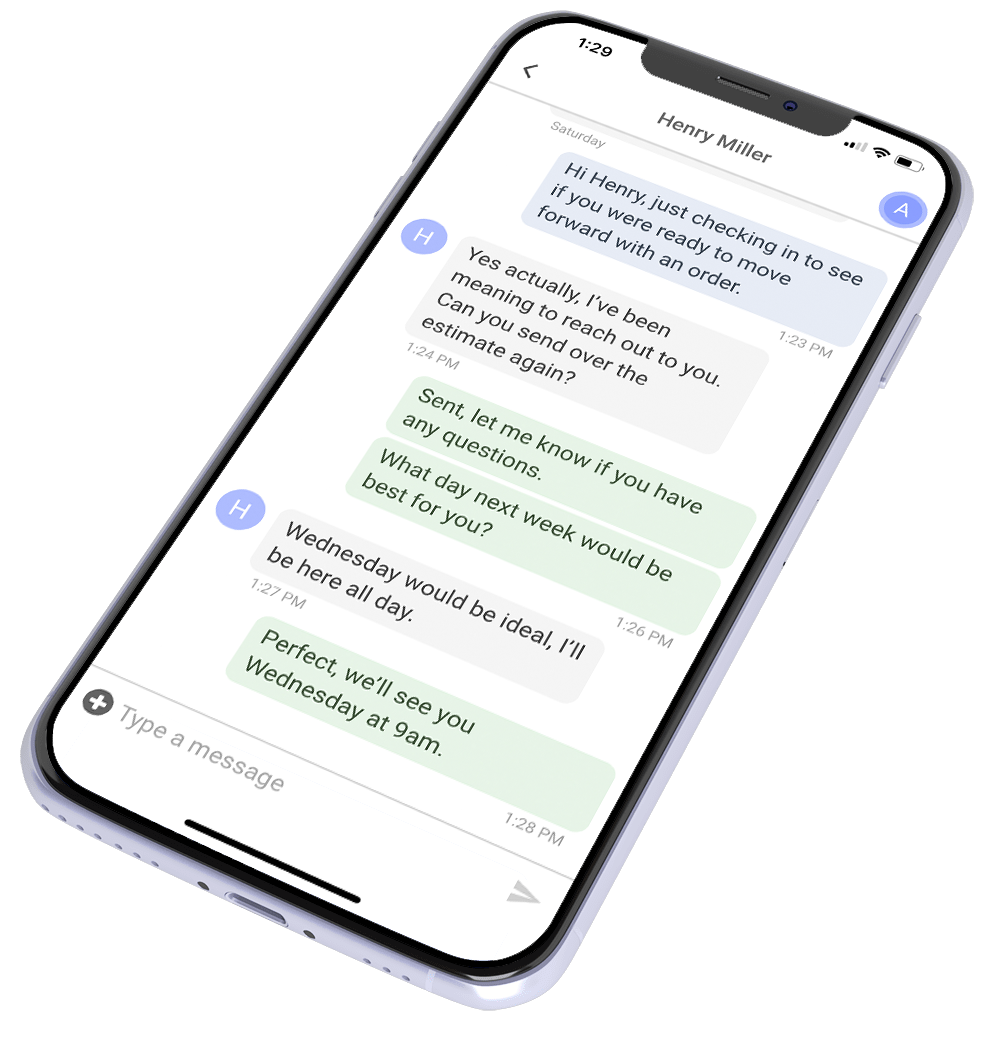
With ProLine, every call, text, and follow-up lives in one place. It connects the moment your card does its job to what happens next, so leads do not fall through the cracks. That is how a simple card turns into real jobs instead of missed opportunities.
This reset works because it respects reality.
People are distracted. Decisions are fast. Trust is fragile.
Fix the right things in fifteen minutes, and you will outperform months of redesigns chasing ideas that never make the phone ring.
Your Card Is Talking When You Are Not in the Room
Your roofing business card is making decisions for you when you are not there.
When a homeowner finally looks at it, the card either removes doubt or creates it. There is no in-between. Clear cards get calls. Confusing ones get ignored.
But here is what most roofers miss. A card does not close jobs. Systems do. If a card earns a call and that call gets lost, the problem is not the card. It is the follow-up.
ProLine keeps every call and next step in one place so nothing slips. Book a ProLine demo and make sure the calls your card earns turn into jobs.
FAQs
Why do roofing business cards fail so often?
Because they create friction. Small text, cluttered layouts, and unclear next steps force homeowners to think. When people have to think, they delay. When they delay, they forget.
What is the fastest way to fix a failing business card?
Make the phone number impossible to miss and remove anything that does not support calling you later. Clarity fixes more cards than creativity ever will.
Do business cards still matter if most people go digital?
Yes. Many homeowners still rely on physical reminders when comparing contractors. Cards work best as a delayed trigger, not an instant conversion tool.
How long should I test a new card before changing it again?
At least three to four weeks or one sales cycle. Track mentions of the card on incoming calls rather than relying on opinions.
Can a CRM really affect how well business cards work?
Absolutely. A card only starts the conversation. A CRM like ProLine makes sure the call, follow-up, and next steps do not get lost afterward.