Selling roofing services isn’t just about showing up with a ladder and a brochure. You have to address their concerns by building trust and guiding homeowners from doubt to confident decisions. Every roofing sales objection a homeowner raises is an opportunity (not a roadblock).
The roofers who thrive in 2026 aren’t necessarily the ones with the most experience on a shingle; they’re the ones who know how to handle objections consistently and professionally. This guide breaks down the most common roofing sales objections and how to answer them, helping you sell more jobs, protect margins, maintain people’s trust, and grow your startup.
Why Customers Hesitate
Let’s throw two seemingly unrelated statistics your way. Number one, 8 out of 10 contractors will be chewed out by the roofing industry in 24 months. Number two, 7% of contractors assumed their sales would drop by a wide margin in 2024 (this number is just 1% in 2026). Let’s throw in another one: a good closing rate in roofing is between 30% and 40% (not a mythical 80 or 90 percent).
But achieving even 30% can become a challenge when you don’t know how to make a good sales pitch. The best way to figure out why prospects are not converting is to look into what makes them hesitate. What causes them to doubt your skills or say something like “We’re happy with our current contractor?” The reasons are:
Cost Concerns
Price is the most common source of hesitation. People are wary of large expenses, and roofing projects are often the most significant home investment they’ll make in a year. So, if you notice that your sales are falling behind your goals, it might happen because of cost-related issues. But you need to understand where these concerns are coming from!
- Concerns aren’t limited to the base cost. They include unexpected fees, potential change orders, and worries about whether the work is truly worth the investment.
- Many homeowners have heard stories about contractors who start a job, then tack on extra charges, leaving clients feeling overcharged and frustrated.
Addressing cost objections effectively means demonstrating value, breaking down the investment clearly, and showing the long-term benefits of a well-installed roof, such as durability, energy efficiency, and protection from future damage.
Trust and Credibility
In today’s market, trust is everything. Homeowners have more access to information than ever before, which means they are often skeptical of contractors they haven’t met. Many have experienced (or heard of) roofers who overpromise, fail to deliver on time, or leave sloppy work behind. When trust is lacking, even the most competitive quote may be ignored.
Overcoming this objection requires proof: licenses, insurance, certifications, past job photos, and verified testimonials and reviews. Showing homeowners that your company follows structured processes and communicates consistently can alleviate their concerns and establish your credibility.
Uncertainty About Need or Timing
Not all hesitation comes from price or trust. Many homeowners simply don’t fully understand the condition of their roof or whether it requires immediate attention.
- They may notice minor issues but hesitate to commit until a problem becomes urgent.
- Some may delay because they are waiting for the right season, anticipating a sale, or hoping for insurance coverage.
Addressing this type of objection requires education. Walk homeowners through inspections, explain visible issues and potential risks, and provide clear documentation so they can make informed decisions
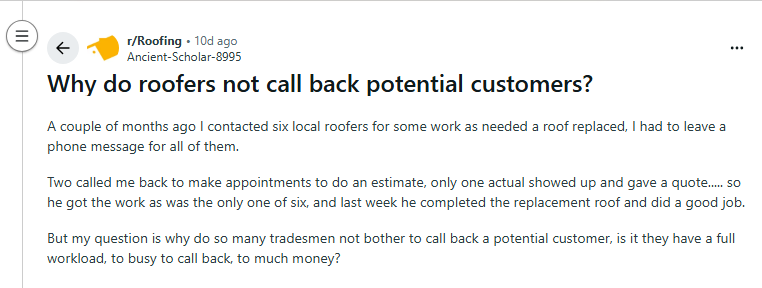
Often, once they see a structured evaluation, uncertainty turns into urgency… and eventually, commitment. So, you should always try to understand where this uncertainty is coming from… and don’t forget to call back. Customers hate it when you don’t call them back!
Top Roofing Sales Objections… and How to Answer Them
“It’s Too Expensive.”
As we’ve just explained above, cost is by far the most common objection. A survey from 2025 says that over 70% of Americans delayed at least one maintenance job at home, even though 4 out of 10 homeowners need roof repairs in the next 5 years. Homeowners are weighing the immediate expense against long-term value. Your response should focus on ROI and protection.
- Explain the long-term benefits: Highlight durability, energy efficiency, and warranty coverage. Explain how a properly installed roof protects a home and reduces future repair costs.
- Break down the investment: Sometimes homeowners just need context. Show line items for materials, labor, permits, and insurance. Transparency builds trust.
- Offer phased or financing options: Many homeowners respond well when you explain flexible payment plans or insurance claim support.
“I Want to Think About It.”
Indecision doesn’t always mean a lost sale; it’s often a request for reassurance. This problem can also stem from, if you pardon our French, the fact that homeowners tend to be lazy; they don’t usually check their roofs for underlying issues or problems. They may also choose to stay wilfully oblivious to obvious symptoms that their roofs need work. So, you should:
- Set a clear follow-up plan: Instead of leaving it open-ended, schedule a specific time to check back. “I understand you want time to think; can I call tomorrow at 2 pm to answer any remaining questions?”
- Provide educational materials: Homeowners feel more confident when they understand the process. A photo-based inspection report or a clear summary of needed repairs reassures them that the work is necessary.
- Reinforce urgency subtly: Highlight factors like storm season, material lead times, or insurance deadlines without being pushy.
“I Need to Get Multiple Quotes.”
Competition is natural. Instead of discouraging comparison shopping, leverage it as a chance to differentiate yourself. When you create your buyer persona before doing a sales pitch, always assume that your prospect will consider talking to other (possibly rival) roofers in the area. So, your response should take these things into account:
- Highlight your unique value: Explain why your roofing crew delivers better quality, faster service, and stronger documentation than competitors.
- Show proof: Photos of completed jobs, before-and-after inspections, and client testimonials provide credibility.
- Offer side-by-side comparisons: Without disparaging competitors, clarify differences in warranties, materials, or turnaround times.
“I Don’t Trust Contractors.”
Trust is earned, not assumed. Many homeowners have been burned by overpromises, delays, or sloppy work. In fact, 3 in 4 homeowners try to take care of home repairs on their own (DIY) and only call professionals when they realize they actually made things even worse. You need to win them over by putting emotions over facts. Here’s what you should do:
- Lead with credibility: Show licenses, insurance, certifications, and BBB ratings upfront.
- Document everything: Provide date-stamped photos, notes, and inspections that homeowners can access. Clear communication builds confidence.
- Offer references: Real homeowners who vouch for your professionalism go a long way.
“I’m Not Ready Yet.”
Timing can be tricky. Homeowners may genuinely need a roof but aren’t prepared to commit immediately. A recent survey says that 50% of Americans have roofs that need repairing, but a lot of these prospects want to wait. What are they waiting for? God knows! It’s your job (or the job of your sales guy) to figure out what’s bugging them and then propose a solution. That’s why your response should include these things:
- Stay top-of-mind: Keep communication structured and consistent. Automated reminders, newsletters, and check-in calls make it easy for the homeowner to return to you when ready.
- Educate on risks: Explain what delays might cost in terms of damage or additional expenses. Always focus on facts, not fear.
- Encourage scheduling inspections: Even if they’re not ready to start, scheduling a free inspection ensures you’re positioned as a knowledgeable, trusted partner.
“I’ve Heard Bad Stories About Roofers.”
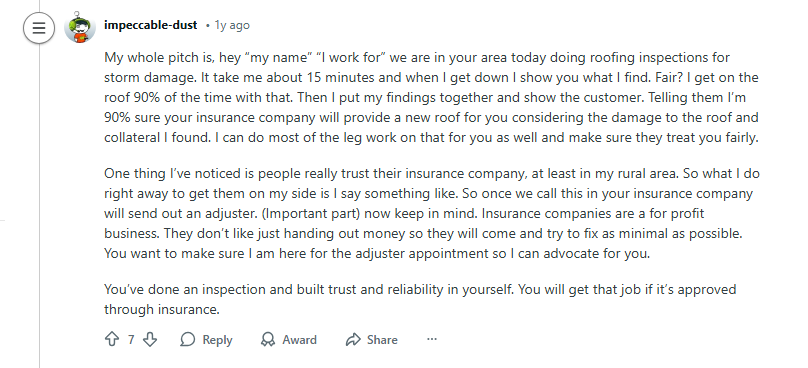
Reputation matters. Homeowners who have heard negative stories may hesitate before giving anyone access to their home. If your roofing sales strategy is failing, it’s probably because of these silly reasons. So, you should refine your sales pitch and understand that other (rival) roofers getting bad reviews may also affect your business. Your sales pitch should include:
- Acknowledge their concerns: Listen carefully, then share examples of how your company ensures professionalism and accountability.
- Show systems in place: Explain how you document every step, maintain safety standards, and follow up with homeowners consistently.
- Highlight reviews and testimonials: Social proof is incredibly powerful.
Handling Objections Without Being Pushy
The goal isn’t to “win” every argument; it’s to guide homeowners through their concerns in a professional and organized way. Key strategies include:
- Listen first, respond second: Let the homeowner fully explain their concern before replying.
- Stay factual: Avoid assumptions or opinions. Share data, examples, and documented evidence.
- Follow structured processes: Use checklists, templates, and CRM workflows to ensure nothing slips through the cracks.
- Empathize: Acknowledge concerns before offering solutions. People respond to understanding, not pressure.
Answer Customer Objections Successfully
In 2026, thriving in roofing sales means having repeatable systems in place for every scenario. Objections are inevitable… but with preparation and the right tools, they no longer derail your sales. Instead, they become a way to showcase professionalism, build trust, and win more business. Let’s get started with ProLine.

FAQs | Overcoming Roofing Sales Objections
How do I handle a homeowner who says my quote is too high?
Break down the quote into materials, labor, permits, and insurance, and explain long-term benefits like durability and warranty coverage. Offering flexible payment or financing options can also help.
What if a homeowner wants multiple quotes?
Use it as a chance to differentiate yourself. Highlight unique value propositions, show proof through photos and testimonials, and clearly explain warranty and service differences.
How can I gain trust quickly with skeptical homeowners?
Document everything, show licenses and insurance, provide references, and maintain consistent, professional communication. A structured CRM helps you present all this information efficiently.
How do I respond when a homeowner says, “I’m not ready yet”?
Stay in touch with educational materials, reminders, and follow-ups. Explain the potential risks of delay in a factual, non-pressure way, and encourage scheduling a free inspection.
Can technology really help with objections?
Yes, a communication-first CRM like ProLine centralizes leads, documentation, and follow-ups, ensuring you respond consistently and professionally.