
Most people look at roofing franchise opportunities through a short-term lens. They think in terms of first-year revenue, early wins, and how quickly the business can replace their income. After all, the roofing contractor industry in the US generated over $76 billion in revenue in 2025 alone!
But the founders who actually build multi-location roofing empires think differently. They are not optimizing for the first 12 months. They are optimizing for what the business looks like in year five and beyond. And that changes everything about how they operate in years one through three.
Because the truth is simple: building a roofing franchise empire is not a quick expansion play. It is a long, structured period of sacrifice before scale becomes visible.

Why don’t entrepreneurs get paid in the first few years of business?
Did you know that fewer than 97,000 roofing contractors were operational in the US in 2023? This number has very much exceeded the 100k mark three years later! But if you’re planning the entrepreneurship market in roofing, remember this one thing: many roofing company owners have to forgo their salaries for the first 5 years of starting a business.
One of the biggest misconceptions about entrepreneurship is that business owners immediately start paying themselves once revenue begins coming in. In reality, many entrepreneurs, especially in service-heavy industries like roofing, go through the first few years taking very little personal income while reinvesting heavily back into the business.
The reason is simple: early-stage businesses consume cash faster than most people expect.
In roofing franchises, revenue has to support multiple priorities before owner compensation becomes stable. Materials often need to be purchased upfront, crews have to be paid consistently, marketing must continue generating leads, and working capital reserves need to stay healthy enough to absorb delayed payments or seasonal slowdowns.
That creates a situation where the business may technically be profitable while still not producing enough stable liquidity to comfortably support large owner withdrawals.
This is why many experienced founders intentionally delay paying themselves aggressively during the first several years. Instead of maximizing short-term income, they focus on strengthening the systems that eventually make long-term income predictable.
In practice, early-stage entrepreneurs often reinvest in:
- Hiring and training stronger teams
- Marketing systems that create a consistent lead flow
- CRM and operational infrastructure that improve efficiency
- Working capital reserves that stabilize cash flow during slower cycles
- Expansion capacity for future territories or locations
The founders who understand this dynamic tend to treat the first few years as a foundation-building phase rather than a payout phase. They recognize that every dollar removed too early is a dollar that cannot strengthen operations, improve scalability, or reduce future instability.
And over time, that patience compounds. Once the business reaches operational maturity, the owner is no longer dependent on unpredictable revenue spikes to create personal income. Instead, compensation becomes supported by systems, consistency, and repeatable performance across the organization.
Revenue is not the same as available cash
One of the first lessons entrepreneurs learn is that business revenue does not automatically translate into personal income. The median income of business owners in the US is around $110,000, while solopreneurs can easily make $24,000 in the United States. But this income is something entrepreneurs realize after surviving years of hard work.
A roofing business can generate hundreds of thousands of dollars in signed jobs while still operating under tight cash flow conditions. That happens because revenue moves through multiple stages before it becomes usable profit. In roofing, money often has to cover:
- Material purchases before installation begins
- Payroll for crews and office staff
- Marketing costs that keep leads flowing
- Insurance, fuel, and operational overhead
- Software and CRM systems that support growth
Only after those obligations are covered does stable owner compensation become realistic. So, your roofing buyer persona has to be that of a man who doesn’t solely depend on their business for their living expenses in the first few years.
Early businesses are constantly reinvesting
Strong entrepreneurs usually treat the first few years as a reinvestment phase rather than an extraction phase. Instead of pulling money out immediately, they direct profits back into the business to strengthen the foundation underneath future growth. That reinvestment often goes toward:
- Hiring better sales reps and production managers
- Improving marketing systems and lead generation
- Building working capital reserves
- Upgrading operational software and communication tools
- Standardizing systems before expansion begins
In roofing franchises, especially, reinvestment has a compounding effect. Better systems create better follow-up. Better follow-up improves close rates. Higher close rates improve cash flow stability. Stable cash flow then supports future expansion.
The founders who understand this cycle tend to delay short-term gratification in exchange for long-term scalability.
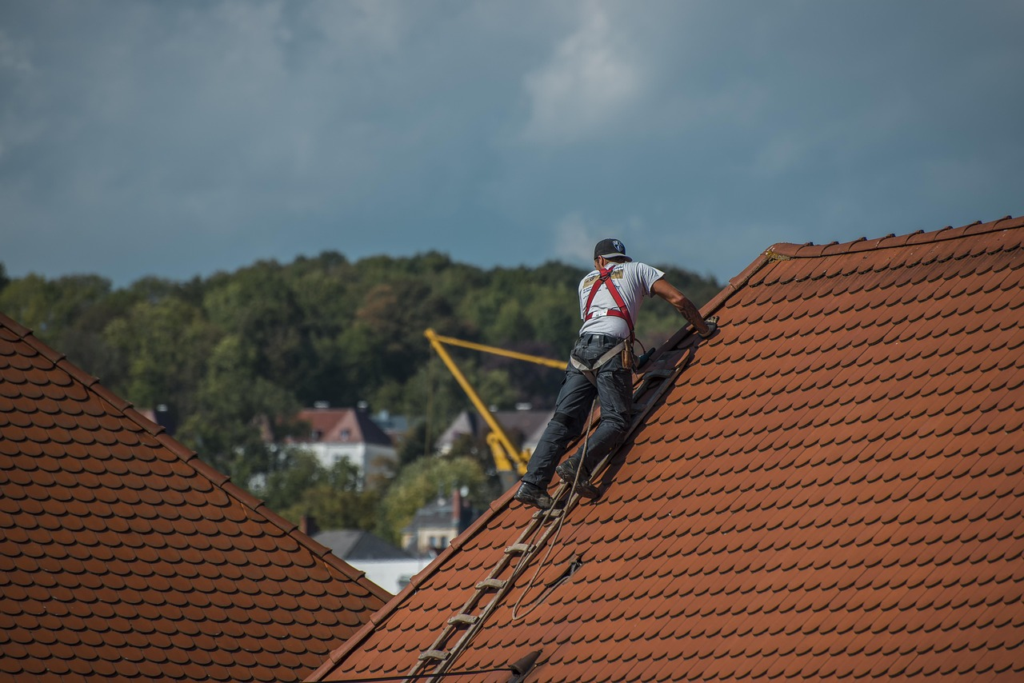
Why roofing franchise opportunities are a long game, not a quick win
Roofing franchise opportunities often look attractive on the surface because demand is strong, storms create predictable spikes in work, and the services are essential rather than optional. But what most new founders underestimate is the operational lag between opportunity and stability.
In roofing, revenue is not the same as control. You can have jobs coming in and still not have a stable system underneath them. Cash flow timing, labor coordination, and insurance cycles all create delays that make early growth feel more volatile than it appears.
That reality is why experienced founders treat the early years as infrastructure building, not income building. They are not asking “How much can I make this year?” They are asking, “What system do I need so year five runs without me?” Running a roofing company is only profitable when you embrace this mindset.
The hidden trade-off behind every roofing franchise empire
Every roofing franchise empire is built on a trade-off that is easy to miss at the beginning. You are choosing between:
- Short-term income extraction
- Long-term operational control and scalability
Most owners unconsciously try to do both at the same time. They want high early income while also building systems that require reinvestment and patience.
But in practice, those two goals often conflict in the early stage of growth. The founders who eventually scale successfully make a clear decision early on: they prioritize system building over personal extraction.
That decision shows up in how they handle hiring, marketing, technology, and especially cash flow discipline.
What the 5-year sacrifice actually looks like in practice
The “sacrifice” in a roofing franchise empire is not usually dramatic. It is not about extreme risk-taking or constant pressure. It is about repeated choices that favor long-term structure over short-term comfort. In most scalable roofing franchise journeys, this includes:
- Reinvesting early profits back into sales systems instead of owner distributions
- Delaying personal income growth until working capital is stable
- Standardizing operations before aggressively expanding locations
- Accepting slower short-term gains in exchange for predictable long-term scaling
This is where many founders separate from operators. Operators focus on running jobs. Empire builders focus on building systems that run jobs without them.
Don’t forget that 95% of roofers fail because they are not willing to make sacrifices.
Year 1 to Year 2: Survival disguised as growth
The first stage of roofing franchise expansion often looks like growth on the outside but feels like survival on the inside.
Revenue starts coming in, but so do competing demands for cash. Labor needs to be paid, materials must be purchased upfront, and marketing is required to maintain lead flow.
At this stage, many founders discover a difficult truth: more jobs do not automatically solve cash flow pressure. In fact, growth can temporarily increase pressure if systems are not fully stable.
This is why early-stage founders who scale successfully tend to obsess over structure rather than volume. They focus on consistency in job execution, billing cycles, and follow-up processes before trying to aggressively expand.
Year 2 to Year 3: The system starts to form
This is where the difference between a business and an empire begins to show.
In the second phase, founders who stayed disciplined start to see the benefits of earlier restraint. Cash flow becomes more predictable, teams become more independent, and operational gaps begin to shrink.
This is also where systems like CRM-driven workflows, standardized proposals, and structured follow-up processes become critical. Platforms like ProLine often play a role here because communication, job tracking, and pipeline visibility reduce the dependency on the founder to manage every detail manually.
When the system starts working without constant intervention, the founder’s role begins to shift from operator to builder. That shift is what enables scale.
Year 3 to Year 5: Expansion becomes intentional, not reactive
By the time a roofing franchise reaches the third to fifth year, the nature of decision-making changes significantly. Expansion is no longer driven by opportunity alone. It is driven by capacity. Founders begin asking different questions:
- Can the system support another location without breaking cash flow cycles?
- Do we have standardized processes that work across markets?
- Is leadership strong enough to operate without direct oversight?
At this stage, growth becomes structured rather than reactive. And this is where the earlier sacrifice pays off. Because the business is no longer dependent on constant owner intervention, expansion does not compromise operational stability.
The real meaning of the 5-year sacrifice
The “5-year sacrifice” is not about suffering or delay for its own sake. It is about sequencing. It is the decision to build something that works without constant intervention before trying to extract maximum value from it.
In roofing franchises, that sequencing matters more than almost anything else because cash flow timing, labor intensity, and operational complexity all compound as the business grows.
Founders who respect that sequence build stability first and income second. And over time, that stability becomes the foundation for everything else: expansion, acquisition, multi-market growth, and eventually, empire-level scale.

Grow Your Roofing Business Steadily & Patiently
Roofing franchise opportunities are not inherently limited. The real limitation is how quickly founders try to turn them into personal income instead of structured systems.
The 5-year sacrifice is not about waiting to succeed. It is about building something that can scale without collapsing under its own growth. Because in roofing, empires are not built in a sprint. They are built in layers, over time, with discipline that most people underestimate at the beginning.
In the words of Carnie Flyfogle: “It’s a long game. Patience. We are in an instant gratification type environment… I sacrificed basically my entire 20s… I am very well aware that I gave up my 20s, and I’m probably going to give up my 30s to get where I want to see us go.”
So, if you want to be successful in the world of roofing, you need to be able to make these sacrifices… and also get the best CRM available online. Only then can you actually be able to build a roofing business from the ground up!
FAQs
Why is roofing franchise growth considered a long-term strategy?
Operational stability, cash flow timing, and system standardization take years to fully develop before large-scale expansion becomes sustainable.
What is the biggest mistake new roofing franchise owners make?
Trying to extract income or scale too quickly before systems, cash flow, and staffing structures are fully stable.
How long does it typically take to build a scalable roofing franchise?
Most scalable operators treat the first 3 to 5 years as a foundation-building phase before aggressive multi-location expansion.
Do all roofing franchises require the same timeline to scale?
No, timelines vary by market, systems, and leadership, but operational discipline and reinvestment speed are the biggest factors.
What role do systems play in building a roofing franchise empire?
Systems reduce dependency on the owner, improve consistency across locations, and make scaling predictable rather than reactive.